
Browse by Category
Fiction
- Action & Adventure
- African American
- Anthologies
- Children's Fiction
- Classics
- Comics & Graphic Novels
- Coming of Age
- Contemporary
- Cultural & Regional
- Drama
- Erotica
- Fantasy
- General
- Historical Fiction
- Horror
- Humor & Satire
- Literary Fiction
- Mystery, Thriller & Suspense
- Poetry
- Religious & Inspirational
- Romance
- Science Fiction
- Short Stories
- War & Military
- Westerns
- Women's Fiction
- Young Adult
Non-Fiction
- Antiques & Collectibles
- Arts & Photography
- Biographies & Memoirs
- Business & Money
- Children's Non-Fiction
-
Computers & Technology
- Artificial Intelligence
- Computer Science
- Cybersecurity & Cryptography
- Data Science & Analytics
- Databases & Big Data
- Game Development & Design
- General
- Hardware & DIY
- Mobile App Development
- Networking & Cloud Computing
- Operating Systems
- Programming
- Robotics
- Software
- Software Engineering
- User Experience (UX) & Design
- Web Development & Design
- Cooking, Food & Wine
- Crafts, Hobbies & Home
- Education & Teaching
- Engineering
- General
- Health, Fitness & Dieting
-
History
- African History
- African History - North Africa
- African History - Sub-Saharan Africa
- American History
- American History - 20th Century
- American History - Civil War
- American History - Colonial Period
- Ancient History
- Asian History
- Asian History - China
- Asian History - India
- Asian History - Japan
- Asian History - Southeast Asia
- European History
- European History - Ancient Greece
- European History - Ancient Rome
- European History - Medieval
- European History - Modern
- European History - Renaissance
- General
- Middle Eastern History
- Military History
- Military History - Aviation
- Military History - Naval
- Social & Cultural History
- World History
- Humor & Entertainment
- Industrial Technology
- Language Learning
- Law
- LGBTQ+ Non-Fiction
- Literary Criticism
- Medical Books
- Parenting & Relationships
- Philosophy
- Politics & Social Sciences
- Reference
- Religion & Spirituality
-
Science & Math
- Agricultural Sciences
- Astronomy & Space Science
- Behavioral Sciences
- Biological Sciences
- Botany & Plant Science
- Chemistry
- Earth Sciences
- Engineering - Chemical
- Engineering - Civil
- Engineering - Electrical
- Engineering - Mechanical
- Environment
- General
- Geology
- Mathematics
- Nature & Ecology
- Oceanography
- Paleontology
- Physics
- Statistics
- Self-Help
- Sports & Outdoors
- Study Aids
- Sustainability & Green Living
- Textbooks
- Transportation
- Travel
- True Crime
- Urban Planning & Development
- Veterinary Medicine
- Writing & Publishing
Jump to Section

Want unlimited access to all books published by MixCache.com (plus their audiobooks)? Try MixCache.com Total Access. Look for the MTA badge on book covers to identify included titles.
Access to infinite ebooks: Don't see the book you want? Suggest it and we'll create it (free!) for you from scratch with our powerful AI book writer. Then read it with MTA - besides profiting from any sales it makes!
Minorities and Regional Identity: Ethnohistorical Provinces of China
MTA
Ethnic groups, cultural survival, and provincial policies — one province per chapter
About this book:
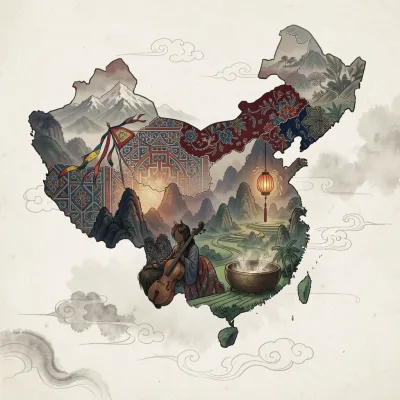
The book *Minorities and Regional Identity: Ethnohistorical Provinces of China* explores how ethnic minority communities have profoundly shaped the historical, cultural, and administrative landscape of China’s provinces. Through an ethnohistorical lens, it examines the dynamic interplay between minority cultures, language, religion, land tenure, and provincial policies, challenging the notion of provinces as static administrative units. Each chapter focuses on a specific province, tracing its unique trajectory through case studies and analyzing how historical legacies—such as trade routes, frontier dynamics, and religious institutions—intersect with contemporary efforts to promote cultural preservation or assimilation. The methodology integrates archival research, oral histories, and fieldwork, emphasizing how identities are layered and situational, influenced by governmental frameworks, ecological settings, and transregional ties.
Across the 25 provinces profiled, recurring themes include the tension between linguistic and religious preservation and state-driven Mandarin standardization, the impact of land rights and resource regimes on traditional livelihoods, and the role of festivals, tourism, and heritage commodification in shaping cultural expression. Examples illustrate how minority communities adapt to modernization: Yunnan’s multilingual traditions contend with Mandarin dominance; Xinjiang’s nomadic pastoral systems face ecological and political pressures; Tibet’s monastic institutions navigate state oversight; and Guangxi’s border markets reflect cross-cultural trade amid strict controls. Environmental changes, infrastructure projects, and urbanization are shown to disrupt or reconfigure indigenous practices, while government policies—such as bilingual education, ecological migration, and Sinicization campaigns—create varied outcomes depending on local contexts.
The book underscores how minority identities are not peripheral but constitutive of provincial narratives, with each region’s diversity reflecting broader patterns of migration, imperial expansion, and geopolitical shifts. From the Hui communities in Ningxia leveraging halal economies to the She in Fujian maintaining linguistic ties through digital platforms, the chapters reveal strategies of cultural resilience and adaptation. The authors argue that provincial policies, while ostensibly promoting unity, often stratify development unevenly, marginalizing minority livelihoods while commodifying cultural symbols. Legal and educational frameworks attempt to balance autonomy with centralized control, yet the lived experiences of minorities highlight gaps between policy intentions and grassroots realities.
Ultimately, the work demonstrates that China’s provinces are mosaics of negotiated identities, where minority communities actively shape regional cultures and histories despite systemic pressures. By foregrounding case studies from ecological zones, borderlands, and heartlands, it illuminates how cultural survival intersects with national and provincial priorities, offering insights for scholars and policymakers on the complexities of sustaining diversity in rapidly transforming societies. The book’s integrated approach—from household to village to province—reveals the enduring significance of minority contributions to China’s ethnohistorical fabric.
What You'll Find Inside:
- Exploration of how ethnic minority communities shape provincial identities in China through historical and contemporary case studies across 25 provinces.
- Analysis of the intersection between language policies, religious practices, and cultural preservation efforts in minority regions.
- Examination of the impact of provincial and national policies on land rights, resource management, and traditional livelihoods.
- Investigation of cross-border and transregional connections that influence minority identities and cultural survival.
- Case studies revealing how urbanization, environmental changes, and economic development reshape minority communities and their ties to local heritage.
Who's It For:
This book is essential for anthropologists, human rights scholars, and researchers interested in China's ethnic minorities and regional development. It provides grounded case studies for understanding cultural survival amid rapid transformation, making it valuable for students of Asian studies, cultural geography, and policy analysis. Readers seeking to explore the dynamic interplay between minority communities and provincial governance in China will find critical insights here.
Author:
Published By:
Date Published:
June 13, 2026
Type:
Nonfiction
Language:
English
Word Count:
56,784 words
Reading Time:
3 hours 59 minutes
Sample:
MixCache.com Total Access
Get unlimited access to this book + all books published by MixCache.com for $11.99/month
Subscribe to MTAOr purchase this book individually below
Order:
Buy the Minorities and Regional Identity: Ethnohistorical Provinces of China ebook on MixCache.com:
Buy Now
Full ebook will be available immediately
- read online or download as a PDF file.
$5 account credit for all new MixCache.com accounts, usable toward any ebook purchase!*






Ratings & Reviews
Ask Questions About This Book
Have a question about the content? Ask our AI assistant!
Start by asking a question about "Minorities and Regional Identity: Ethnohistorical Provinces of China"
Example: "Does this book mention William Shakespeare?"
Thinking...