Browse by Category
Fiction
- Action & Adventure
- African American
- Anthologies
- Children's Fiction
- Classics
- Comics & Graphic Novels
- Coming of Age
- Contemporary
- Cultural & Regional
- Drama
- Erotica
- Fantasy
- General
- Historical Fiction
- Horror
- Humor & Satire
- Literary Fiction
- Mystery, Thriller & Suspense
- Poetry
- Religious & Inspirational
- Romance
- Science Fiction
- Short Stories
- War & Military
- Westerns
- Women's Fiction
- Young Adult
Non-Fiction
- Antiques & Collectibles
- Arts & Photography
- Biographies & Memoirs
- Business & Money
- Children's Non-Fiction
-
Computers & Technology
- Artificial Intelligence
- Computer Science
- Cybersecurity & Cryptography
- Data Science & Analytics
- Databases & Big Data
- Game Development & Design
- General
- Hardware & DIY
- Mobile App Development
- Networking & Cloud Computing
- Operating Systems
- Programming
- Robotics
- Software
- Software Engineering
- User Experience (UX) & Design
- Web Development & Design
- Cooking, Food & Wine
- Crafts, Hobbies & Home
- Education & Teaching
- Engineering
- General
- Health, Fitness & Dieting
-
History
- African History
- African History - North Africa
- African History - Sub-Saharan Africa
- American History
- American History - 20th Century
- American History - Civil War
- American History - Colonial Period
- Ancient History
- Asian History
- Asian History - China
- Asian History - India
- Asian History - Japan
- Asian History - Southeast Asia
- European History
- European History - Ancient Greece
- European History - Ancient Rome
- European History - Medieval
- European History - Modern
- European History - Renaissance
- General
- Middle Eastern History
- Military History
- Military History - Aviation
- Military History - Naval
- Social & Cultural History
- World History
- Humor & Entertainment
- Industrial Technology
- Language Learning
- Law
- LGBTQ+ Non-Fiction
- Literary Criticism
- Medical Books
- Parenting & Relationships
- Philosophy
- Politics & Social Sciences
- Reference
- Religion & Spirituality
-
Science & Math
- Agricultural Sciences
- Astronomy & Space Science
- Behavioral Sciences
- Biological Sciences
- Botany & Plant Science
- Chemistry
- Earth Sciences
- Engineering - Chemical
- Engineering - Civil
- Engineering - Electrical
- Engineering - Mechanical
- Environment
- General
- Geology
- Mathematics
- Nature & Ecology
- Oceanography
- Paleontology
- Physics
- Statistics
- Self-Help
- Sports & Outdoors
- Study Aids
- Sustainability & Green Living
- Textbooks
- Transportation
- Travel
- True Crime
- Urban Planning & Development
- Veterinary Medicine
- Writing & Publishing
Jump to Section
MixCache.com Total Access
Unlimited reading and audiobooks for every book published by MixCache.com.
Included titles carry the MTA badge.
Learn more →
Digital Twins and Simulation for Factories: Virtual Tools to Optimize Performance
MTA
How to build and use digital twins, discrete-event simulation, and optimization models to improve manufacturing decisions.
About this book:
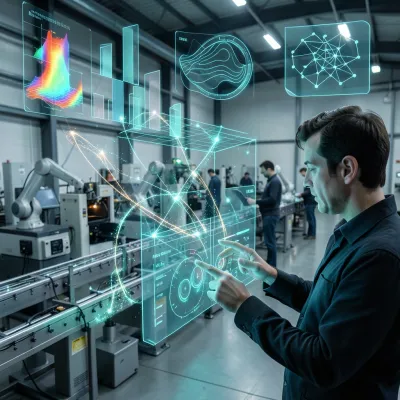
Digital twins in manufacturing are dynamic, data‑driven virtual replicas of physical assets, lines, or entire factories that continuously exchange data with their physical counterparts. Built on a foundation of event, state, and time‑series data from IIoT sensors, PLCs, MES, and ERP systems, they require robust data pipelines for ingestion, contextualization with master data (BOMs, routings, asset specifications), and storage in time‑series or relational databases. The twin’s value lies in its ability to combine discrete‑event simulation, agent‑based modeling, system dynamics, and mathematical optimization (LP, MILP, NLP) to enable risk‑free experimentation, predictive insights, and prescriptive recommendations for operational decisions.
Core applications include optimizing throughput, lead time, WIP, and OEE through bottleneck identification, layout planning, line balancing, changeover reduction (SMED), predictive maintenance, quality control (SPC, yield prediction, traceability), inventory and Kanban policies, energy and carbon footprint reduction, and human‑in‑the‑loop support for safety and ergonomics. Simulation optimization and metaheuristics (genetic algorithms, simulated annealing, tabu search) extend the twin’s capability to solve highly stochastic, combinatorial problems where traditional optimization fails. Verification, validation, and credibility processes ensure the model’s outputs align with historical data and stakeholder expectations, while integration with MES enables real‑time dispatching and scheduling feedback, and ERP linkage supports strategic capacity planning and financial impact analysis.
A practical implementation roadmap advises starting with a narrowly scoped pilot focused on a high‑impact KPI, establishing reliable data pipelines, building a simple DES model, validating against historical data, and demonstrating value through “what‑if” analysis. Subsequent phases expand scope, integrate with MES/ERP for bidirectional data flow, add specialized twins (maintenance, quality, energy/sustainability), incorporate advanced modeling (ABM, SD, optimization), and evolve toward autonomous, cloud‑edge hybrid architectures with strong cybersecurity. Case studies across automotive machining, pharmaceutical batch processing, consumer goods packaging, and semiconductor fabrication illustrate tangible benefits such as 15‑30% throughput gains, 20‑30% lead‑time reductions, significant yield improvements, and multi‑million‑dollar energy savings, confirming that digital twins transform reactive factories into proactive, continuously optimizing enterprises.
What You'll Find Inside:
- Digital twins create dynamic, data-driven virtual replicas of machines, lines, or factories that enable risk-free what‑if experimentation and prescriptive decision‑making through continuous data flow.
- Effective twins rely on a solid data foundation of events, states, time series, master data, and transactional information, supported by IIoT sensing, data pipelines, and contextualization.
- The book covers a full modeling toolbox—discrete‑event simulation for operational flow, agent‑based and system dynamics for emergent behavior and long‑term trends, and optimization (LP, MILP, NLP) with metaheuristics for finding best actions.
- Integration with MES and ERP closes the loop: real‑time shop‑floor data feeds the twin, while optimized schedules, dispatching rules, and maintenance recommendations flow back for execution and strategic planning.
- A pragmatic implementation roadmap starts with a focused pilot, validates against historical data, then expands scope, adds specialized twins (maintenance, quality, energy), and scales via hybrid cloud‑edge architecture.
Who's It For:
This book is intended for manufacturing engineers, operations analysts, plant managers, and continuous improvement specialists who are responsible for optimizing factory performance. It will also benefit digital transformation leaders, data scientists, and IT/OT professionals seeking to build, integrate, and scale digital twins for data‑driven decision making in discrete, batch, or mixed‑mode production environments.
Table of Contents:
- Introduction
- Chapter 1 Defining Digital Twins for Manufacturing
- Chapter 2 Manufacturing Systems and Performance Metrics
- Chapter 3 Data Requirements: Events, States, and Time Series
- Chapter 4 IIoT Sensing and Connectivity
- Chapter 5 Data Pipelines, Context, and Master Data
- Chapter 6 Process Mapping and Value Stream Foundations
- Chapter 7 Discrete-Event Simulation: Theory to Practice
- Chapter 8 Agent-Based and System Dynamics in the Factory
- Chapter 9 Optimization Models: LP, MILP, and Nonlinear
- Chapter 10 Simulation Optimization and Metaheuristics
- Chapter 11 Model Scope, Abstraction, and Granularity
- Chapter 12 Calibration and Parameter Estimation
- Chapter 13 Verification, Validation, and Credibility
- Chapter 14 Integration with MES and ERP
- Chapter 15 Scheduling, Dispatching, and Finite Capacity Planning
- Chapter 16 Inventory, Kanban, and Material Flow Control
- Chapter 17 Layout Planning and Line Balancing
- Chapter 18 Changeovers, SMED, and Throughput Improvement
- Chapter 19 Maintenance and Reliability Twins
- Chapter 20 Quality Twins: SPC, Yield, and Traceability
- Chapter 21 Human-in-the-Loop, Safety, and Ergonomics
- Chapter 22 Energy, Sustainability, and Carbon Twins
- Chapter 23 Risk, Uncertainty, and Scenario Testing
- Chapter 24 Architecture at Scale: Cloud, Edge, and Cybersecurity
- Chapter 25 Case Studies and an Implementation Roadmap
Author:
Published By:
Date Published:
May 29, 2026
Type:
Nonfiction
Language:
English
Word Count:
59,685 words
Reading Time:
4 hours 11 minutes
Sample:
Order:
Order Digital Twins and Simulation for Factories: Virtual Tools to Optimize Performance (Hardcover) on MixCache.com:
Buy NowPrint copy is made to order and ships worldwide. Includes the ebook free, ready to read instantly.
$5 account credit for all new MixCache.com accounts, usable toward any ebook purchase!*