
Browse by Category
Fiction
- Action & Adventure
- African American
- Anthologies
- Children's Fiction
- Classics
- Comics & Graphic Novels
- Coming of Age
- Contemporary
- Cultural & Regional
- Drama
- Erotica
- Fantasy
- General
- Historical Fiction
- Horror
- Humor & Satire
- Literary Fiction
- Mystery, Thriller & Suspense
- Poetry
- Religious & Inspirational
- Romance
- Science Fiction
- Short Stories
- War & Military
- Westerns
- Women's Fiction
- Young Adult
Non-Fiction
- Antiques & Collectibles
- Arts & Photography
- Biographies & Memoirs
- Business & Money
- Children's Non-Fiction
-
Computers & Technology
- Artificial Intelligence
- Computer Science
- Cybersecurity & Cryptography
- Data Science & Analytics
- Databases & Big Data
- Game Development & Design
- General
- Hardware & DIY
- Mobile App Development
- Networking & Cloud Computing
- Operating Systems
- Programming
- Robotics
- Software
- Software Engineering
- User Experience (UX) & Design
- Web Development & Design
- Cooking, Food & Wine
- Crafts, Hobbies & Home
- Education & Teaching
- Engineering
- General
- Health, Fitness & Dieting
-
History
- African History
- African History - North Africa
- African History - Sub-Saharan Africa
- American History
- American History - 20th Century
- American History - Civil War
- American History - Colonial Period
- Ancient History
- Asian History
- Asian History - China
- Asian History - India
- Asian History - Japan
- Asian History - Southeast Asia
- European History
- European History - Ancient Greece
- European History - Ancient Rome
- European History - Medieval
- European History - Modern
- European History - Renaissance
- General
- Middle Eastern History
- Military History
- Military History - Aviation
- Military History - Naval
- Social & Cultural History
- World History
- Humor & Entertainment
- Industrial Technology
- Language Learning
- Law
- LGBTQ+ Non-Fiction
- Literary Criticism
- Medical Books
- Parenting & Relationships
- Philosophy
- Politics & Social Sciences
- Reference
- Religion & Spirituality
-
Science & Math
- Agricultural Sciences
- Astronomy & Space Science
- Behavioral Sciences
- Biological Sciences
- Botany & Plant Science
- Chemistry
- Earth Sciences
- Engineering - Chemical
- Engineering - Civil
- Engineering - Electrical
- Engineering - Mechanical
- Environment
- General
- Geology
- Mathematics
- Nature & Ecology
- Oceanography
- Paleontology
- Physics
- Statistics
- Self-Help
- Sports & Outdoors
- Study Aids
- Sustainability & Green Living
- Textbooks
- Transportation
- Travel
- True Crime
- Urban Planning & Development
- Veterinary Medicine
- Writing & Publishing
Jump to Section
MixCache.com Total Access
Unlimited reading and audiobooks for every book published by MixCache.com.
Included titles carry the MTA badge.
Learn more →
Comparative Family Law in Muslim-majority States
MTA
How marriage, divorce, custody, and inheritance are legislated across jurisdictions
About this book:
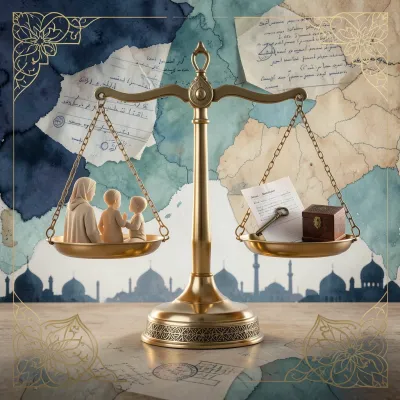
This book offers a comprehensive comparative analysis of family law across Muslim‑majority states, examining how marriage, divorce, child custody, and inheritance are legislated, interpreted, and enforced. It begins by outlining the methodological foundations—functional and contextual comparison, the role of schools of Islamic jurisprudence, and the diversity of legal sources ranging from civil codes and Sharia‑based statutes to judicial decisions, administrative regulations, and informal practices. The work then traces the historical arc of codification, showing how classical doctrines from the Hanafi, Maliki, Shafiʿi, Hanbali, and Jaʿfari madhhabs have been selected, blended, or reformed into modern statutes, often through processes of takhayyur (selection) and talfiq (piecing together) to balance religious fidelity with state‑building and social reform.
Subsequent chapters explore the substantive law in detail. They cover marriage formation—capacity, consent, and the evolving role of the marriage guardian (wilaya); mahr and marital property regimes; the regulation of polygyny versus monogamy and the importance of marriage registration; interfaith, international, and cross‑border marriages; divorce mechanisms including talaq, khulʿ, taʿliq, and faskh; post‑divorce rights such as nafaqa, housing, mutʿa, and the ʿidda period; child custody (hadana) and guardianship (wilaya); inheritance (farāʾid) and testamentary dispositions (waṣiyya); and protective frameworks for domestic violence, mediation, and procedural justice. The analysis consistently distinguishes de jure rules from de facto practice, highlighting gaps between written law and lived experience.
The book then presents regional case studies that illustrate how shared Islamic foundations produce divergent legal outcomes: the Maghrebi reforms of Tunisia and Morocco; the judicialized codifications of Egypt and Jordan; the conservative yet increasingly codified Gulf States; Jaʿfari‑based systems in Iran and Iraq; Turkey’s secular civil‑law model; South Asian approaches in Pakistan, Bangladesh, and Afghanistan; Southeast Asian hybrid systems in Indonesia, Malaysia, and Brunei; and Sub‑Saharan African experiences in Sudan, Northern Nigeria, and Somalia. Throughout, the work examines the impact of constitutional Sharia clauses, legislative hierarchies, and the interaction with international human rights instruments such as CEDAW and the CRC, showing how these norms drive reform trajectories—judicialization of divorce, raising the minimum age of marriage, expanding women’s access to khulʿ and faskh, strengthening protection orders, and rethinking custody and inheritance—while also noting persistent tensions between reform advocates and traditionalist interpretations.
Ultimately, the volume underscores that family law in Muslim‑majority states is a dynamic field shaped by jurisprudential diversity, state‑led codification, societal pressures, and global human rights discourse. It highlights both the continuities rooted in Islamic legal tradition and the innovative pathways states have taken to address gender equality, child welfare, and legal certainty, offering readers a nuanced map of where convergence and divergence occur across the Muslim world.
What You'll Find Inside:
- The book provides a comparative analysis of marriage, divorce, custody, and inheritance laws across Muslim-majority states, showing how classical Islamic jurisprudence interacts with modern statutory frameworks and judicial practice.
- It examines the influence of the five major schools of Islamic jurisprudence (Hanafi, Maliki, Shafi'i, Hanbali, Ja'fari) on national family codes, highlighting both continuities and divergences in legal interpretations.
- The work analyzes how constitutional provisions, Sharia clauses, and legislative hierarchies shape the parameters of family law reform, including the tension between religious doctrine and international human rights norms.
- It covers cross-cutting issues including domestic violence protection mechanisms, mediation and conciliation procedures, and conflict of laws in transnational family contexts such as cross-border marriages and custody disputes.
- The book offers region-specific case studies from the Maghreb, Gulf states, South Asia, Southeast Asia, and Sub-Saharan Africa, illustrating diverse reform pathways and the interaction between state law, religious tradition, and customary practices.
Who's It For:
This book is designed for legal scholars seeking doctrinal syntheses and statutory references, judges looking for comparative solutions to procedural and remedial challenges in family law, and NGOs requiring orientation for casework, advocacy, and program design in Muslim-majority jurisdictions. It also serves practitioners needing practical guidance on court access, registration requirements, and enforcement mechanisms.
Table of Contents:
- Introduction
- Chapter 1 Comparative Methodologies and Sources
- Chapter 2 Schools of Islamic Jurisprudence and the Arc of Codification
- Chapter 3 Constitutions, Sharia Clauses, and Legislative Hierarchies
- Chapter 4 Marriage Formation: Capacity, Consent, and Guardianship (Wilaya)
- Chapter 5 Mahr, Dower, and Marital Property Regimes
- Chapter 6 Polygyny, Monogamy, and Marriage Registration
- Chapter 7 Interfaith, International, and Cross-Border Marriages
- Chapter 8 Divorce Mechanisms: Talaq, Khulʿ, Taʿliq, and Faskh
- Chapter 9 Post-Divorce Rights: Nafaqa, Housing, Mutʿa, and ʿIdda
- Chapter 10 Child Custody (Hadana) and Guardianship
- Chapter 11 Inheritance (Farāʾid) and Testamentary Dispositions (Waṣiyya)
- Chapter 12 Domestic Violence, Protection Orders, and Specialized Family Courts
- Chapter 13 Mediation, Conciliation, and Procedural Justice
- Chapter 14 Conflict of Laws, Choice of Forum, and Transnational Enforcement
- Chapter 15 Religious Minorities and Sect-Specific Personal Status (Jaʿfari, Ibadi, Zaydi)
- Chapter 16 Nationality, Citizenship, and Family Law Effects
- Chapter 17 Tunisia and Morocco: Maghrebi Reform Pathways
- Chapter 18 Egypt and Jordan: Judicial Practice and Codification
- Chapter 19 The Gulf States: Saudi Arabia, UAE, Qatar, Kuwait, Bahrain, Oman
- Chapter 20 Iran and Iraq: Jaʿfari Law and Post‑Conflict Reforms
- Chapter 21 Turkey: Civil Law, Secularism, and Islamic Discourse
- Chapter 22 South Asia: Pakistan, Bangladesh, and Afghanistan
- Chapter 23 Southeast Asia: Indonesia, Malaysia, and Brunei
- Chapter 24 Sub‑Saharan Africa: Sudan, Northern Nigeria, and Somalia
- Chapter 25 International Human Rights (CEDAW, CRC) and Future Reform Trajectories
Author:
Published By:
Date Published:
May 23, 2026
Type:
Nonfiction
Language:
English
Word Count:
54,291 words
Reading Time:
3 hours 48 minutes
Sample:
MixCache.com Total Access
Get unlimited access to this book + all books published by MixCache.com for $11.99/month
Subscribe to MTAOr purchase this book individually below
Order:
Buy the Comparative Family Law in Muslim-majority States ebook on MixCache.com:
Buy Now
Full ebook will be available immediately
- read online or download as a PDF file.
$5 account credit for all new MixCache.com accounts, usable toward any ebook purchase!*




Ratings & Reviews
Ask Questions About This Book
Have a question about the content? Ask our AI assistant!
Start by asking a question about "Comparative Family Law in Muslim-majority States"
Example: "Does this book mention William Shakespeare?"
Thinking...