
Browse by Category
Fiction
- Action & Adventure
- African American
- Anthologies
- Children's Fiction
- Classics
- Comics & Graphic Novels
- Coming of Age
- Contemporary
- Cultural & Regional
- Drama
- Erotica
- Fantasy
- General
- Historical Fiction
- Horror
- Humor & Satire
- Literary Fiction
- Mystery, Thriller & Suspense
- Poetry
- Religious & Inspirational
- Romance
- Science Fiction
- Short Stories
- War & Military
- Westerns
- Women's Fiction
- Young Adult
Non-Fiction
- Antiques & Collectibles
- Arts & Photography
- Biographies & Memoirs
- Business & Money
- Children's Non-Fiction
-
Computers & Technology
- Artificial Intelligence
- Computer Science
- Cybersecurity & Cryptography
- Data Science & Analytics
- Databases & Big Data
- Game Development & Design
- General
- Hardware & DIY
- Mobile App Development
- Networking & Cloud Computing
- Operating Systems
- Programming
- Robotics
- Software
- Software Engineering
- User Experience (UX) & Design
- Web Development & Design
- Cooking, Food & Wine
- Crafts, Hobbies & Home
- Education & Teaching
- Engineering
- General
- Health, Fitness & Dieting
-
History
- African History
- African History - North Africa
- African History - Sub-Saharan Africa
- American History
- American History - 20th Century
- American History - Civil War
- American History - Colonial Period
- Ancient History
- Asian History
- Asian History - China
- Asian History - India
- Asian History - Japan
- Asian History - Southeast Asia
- European History
- European History - Ancient Greece
- European History - Ancient Rome
- European History - Medieval
- European History - Modern
- European History - Renaissance
- General
- Middle Eastern History
- Military History
- Military History - Aviation
- Military History - Naval
- Social & Cultural History
- World History
- Humor & Entertainment
- Industrial Technology
- Language Learning
- Law
- LGBTQ+ Non-Fiction
- Literary Criticism
- Medical Books
- Parenting & Relationships
- Philosophy
- Politics & Social Sciences
- Reference
- Religion & Spirituality
-
Science & Math
- Agricultural Sciences
- Astronomy & Space Science
- Behavioral Sciences
- Biological Sciences
- Botany & Plant Science
- Chemistry
- Earth Sciences
- Engineering - Chemical
- Engineering - Civil
- Engineering - Electrical
- Engineering - Mechanical
- Environment
- General
- Geology
- Mathematics
- Nature & Ecology
- Oceanography
- Paleontology
- Physics
- Statistics
- Self-Help
- Sports & Outdoors
- Study Aids
- Sustainability & Green Living
- Textbooks
- Transportation
- Travel
- True Crime
- Urban Planning & Development
- Veterinary Medicine
- Writing & Publishing
Jump to Section
MixCache.com Total Access
Unlimited reading and audiobooks for every book published by MixCache.com.
Included titles carry the MTA badge.
Learn more →
Bloodsuckers and Plaguebearers
How Mosquitoes, Ticks, Fleas, Lice and Other Arthropods Transmit Disease and Shape Our World
About this book:
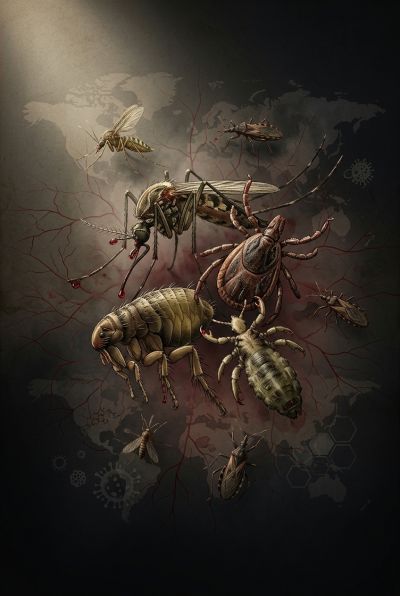


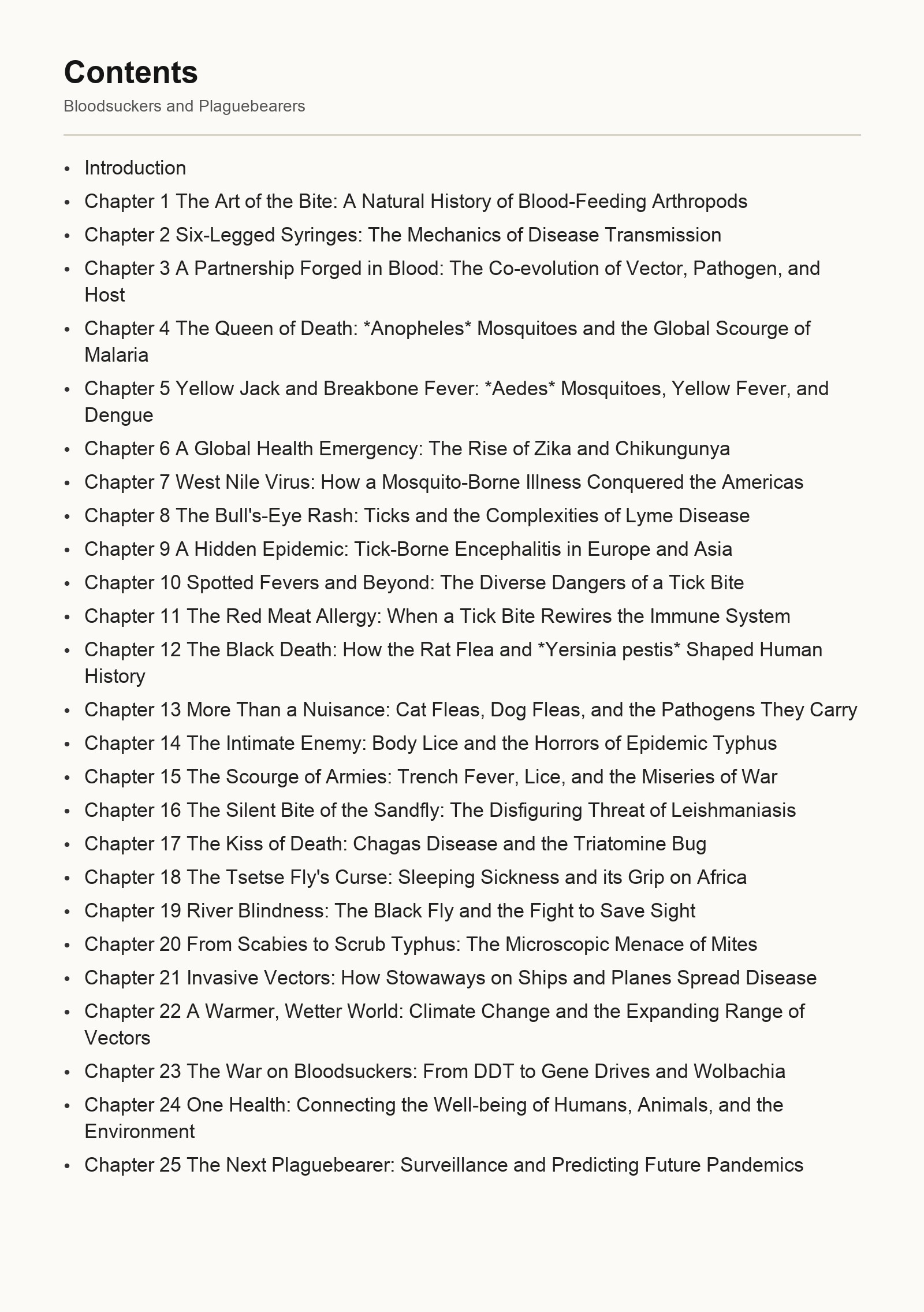
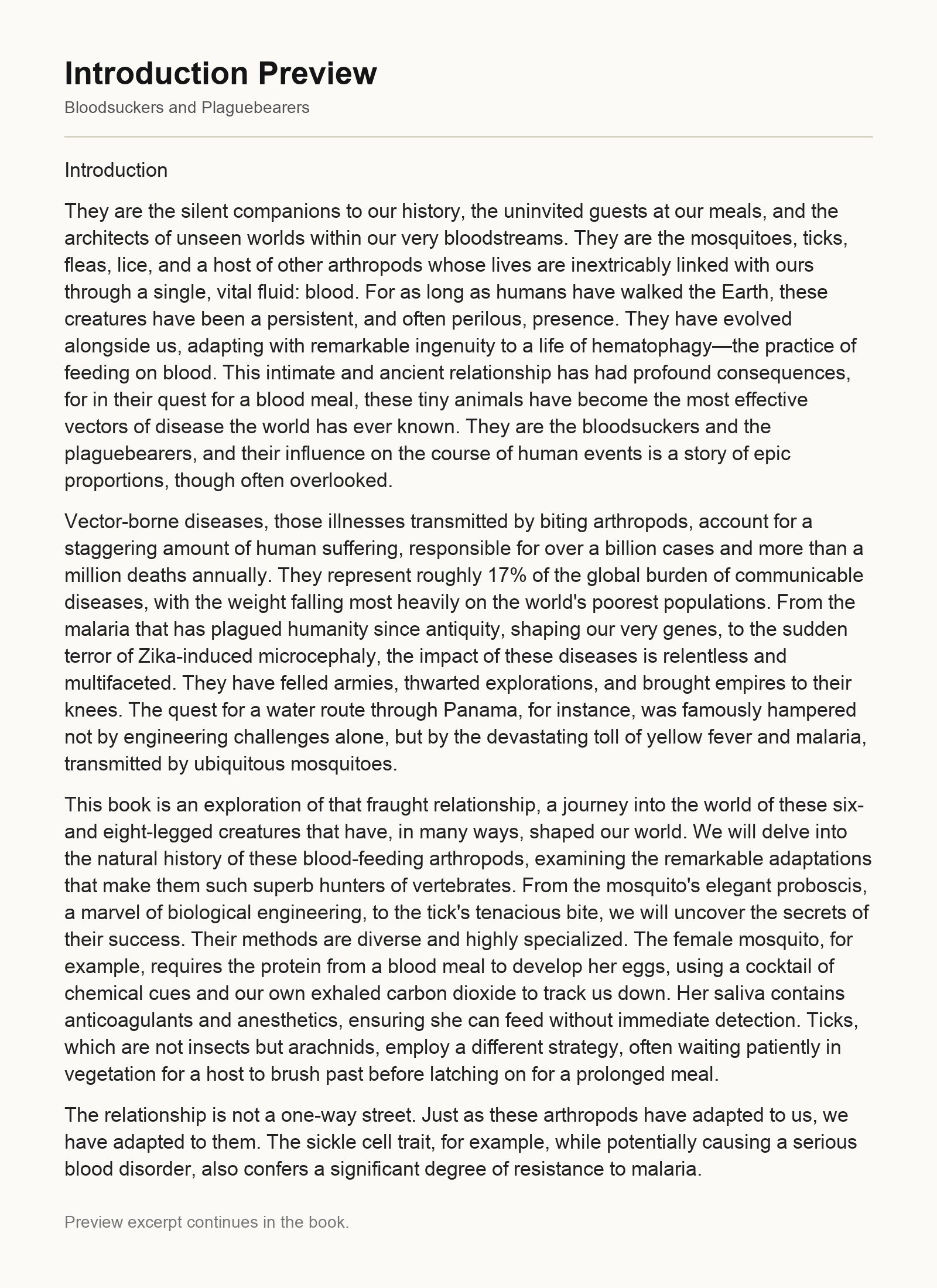

Bloodsuckers and Plaguebearers takes readers on a sweeping journey through the hidden world of arthropods that feed on blood and the diseases they carry. From the delicate proboscis of a mosquito to the harpoon‑like mouthparts of a tick, the book reveals how these tiny creatures have evolved sophisticated sensory and mechanical tools to locate hosts, pierce skin, and bypass our defenses. Each chapter unpacks the biology of a different vector—mosquitoes, ticks, fleas, lice, sandflies, triatomine bugs, tsetse flies, black flies, and mites—showing how their life cycles, feeding habits, and ecological niches make them perfect conduits for pathogens.
Readers will gain a deep understanding of the mechanics of disease transmission, learning the difference between mechanical and biological spread, the concept of extrinsic incubation period, and how pathogens manipulate their vectors to survive and multiply. The book explains complex transmission modes such as propagative, cyclo‑developmental, and cyclo‑propagative cycles, and introduces key epidemiological ideas like vectorial capacity and vector competence, helping readers see why some arthropods become deadly plaguebearers while others remain mere nuisances.
Beyond the science, the narrative explores the profound historical and evolutionary impact of vector‑borne illnesses. It traces how malaria shaped the human genome through sickle‑cell trait, how the Black Death reshaped medieval society, and how Lyme disease emerged from suburban forest fragments. The co‑evolutionary dance between vector, pathogen, and host is illustrated with vivid examples—from parasites that make humans smell more attractive to mosquitoes, to bacteria that rewire the immune system to trigger a meat allergy after a tick bite.
The book also surveys humanity’s ongoing battle against these tiny foes, chronicling the rise and fall of chemical insecticides like DDT, the promise of insecticide‑treated bed nets, and cutting‑edge genetic strategies such as gene drives and Wolbachia‑infected mosquitoes. Readers will discover how integrated vector management, One Health approaches, and global surveillance networks are being marshaled to predict and prevent the next outbreak, and how climate change is altering the geographic reach of vectors in real time.
Finally, Bloodsuckers and Plaguebearers equips readers with a forward‑looking perspective on emerging threats. It highlights the role of genomic epidemiology, sentinel animal programs, and predictive modeling in spotting dangerous pathogens before they spill over into humans. By connecting the microscopic world of blood‑feeding arthropods to the grand sweep of human history, ecology, and public health, the book offers a compelling, comprehensive education that will change the way readers see the tiny creatures that have, quite literally, sucked the lifeblood from civilizations and continue to shape our future.
What You'll Find Inside:
- Explores the biology, behavior, and adaptations of blood-feeding arthropods such as mosquitoes, ticks, fleas, lice, and mites.
- Details the mechanics of disease transmission, differentiating mechanical and biological pathways and explaining concepts like extrinsic incubation period and vectorial capacity.
- Examines major vector-borne diseases—including malaria, dengue, Lyme disease, plague, and Chagas—their historical impact, and ongoing global burden.
- Investigates the co-evolutionary dynamics between vectors, pathogens, and hosts, highlighting how this relationship has shaped human genetics and immunity.
- Reviews past and present control strategies—from DDT and bed nets to gene drives and Wolbachia—and outlines a One Health framework for future preparedness.
Who's It For:
This book is ideal for students and professionals in public health, epidemiology, entomology, and global health who need a comprehensive understanding of vector-borne diseases. It also serves general readers interested in how arthropod-borne illnesses have influenced human history, shaped genetic traits, and continue to pose threats in a changing climate.
Table of Contents:
- Introduction
- Chapter 1 The Art of the Bite: A Natural History of Blood-Feeding Arthropods
- Chapter 2 Six-Legged Syringes: The Mechanics of Disease Transmission
- Chapter 3 A Partnership Forged in Blood: The Co-evolution of Vector, Pathogen, and Host
- Chapter 4 The Queen of Death: Anopheles Mosquitoes and the Global Scourge of Malaria
- Chapter 5 Yellow Jack and Breakbone Fever: Aedes Mosquitoes, Yellow Fever, and Dengue
- Chapter 6 A Global Health Emergency: The Rise of Zika and Chikungunya
- Chapter 7 West Nile Virus: How a Mosquito-Borne Illness Conquered the Americas
- Chapter 8 The Bull's-Eye Rash: Ticks and the Complexities of Lyme Disease
- Chapter 9 A Hidden Epidemic: Tick-Borne Encephalitis in Europe and Asia
- Chapter 10 Spotted Fevers and Beyond: The Diverse Dangers of a Tick Bite
- Chapter 11 The Red Meat Allergy: When a Tick Bite Rewires the Immune System
- Chapter 12 The Black Death: How the Rat Flea and Yersinia pestis Shaped Human History
- Chapter 13 More Than a Nuisance: Cat Fleas, Dog Fleas, and the Pathogens They Carry
- Chapter 14 The Intimate Enemy: Body Lice and the Horrors of Epidemic Typhus
- Chapter 15 The Scourge of Armies: Trench Fever, Lice, and the Miseries of War
- Chapter 16 The Silent Bite of the Sandfly: The Disfiguring Threat of Leishmaniasis
- Chapter 17 The Kiss of Death: Chagas Disease and the Triatomine Bug
- Chapter 18 The Tsetse Fly's Curse: Sleeping Sickness and its Grip on Africa
- Chapter 19 River Blindness: The Black Fly and the Fight to Save Sight
- Chapter 20 From Scabies to Scrub Typhus: The Microscopic Menace of Mites
- Chapter 21 Invasive Vectors: How Stowaways on Ships and Planes Spread Disease
- Chapter 22 A Warmer, Wetter World: Climate Change and the Expanding Range of Vectors
- Chapter 23 The War on Bloodsuckers: From DDT to Gene Drives and Wolbachia
- Chapter 24 One Health: Connecting the Well-being of Humans, Animals, and the Environment
- Chapter 25 The Next Plaguebearer: Surveillance and Predicting Future Pandemics
Author:
Published By:
Date Published:
May 22, 2026
Type:
Nonfiction
Language:
English
Also Available In:
Word Count:
47,973 words
Reading Time:
3 hours 22 minutes
Sample:
Order:
Order Bloodsuckers and Plaguebearers (Hardcover) on MixCache.com:
Buy NowPrint copy is made to order and ships worldwide. Includes the ebook free, ready to read instantly.
$5 account credit for all new MixCache.com accounts, usable toward any ebook purchase!*


