
Browse by Category
Fiction
- Action & Adventure
- African American
- Anthologies
- Children's Fiction
- Classics
- Comics & Graphic Novels
- Coming of Age
- Contemporary
- Cultural & Regional
- Drama
- Erotica
- Fantasy
- General
- Historical Fiction
- Horror
- Humor & Satire
- Literary Fiction
- Mystery, Thriller & Suspense
- Poetry
- Religious & Inspirational
- Romance
- Science Fiction
- Short Stories
- War & Military
- Westerns
- Women's Fiction
- Young Adult
Non-Fiction
- Antiques & Collectibles
- Arts & Photography
- Biographies & Memoirs
- Business & Money
- Children's Non-Fiction
-
Computers & Technology
- Artificial Intelligence
- Computer Science
- Cybersecurity & Cryptography
- Data Science & Analytics
- Databases & Big Data
- Game Development & Design
- General
- Hardware & DIY
- Mobile App Development
- Networking & Cloud Computing
- Operating Systems
- Programming
- Robotics
- Software
- Software Engineering
- User Experience (UX) & Design
- Web Development & Design
- Cooking, Food & Wine
- Crafts, Hobbies & Home
- Education & Teaching
- Engineering
- General
- Health, Fitness & Dieting
-
History
- African History
- African History - North Africa
- African History - Sub-Saharan Africa
- American History
- American History - 20th Century
- American History - Civil War
- American History - Colonial Period
- Ancient History
- Asian History
- Asian History - China
- Asian History - India
- Asian History - Japan
- Asian History - Southeast Asia
- European History
- European History - Ancient Greece
- European History - Ancient Rome
- European History - Medieval
- European History - Modern
- European History - Renaissance
- General
- Middle Eastern History
- Military History
- Military History - Aviation
- Military History - Naval
- Social & Cultural History
- World History
- Humor & Entertainment
- Industrial Technology
- Language Learning
- Law
- LGBTQ+ Non-Fiction
- Literary Criticism
- Medical Books
- Parenting & Relationships
- Philosophy
- Politics & Social Sciences
- Reference
- Religion & Spirituality
-
Science & Math
- Agricultural Sciences
- Astronomy & Space Science
- Behavioral Sciences
- Biological Sciences
- Botany & Plant Science
- Chemistry
- Earth Sciences
- Engineering - Chemical
- Engineering - Civil
- Engineering - Electrical
- Engineering - Mechanical
- Environment
- General
- Geology
- Mathematics
- Nature & Ecology
- Oceanography
- Paleontology
- Physics
- Statistics
- Self-Help
- Sports & Outdoors
- Study Aids
- Sustainability & Green Living
- Textbooks
- Transportation
- Travel
- True Crime
- Urban Planning & Development
- Veterinary Medicine
- Writing & Publishing
Jump to Section
MixCache.com Total Access
Unlimited reading and audiobooks for every book published by MixCache.com.
Included titles carry the MTA badge.
Learn more →A History of Uzbekistan
About this book:
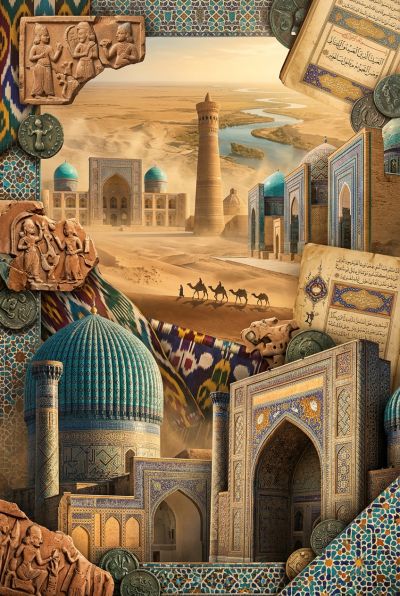
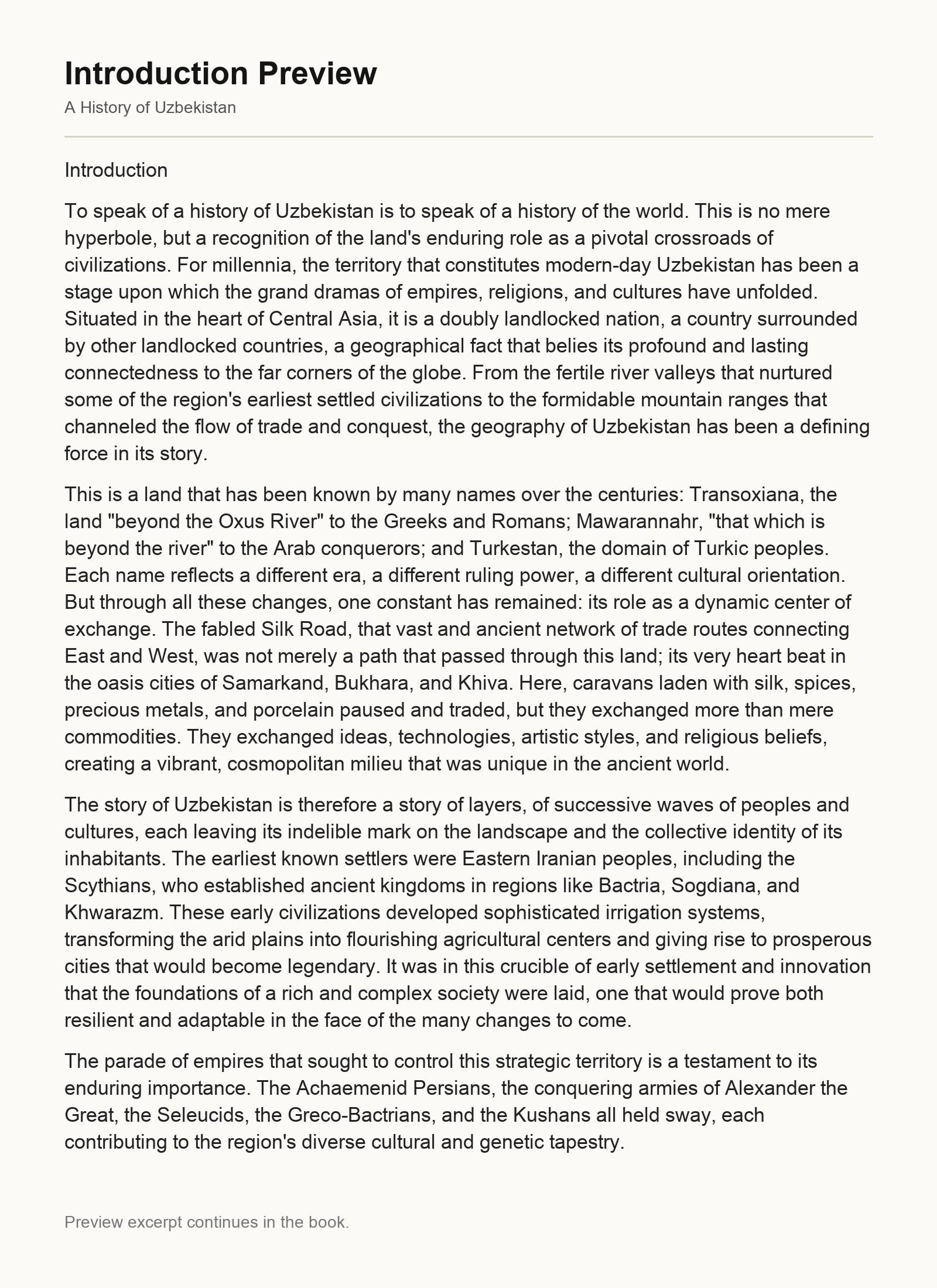
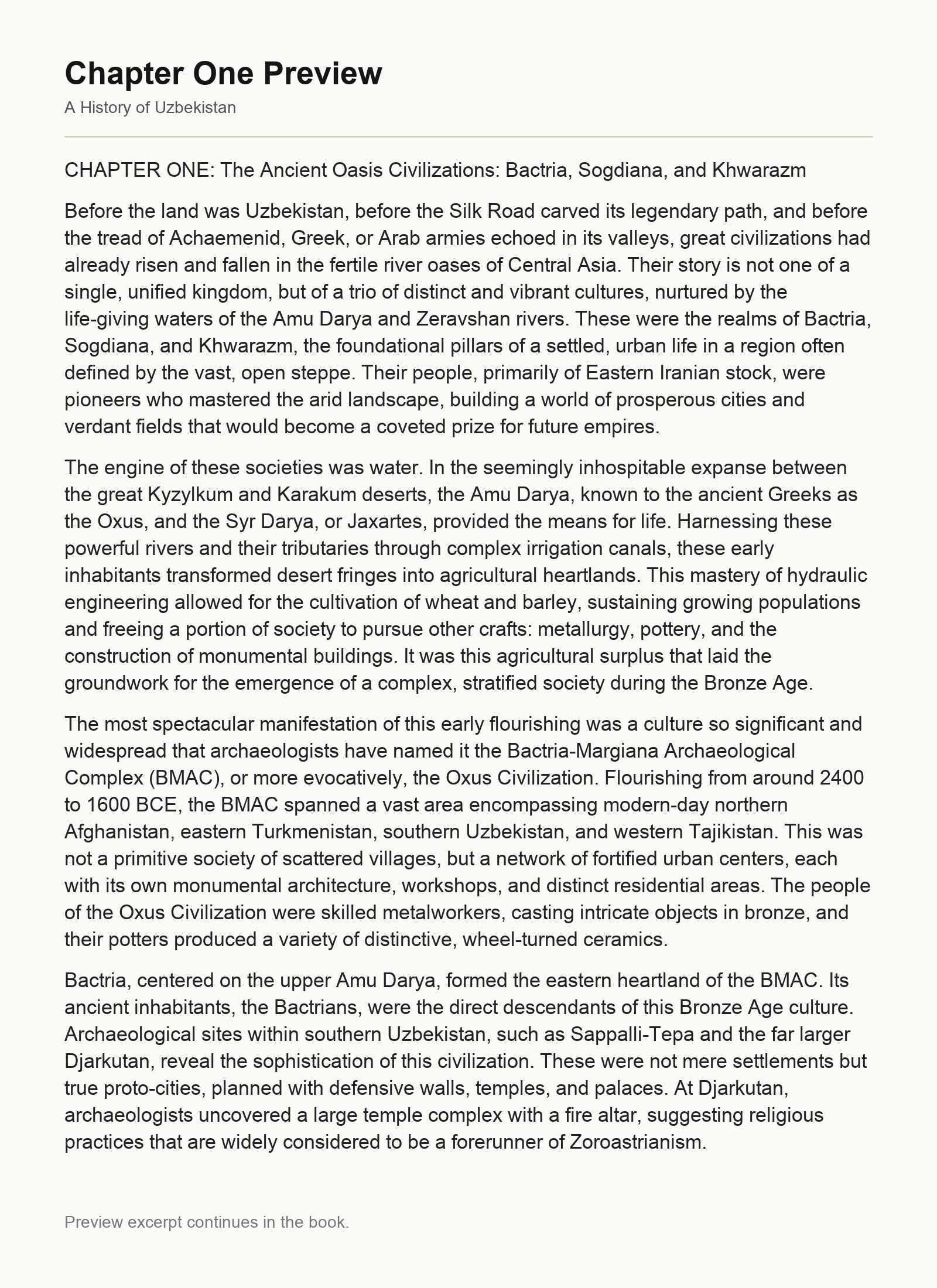
For readers seeking to understand one of history's most significant crossroads of civilization, this comprehensive history of Uzbekistan reveals how a doubly landlocked nation became a pivotal stage for empires, ideas, and cultural exchange. From the ancient oasis civilizations of Bactria, Sogdiana, and Khwarazm that mastered desert irrigation to create prosperous cities, to their role as the vibrant heart of the Silk Road where silk, spices, and knowledge flowed between East and West, readers will discover how Uzbekistan's geography made it both a coveted prize and a unique melting pot of cultures.
The book guides readers through layer upon layer of history, from Persian and Greek rule to the arrival of Turkic peoples and the transformative Arab conquest that introduced Islam. Readers will experience the intellectual flowering of the Samanid era when Bukhara rivaled Baghdad as a center of learning, producing scholars like Avicenna and al-Biruni whose work shaped global knowledge. They'll witness the rise and fall of empires—the Kushans who secured the Silk Road, Timur who initiated a Central Asian renaissance with breathtaking architecture in Samarkand, and the Uzbek Shaybanids who established khanates that would give the modern nation its name.
Readers will gain deep insight into the region's turbulent transitions, from the devastation of the Mongol invasion that destroyed ancient irrigation systems to the fierce rivalries between the Khanates of Bukhara, Khiva, and Kokand. The narrative continues through the Russian conquest that redrew Central Asia's map, the Soviet era's contradictory modernization that brought literacy and industry alongside repression and ecological disaster like the Aral Sea's shrinkage, and the complex journey to independence that involved navigating Soviet legacies while rediscovering pre-Soviet roots.
Through detailed accounts of 20th and 21st century developments, readers will understand how Uzbekistan has navigated its place in the modern world—from the authoritarian rule of Islam Karimov to the reformist era of Shavkat Mirziyoyev that has opened the country to regional cooperation and global engagement. The book reveals how contemporary Uzbekistan balances economic liberalization with political realities, addressing enduring challenges like water resource management while embracing its historical identity as a bridge between civilizations.
Ultimately, readers will come away with a profound appreciation for Uzbekistan not merely as a Central Asian footnote, but as a land whose story illuminates broader patterns of human civilization: how geography shapes destiny, how empires rise and fall at crossroads of trade, how ideas travel farther than armies, and how cultures persist and transform through centuries of change. This history offers essential context for understanding not just Uzbekistan, but the interconnected story of Eurasia itself.
What You'll Find Inside:
- Uzbekistan's enduring role as a Silk Road crossroads facilitated millennia of cultural, technological, and religious exchange between East and West, shaping its cosmopolitan identity.
- The region experienced successive golden ages under empires like the Samanids (Islamic scholarship) and Timurids (architectural renaissance), producing global figures such as Avicenna and Ulugh Beg.
- From Arab conquest to Soviet rule, Uzbekistan's history reflects cycles of foreign domination, cultural synthesis, and resilient local adaptation to imperial powers.
- The Soviet era transformed Uzbekistan through forced collectivization, industrialization, and cultural repression, leaving complex legacies like the Aral Sea crisis and cotton monoculture.
- Post-independence Uzbekistan evolved from Karimov's authoritarian rule to Mirziyoyev's reform era, balancing economic liberalization, regional cooperation, and lingering political constraints.
Who's It For:
This book is ideal for university students and scholars of Central Asian history, Islamic studies, or world history seeking a comprehensive narrative of Uzbekistan's pivotal role in Eurasian civilizations. It also serves general readers interested in the Silk Road, empire studies, or post-Soviet societal transformation, providing essential context for understanding modern Uzbekistan's cultural identity, political trajectory, and regional significance. Professionals in international relations, development, or regional policy focused on Central Asia will find valuable historical insights into contemporary challenges and opportunities.
Table of Contents:
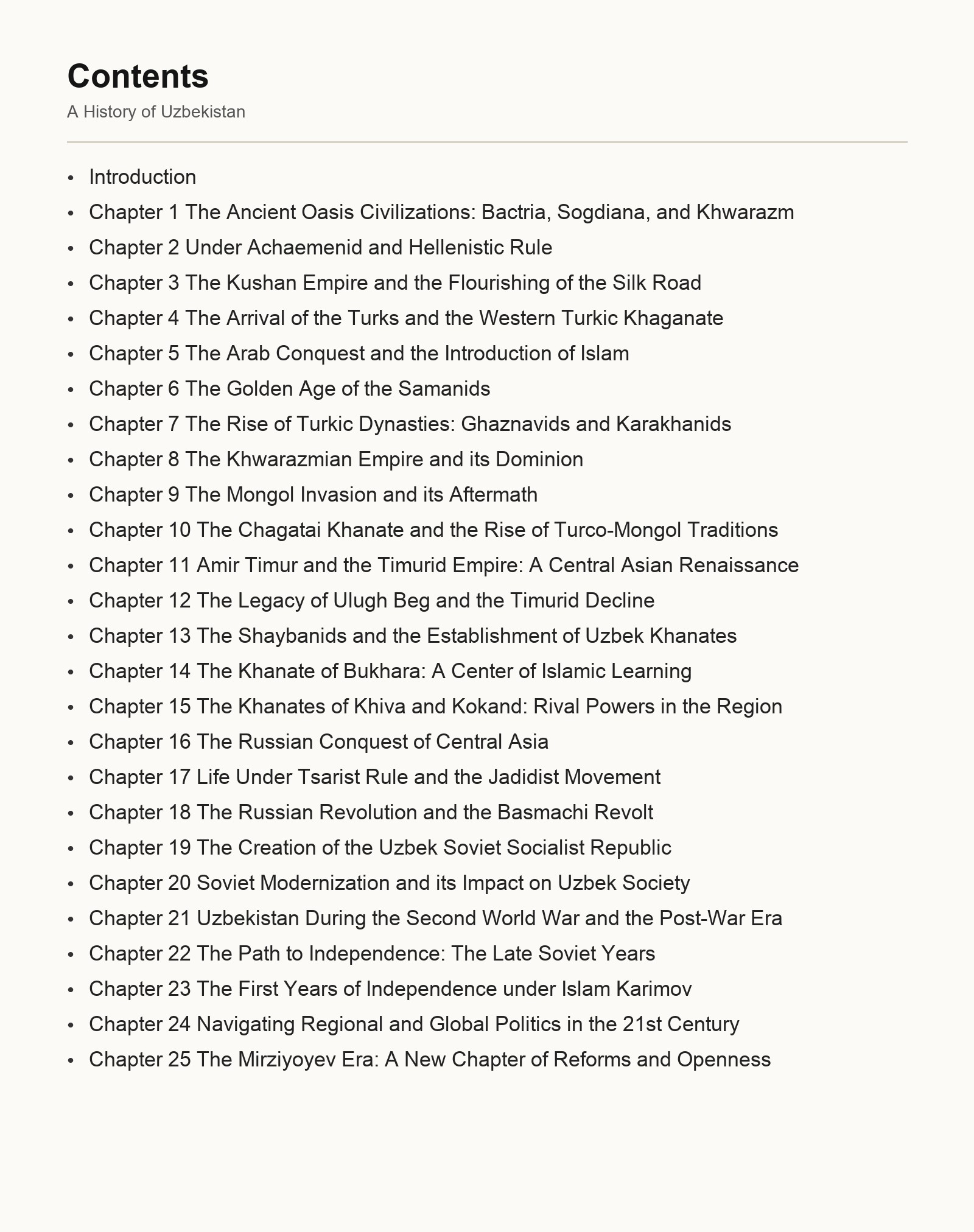
- Introduction
- Chapter 1 The Ancient Oasis Civilizations: Bactria, Sogdiana, and Khwarazm
- Chapter 2 Under Achaemenid and Hellenistic Rule
- Chapter 3 The Kushan Empire and the Flourishing of the Silk Road
- Chapter 4 The Arrival of the Turks and the Western Turkic Khaganate
- Chapter 5 The Arab Conquest and the Introduction of Islam
- Chapter 6 The Golden Age of the Samanids
- Chapter 7 The Rise of Turkic Dynasties: Ghaznavids and Karakhanids
- Chapter 8 The Khwarazmian Empire and its Dominion
- Chapter 9 The Mongol Invasion and its Aftermath
- Chapter 10 The Chagatai Khanate and the Rise of Turco-Mongol Traditions
- Chapter 11 Amir Timur and the Timurid Empire: A Central Asian Renaissance
- Chapter 12 The Legacy of Ulugh Beg and the Timurid Decline
- Chapter 13 The Shaybanids and the Establishment of Uzbek Khanates
- Chapter 14 The Khanate of Bukhara: A Center of Islamic Learning
- Chapter 15 The Khanates of Khiva and Kokand: Rival Powers in the Region
- Chapter 16 The Russian Conquest of Central Asia
- Chapter 17 Life Under Tsarist Rule and the Jadidist Movement
- Chapter 18 The Russian Revolution and the Basmachi Revolt
- Chapter 19 The Creation of the Uzbek Soviet Socialist Republic
- Chapter 20 Soviet Modernization and its Impact on Uzbek Society
- Chapter 21 Uzbekistan During the Second World War and the Post-War Era
- Chapter 22 The Path to Independence: The Late Soviet Years
- Chapter 23 The First Years of Independence under Islam Karimov
- Chapter 24 Navigating Regional and Global Politics in the 21st Century
- Chapter 25 The Mirziyoyev Era: A New Chapter of Reforms and Openness
Author:
Published By:
Date Published:
May 18, 2026
Type:
Nonfiction
Language:
English
Also Available In:
Word Count:
51,217 words
Reading Time:
3 hours 35 minutes
Sample:
Order:
Buy the A History of Uzbekistan ebook on MixCache.com:
Buy NowThe full ebook will be available immediately to read instantly on any device.
$5 account credit for all new MixCache.com accounts, usable toward any ebook purchase!*





Ratings & Reviews
Ask Questions About This Book
Have a question about the content? Ask our AI assistant!
Start by asking a question about "A History of Uzbekistan"
Example: "Does this book mention William Shakespeare?"
Thinking...