Browse by Category
Fiction
- Action & Adventure
- African American
- Anthologies
- Children's Fiction
- Classics
- Comics & Graphic Novels
- Coming of Age
- Contemporary
- Cultural & Regional
- Drama
- Erotica
- Fantasy
- General
- Historical Fiction
- Horror
- Humor & Satire
- Literary Fiction
- Mystery, Thriller & Suspense
- Poetry
- Religious & Inspirational
- Romance
- Science Fiction
- Short Stories
- War & Military
- Westerns
- Women's Fiction
- Young Adult
Non-Fiction
- Antiques & Collectibles
- Arts & Photography
- Biographies & Memoirs
- Business & Money
- Children's Non-Fiction
-
Computers & Technology
- Artificial Intelligence
- Computer Science
- Cybersecurity & Cryptography
- Data Science & Analytics
- Databases & Big Data
- Game Development & Design
- General
- Hardware & DIY
- Mobile App Development
- Networking & Cloud Computing
- Operating Systems
- Programming
- Robotics
- Software
- Software Engineering
- User Experience (UX) & Design
- Web Development & Design
- Cooking, Food & Wine
- Crafts, Hobbies & Home
- Education & Teaching
- Engineering
- General
- Health, Fitness & Dieting
-
History
- African History
- African History - North Africa
- African History - Sub-Saharan Africa
- American History
- American History - 20th Century
- American History - Civil War
- American History - Colonial Period
- Ancient History
- Asian History
- Asian History - China
- Asian History - India
- Asian History - Japan
- Asian History - Southeast Asia
- European History
- European History - Ancient Greece
- European History - Ancient Rome
- European History - Medieval
- European History - Modern
- European History - Renaissance
- General
- Middle Eastern History
- Military History
- Military History - Aviation
- Military History - Naval
- Social & Cultural History
- World History
- Humor & Entertainment
- Industrial Technology
- Language Learning
- Law
- LGBTQ+ Non-Fiction
- Literary Criticism
- Medical Books
- Parenting & Relationships
- Philosophy
- Politics & Social Sciences
- Reference
- Religion & Spirituality
-
Science & Math
- Agricultural Sciences
- Astronomy & Space Science
- Behavioral Sciences
- Biological Sciences
- Botany & Plant Science
- Chemistry
- Earth Sciences
- Engineering - Chemical
- Engineering - Civil
- Engineering - Electrical
- Engineering - Mechanical
- Environment
- General
- Geology
- Mathematics
- Nature & Ecology
- Oceanography
- Paleontology
- Physics
- Statistics
- Self-Help
- Sports & Outdoors
- Study Aids
- Sustainability & Green Living
- Textbooks
- Transportation
- Travel
- True Crime
- Urban Planning & Development
- Veterinary Medicine
- Writing & Publishing
Jump to Section
MixCache.com Total Access
Unlimited reading and audiobooks for every book published by MixCache.com.
Included titles carry the MTA badge.
Learn more →A History of Lesotho
About this book:

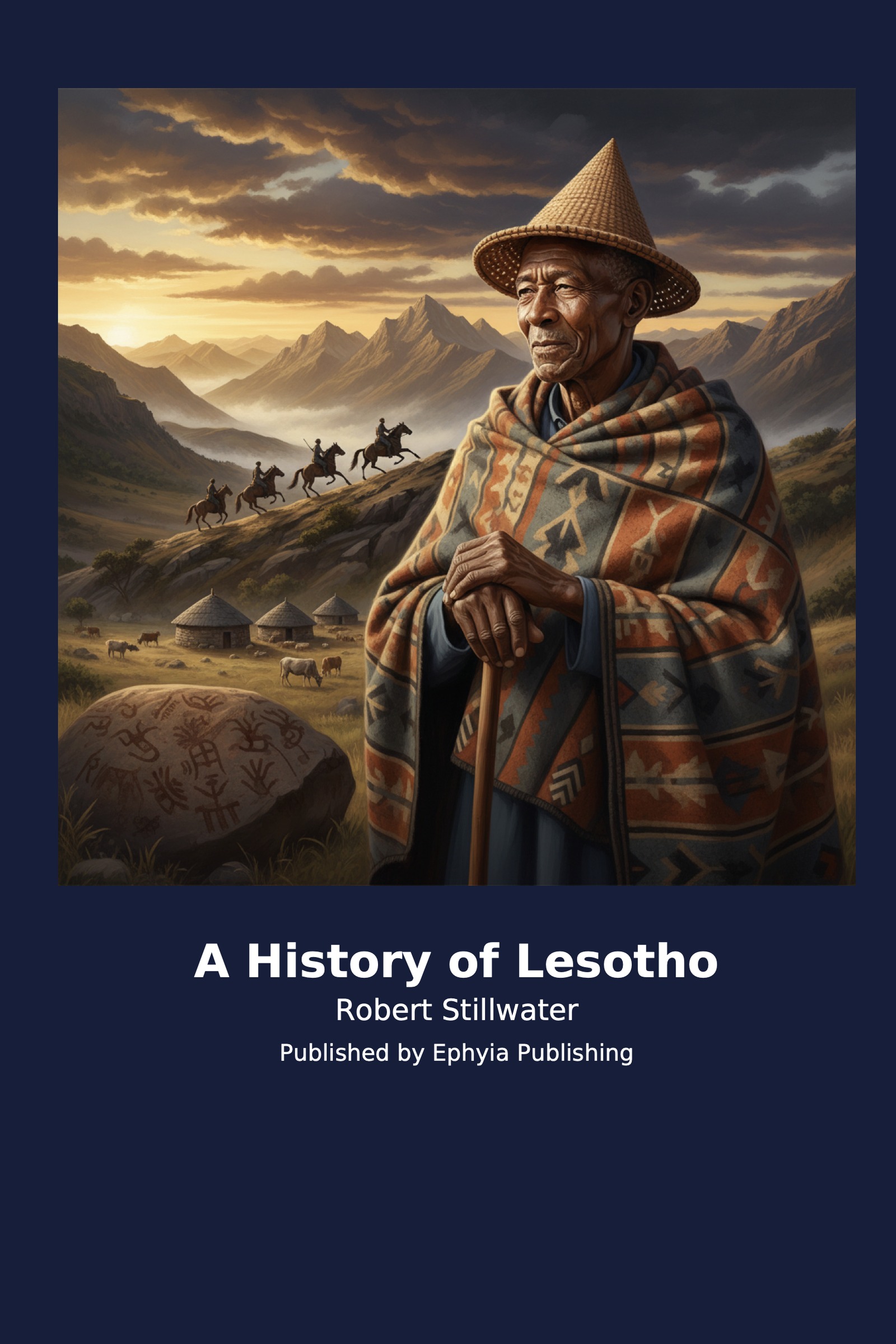
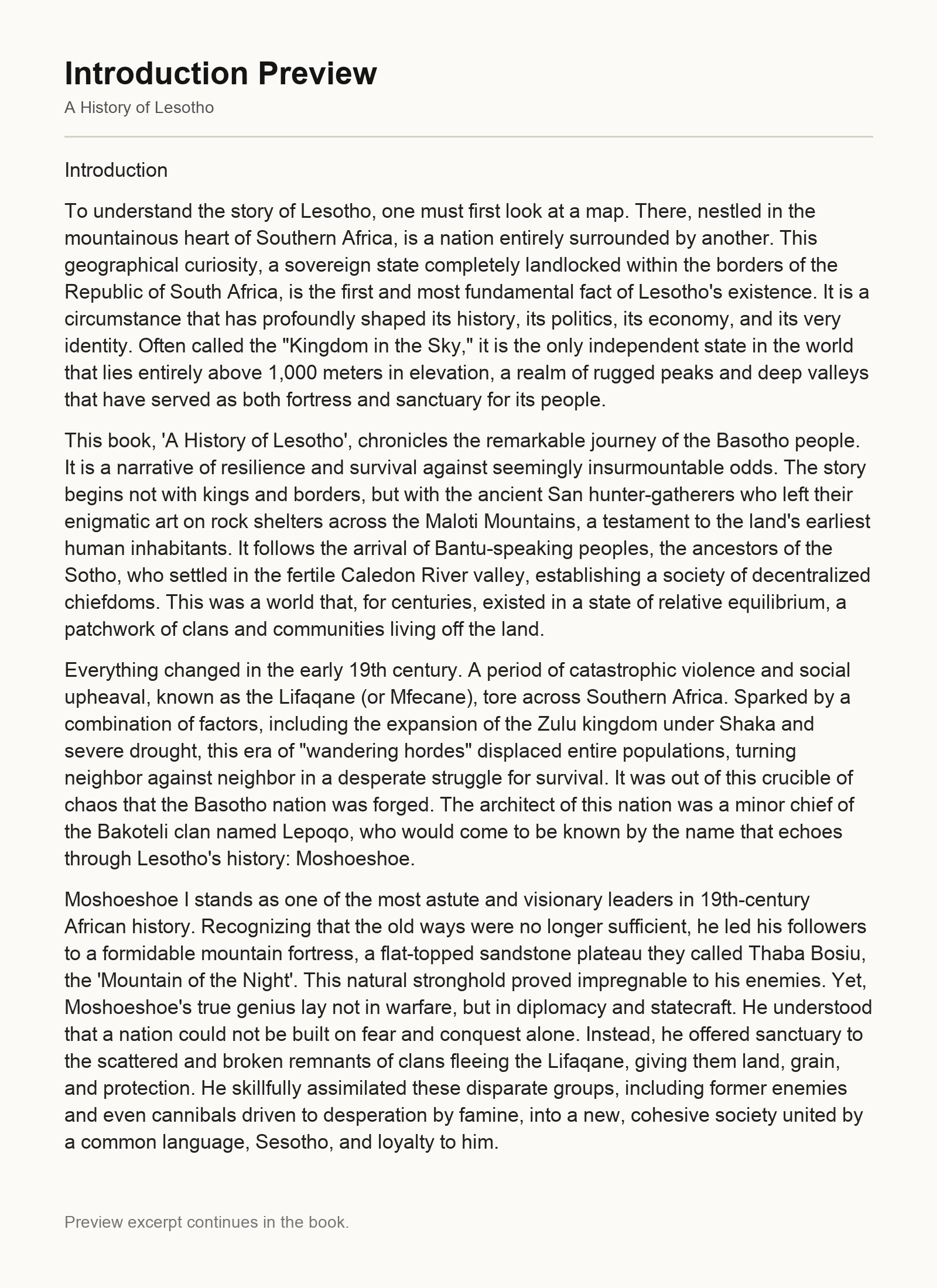
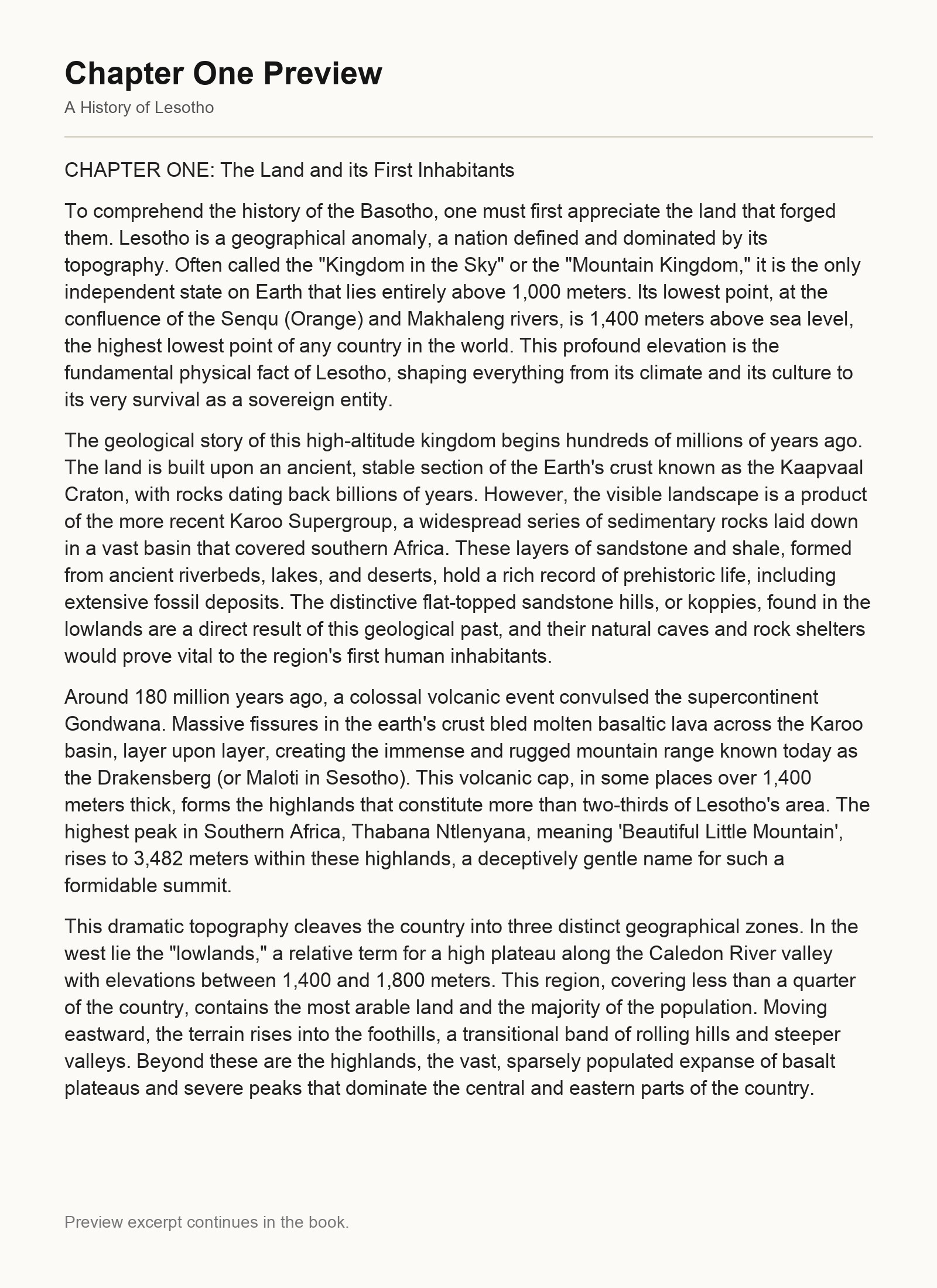
A History of Lesotho offers readers a sweeping journey through the rise and endurance of a nation forged in the mountains of Southern Africa. From the ancient San rock art that whispers of the land’s first inhabitants to the arrival of Bantu‑speaking Sotho peoples, the book traces the foundations of a society built on kinship, cattle, and spiritual reverence for ancestral spirits. Readers will discover how the devastation of the Lifaqane shattered old chiefdoms and gave rise to Moshoeshoe I, whose blend of fortress diplomacy, generous incorporation of refugees, and shrewd alliances with missionaries laid the groundwork for the Basotho nation.
The narrative follows the Basotho’s relentless struggle to retain sovereignty amid Boer expansion, British imperial maneuvers, and the recurring threat of incorporation into the Union of South Africa. Detailed chapters examine the Gun Wars, the establishment of the British protectorate, the tension between indirect rule and colonial administration, and the emergence of early political institutions like the Basutoland National Council and the Laws of Lerotholi. Readers will experience the internal dynamics of chieftainship, the impact of migrant labor, and the environmental and socio‑economic strains that shaped the kingdom’s path toward independence.
Independence in 1966 brought not euphoria but a fierce power struggle between the elected government and the monarchy, a conflict that echoed through coups, one‑party rule, and military interventions. The book walks the reader through the turbulent decades of Leabua Jonathan’s rule, the 1970 coup, the 1986 military takeover, the exile and return of Moshoeshoe II, and the fraught experiments with democracy that culminated in the 1993 restoration of multiparty politics. Readers will gain insight into how external pressures—from apartheid South Africa to global Cold War politics—intersected with internal struggles over land, identity, and governance.
Beyond politics, the work delves into the profound socio‑economic forces that define modern Lesotho. It explains the Lesotho Highlands Water Project as both a source of vital revenue and a catalyst for displacement and environmental change, the devastating HIV/AIDS epidemic and the nation’s remarkable response, and the ongoing struggle over land reform that seeks to balance customary tenure with modern market needs. The text also explores cultural resilience, illuminating the enduring symbols of the Mokorotlo hat, Basotho blanket, and Basotho pony, and the role of language, music, and dance in preserving a distinct national identity.
Finally, A History of Lesotho brings the story into the twenty‑first century, examining the kingdom’s foreign policy as it navigates dependence on South Africa, partnerships with China and Western donors, and the persistent quest for stable governance amid coalition politics and security‑sector challenges. Readers will finish the book with a deep appreciation of how geography, leadership, culture, and external forces have intertwined to shape a small but remarkable nation that continues to assert its place in the world. This comprehensive account equips readers with a nuanced understanding of Lesotho’s past, present, and the challenges that lie ahead.
What You'll Find Inside:
- Lesotho's unique geographical position as the world's only independent state entirely above 1,000 meters elevation, completely surrounded by South Africa, and how this 'Kingdom in the Sky' has fundamentally shaped its history, defense, and relationship with its powerful neighbor.
- The nation-building process under Moshoeshoe I during the Lifaqane crisis, including his strategic use of Thaba Bosiu as an impregnable fortress, his policy of sanctuary and incorporation of diverse refugee groups, and his diplomatic genius in balancing Boer and British threats.
- The century-long struggle for autonomy from colonial powers, detailing Lesotho's journey from Moshoeshoe's appeal for British protection in 1868, through periods under Cape Colony administration and the Gun War, to eventual independence in 1966 and the ongoing tension between sovereignty and economic dependence on South Africa.
- The turbulent post-independence political landscape marked by the 1970 coup that ended democracy, Leabua Jonathan's 16-year authoritarian rule, the 1986 military coup, cycles of military and civilian rule, and the persistent struggle between monarchy and elected government for power.
- Modern Lesotho's defining challenges: the Lesotho Highlands Water Project as both economic lifeline and source of social/environmental disruption, the devastating HIV/AIDS epidemic, land reform efforts to address gender inequality, and contemporary political instability characterized by coalition governments and security sector politicization.
Who's It For:
This book is essential reading for students and scholars of African history, particularly those focusing on Southern Africa or using Lesotho as a case study for broader themes in post-colonial state formation. It will also appeal to researchers interested in the dynamics of small states surrounded by powerful neighbors, the interplay between traditional authority and modern governance, and specific topics like the Lesotho Highlands Water Project or HIV/AIDS impact in developing nations. General readers with a serious interest in African democracy, authoritarianism, and cultural resilience will find valuable insights in this comprehensive historical account.
Table of Contents:
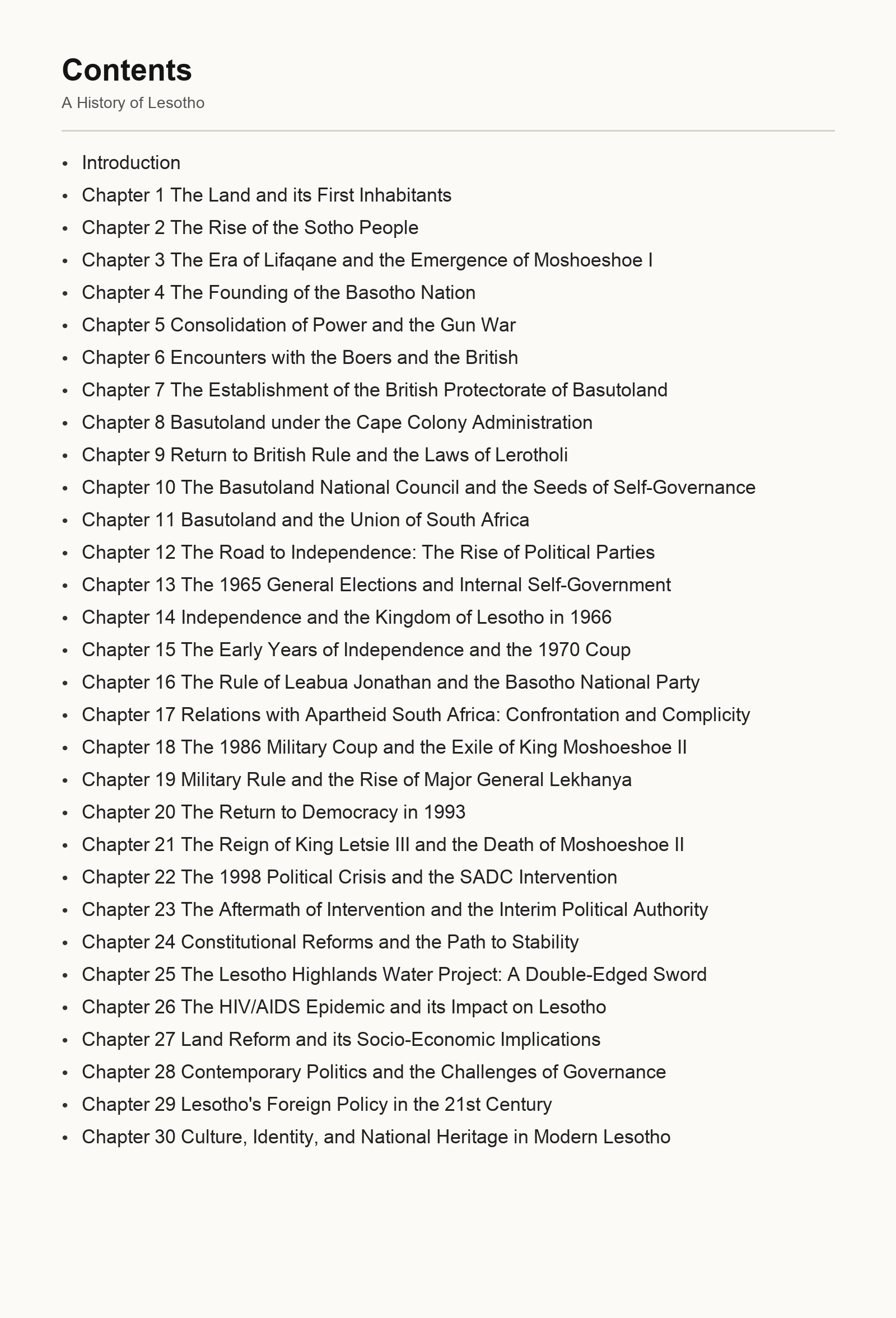
- Introduction
- Chapter 1 The Land and its First Inhabitants
- Chapter 2 The Rise of the Sotho People
- Chapter 3 The Era of Lifaqane and the Emergence of Moshoeshoe I
- Chapter 4 The Founding of the Basotho Nation
- Chapter 5 Consolidation of Power and the Gun War
- Chapter 6 Encounters with the Boers and the British
- Chapter 7 The Establishment of the British Protectorate of Basutoland
- Chapter 8 Basutoland under the Cape Colony Administration
- Chapter 9 Return to British Rule and the Laws of Lerotholi
- Chapter 10 The Basutoland National Council and the Seeds of Self-Governance
- Chapter 11 Basutoland and the Union of South Africa
- Chapter 12 The Road to Independence: The Rise of Political Parties
- Chapter 13 The 1965 General Elections and Internal Self-Government
- Chapter 14 Independence and the Kingdom of Lesotho in 1966
- Chapter 15 The Early Years of Independence and the 1970 Coup
- Chapter 16 The Rule of Leabua Jonathan and the Basotho National Party
- Chapter 17 Relations with Apartheid South Africa: Confrontation and Complicity
- Chapter 18 The 1986 Military Coup and the Exile of King Moshoeshoe II
- Chapter 19 Military Rule and the Rise of Major General Lekhanya
- Chapter 20 The Return to Democracy in 1993
- Chapter 21 The Reign of King Letsie III and the Death of Moshoeshoe II
- Chapter 22 The 1998 Political Crisis and the SADC Intervention
- Chapter 23 The Aftermath of Intervention and the Interim Political Authority
- Chapter 24 Constitutional Reforms and the Path to Stability
- Chapter 25 The Lesotho Highlands Water Project: A Double-Edged Sword
- Chapter 26 The HIV/AIDS Epidemic and its Impact on Lesotho
- Chapter 27 Land Reform and its Socio-Economic Implications
- Chapter 28 Contemporary Politics and the Challenges of Governance
- Chapter 29 Lesotho's Foreign Policy in the 21st Century
- Chapter 30 Culture, Identity, and National Heritage in Modern Lesotho
Author:
Published By:
Date Published:
May 16, 2026
Type:
Nonfiction
Language:
English
Word Count:
52,882 words
Reading Time:
3 hours 42 minutes
Sample:
Order:
Order A History of Lesotho (Paperback) on MixCache.com:
Buy NowPrint copy is made to order and ships worldwide. Includes the ebook free, ready to read instantly.
$5 account credit for all new MixCache.com accounts, usable toward any ebook purchase!*