Browse by Category
Fiction
- Action & Adventure
- African American
- Anthologies
- Children's Fiction
- Classics
- Comics & Graphic Novels
- Coming of Age
- Contemporary
- Cultural & Regional
- Drama
- Erotica
- Fantasy
- General
- Historical Fiction
- Horror
- Humor & Satire
- Literary Fiction
- Mystery, Thriller & Suspense
- Poetry
- Religious & Inspirational
- Romance
- Science Fiction
- Short Stories
- War & Military
- Westerns
- Women's Fiction
- Young Adult
Non-Fiction
- Antiques & Collectibles
- Arts & Photography
- Biographies & Memoirs
- Business & Money
- Children's Non-Fiction
-
Computers & Technology
- Artificial Intelligence
- Computer Science
- Cybersecurity & Cryptography
- Data Science & Analytics
- Databases & Big Data
- Game Development & Design
- General
- Hardware & DIY
- Mobile App Development
- Networking & Cloud Computing
- Operating Systems
- Programming
- Robotics
- Software
- Software Engineering
- User Experience (UX) & Design
- Web Development & Design
- Cooking, Food & Wine
- Crafts, Hobbies & Home
- Education & Teaching
- Engineering
- General
- Health, Fitness & Dieting
-
History
- African History
- African History - North Africa
- African History - Sub-Saharan Africa
- American History
- American History - 20th Century
- American History - Civil War
- American History - Colonial Period
- Ancient History
- Asian History
- Asian History - China
- Asian History - India
- Asian History - Japan
- Asian History - Southeast Asia
- European History
- European History - Ancient Greece
- European History - Ancient Rome
- European History - Medieval
- European History - Modern
- European History - Renaissance
- General
- Middle Eastern History
- Military History
- Military History - Aviation
- Military History - Naval
- Social & Cultural History
- World History
- Humor & Entertainment
- Industrial Technology
- Language Learning
- Law
- LGBTQ+ Non-Fiction
- Literary Criticism
- Medical Books
- Parenting & Relationships
- Philosophy
- Politics & Social Sciences
- Reference
- Religion & Spirituality
-
Science & Math
- Agricultural Sciences
- Astronomy & Space Science
- Behavioral Sciences
- Biological Sciences
- Botany & Plant Science
- Chemistry
- Earth Sciences
- Engineering - Chemical
- Engineering - Civil
- Engineering - Electrical
- Engineering - Mechanical
- Environment
- General
- Geology
- Mathematics
- Nature & Ecology
- Oceanography
- Paleontology
- Physics
- Statistics
- Self-Help
- Sports & Outdoors
- Study Aids
- Sustainability & Green Living
- Textbooks
- Transportation
- Travel
- True Crime
- Urban Planning & Development
- Veterinary Medicine
- Writing & Publishing
Jump to Section
MixCache.com Total Access
Unlimited reading and audiobooks for every book published by MixCache.com.
Included titles carry the MTA badge.
Learn more →
World War II
A History of The World's Greatest Conflict
About this book:
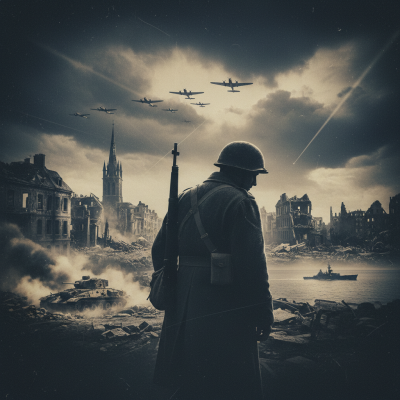
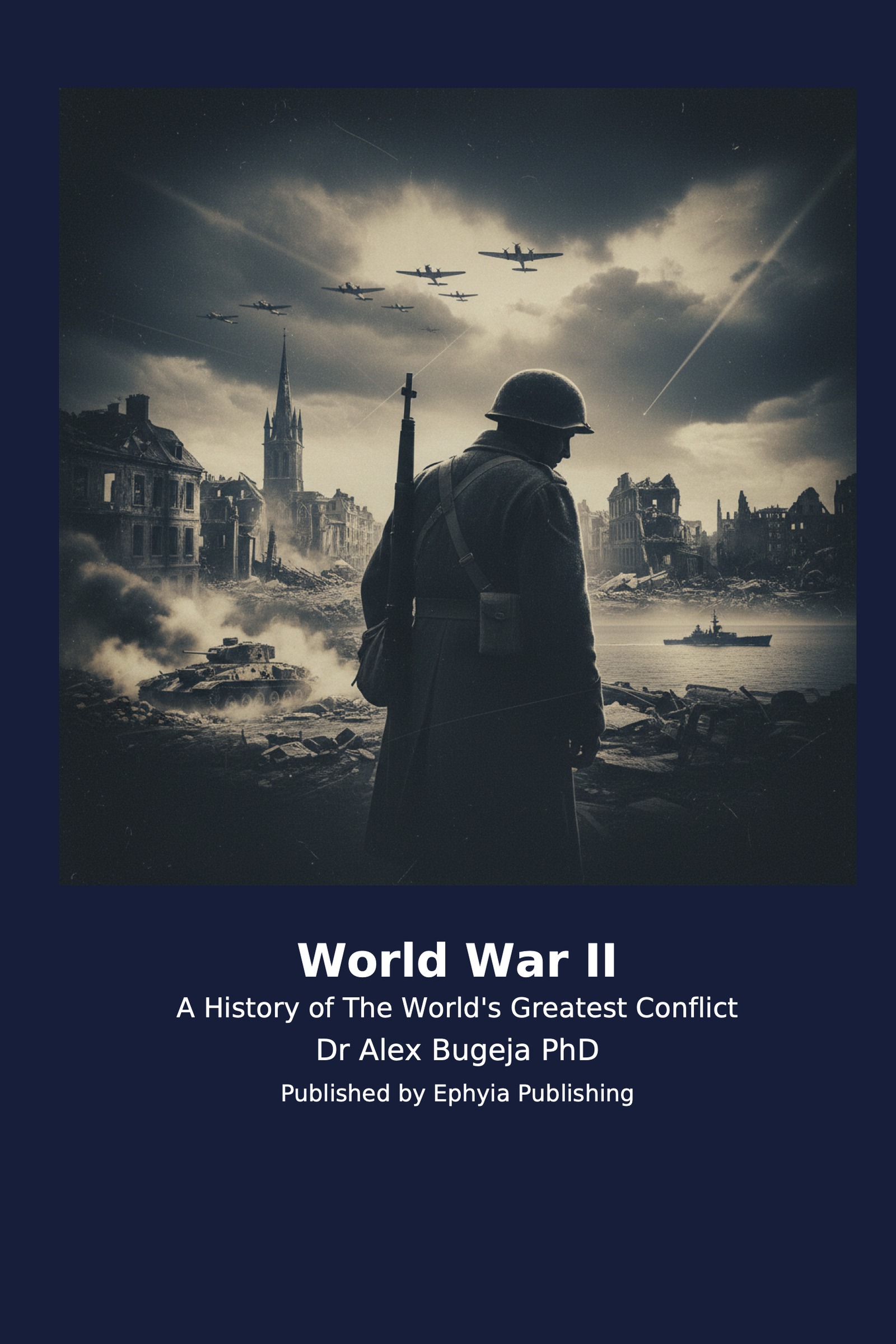
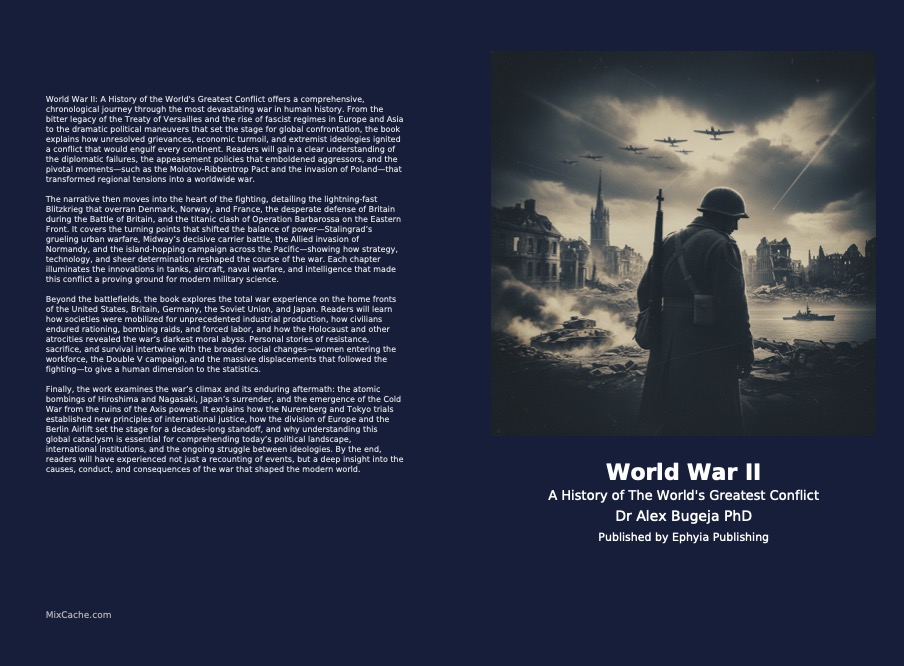
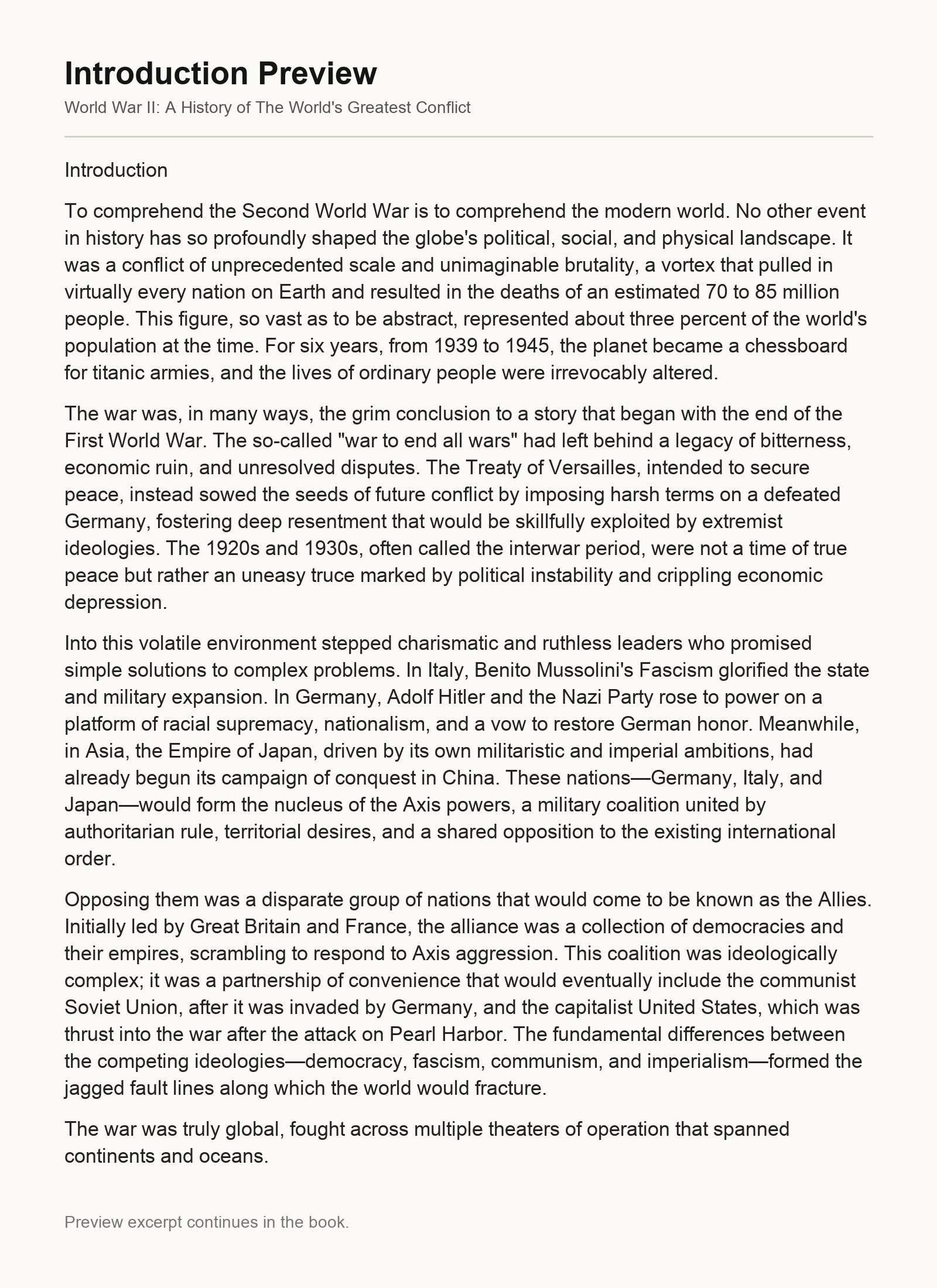
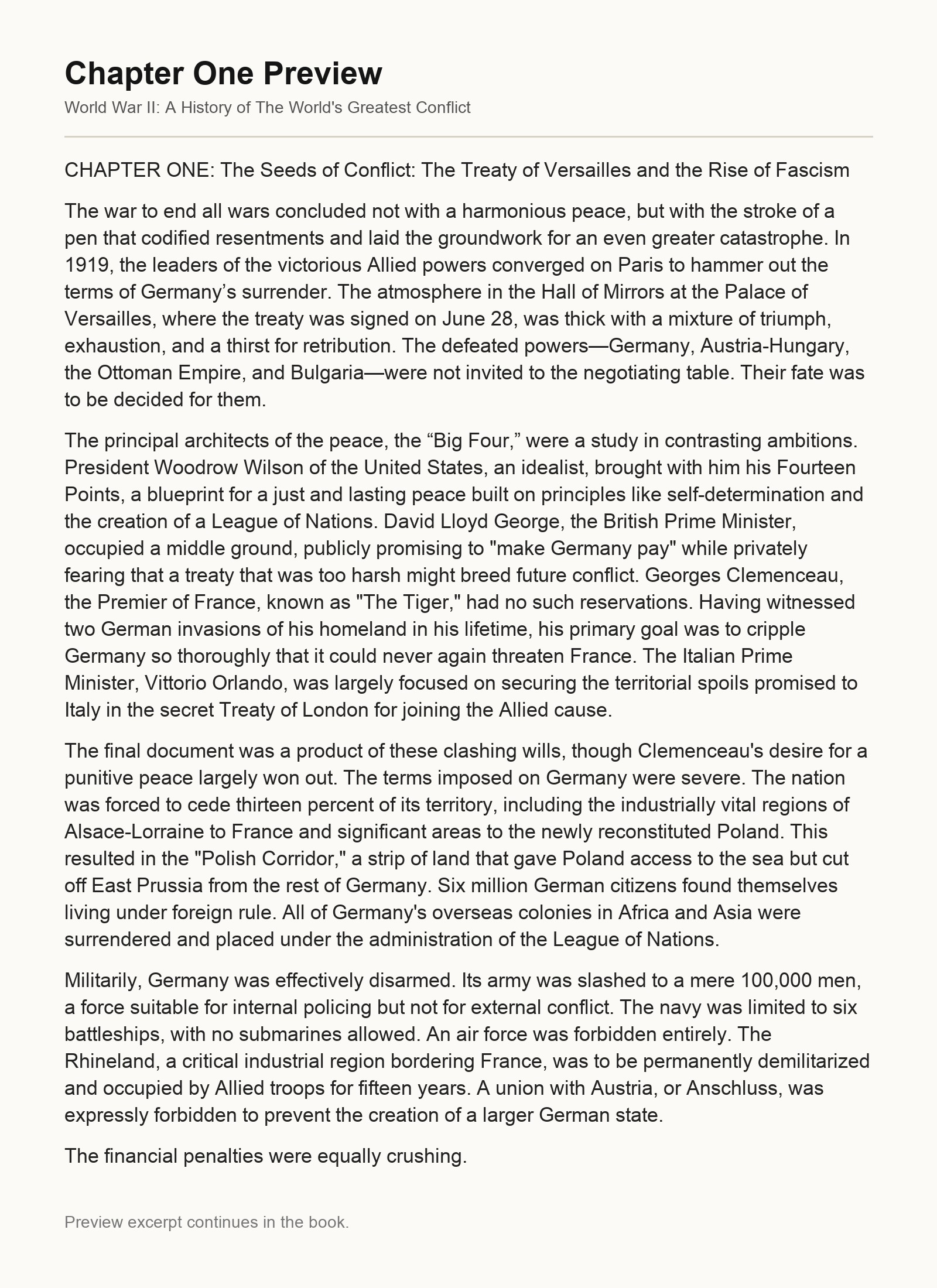
World War II: A History of the World's Greatest Conflict offers a comprehensive, chronological journey through the most devastating war in human history. From the bitter legacy of the Treaty of Versailles and the rise of fascist regimes in Europe and Asia to the dramatic political maneuvers that set the stage for global confrontation, the book explains how unresolved grievances, economic turmoil, and extremist ideologies ignited a conflict that would engulf every continent. Readers will gain a clear understanding of the diplomatic failures, the appeasement policies that emboldened aggressors, and the pivotal moments—such as the Molotov‑Ribbentrop Pact and the invasion of Poland—that transformed regional tensions into a worldwide war.
The narrative then moves into the heart of the fighting, detailing the lightning‑fast Blitzkrieg that overran Denmark, Norway, and France, the desperate defense of Britain during the Battle of Britain, and the titanic clash of Operation Barbarossa on the Eastern Front. It covers the turning points that shifted the balance of power—Stalingrad’s grueling urban warfare, Midway’s decisive carrier battle, the Allied invasion of Normandy, and the island‑hopping campaign across the Pacific—showing how strategy, technology, and sheer determination reshaped the course of the war. Each chapter illuminates the innovations in tanks, aircraft, naval warfare, and intelligence that made this conflict a proving ground for modern military science.
Beyond the battlefields, the book explores the total war experience on the home fronts of the United States, Britain, Germany, the Soviet Union, and Japan. Readers will learn how societies were mobilized for unprecedented industrial production, how civilians endured rationing, bombing raids, and forced labor, and how the Holocaust and other atrocities revealed the war’s darkest moral abyss. Personal stories of resistance, sacrifice, and survival intertwine with the broader social changes—women entering the workforce, the Double V campaign, and the massive displacements that followed the fighting—to give a human dimension to the statistics.
Finally, the work examines the war’s climax and its enduring aftermath: the atomic bombings of Hiroshima and Nagasaki, Japan’s surrender, and the emergence of the Cold War from the ruins of the Axis powers. It explains how the Nuremberg and Tokyo trials established new principles of international justice, how the division of Europe and the Berlin Airlift set the stage for a decades‑long standoff, and why understanding this global cataclysm is essential for comprehending today’s political landscape, international institutions, and the ongoing struggle between ideologies. By the end, readers will have experienced not just a recounting of events, but a deep insight into the causes, conduct, and consequences of the war that shaped the modern world.
What You'll Find Inside:
- The book examines how the Treaty of Versailles and economic turmoil created conditions for the rise of fascist regimes in Germany, Italy, and Japan.
- Detailed accounts of pivotal military turning points including Blitzkrieg tactics, the Battle of Britain, Stalingrad, Midway, and D-Day.
- Comprehensive coverage of the Holocaust and Nazi genocide, including the machinery of extermination and victim experiences.
- Analysis of how nations mobilized for total war, transforming economies, societies, and home fronts across all major combatants.
- Exploration of the war's aftermath, including the Nuremberg Trials, displaced persons crisis, and the origins of the Cold War.
Who's It For:
This book is ideal for students of 20th-century history, history enthusiasts seeking a comprehensive overview, and general readers who want to understand how World War II shaped the modern world. It provides both military detail and social/political context, making it suitable for academic study as well as personal enrichment. Educators will also find it a valuable reference for teaching about this pivotal conflict.
Table of Contents:
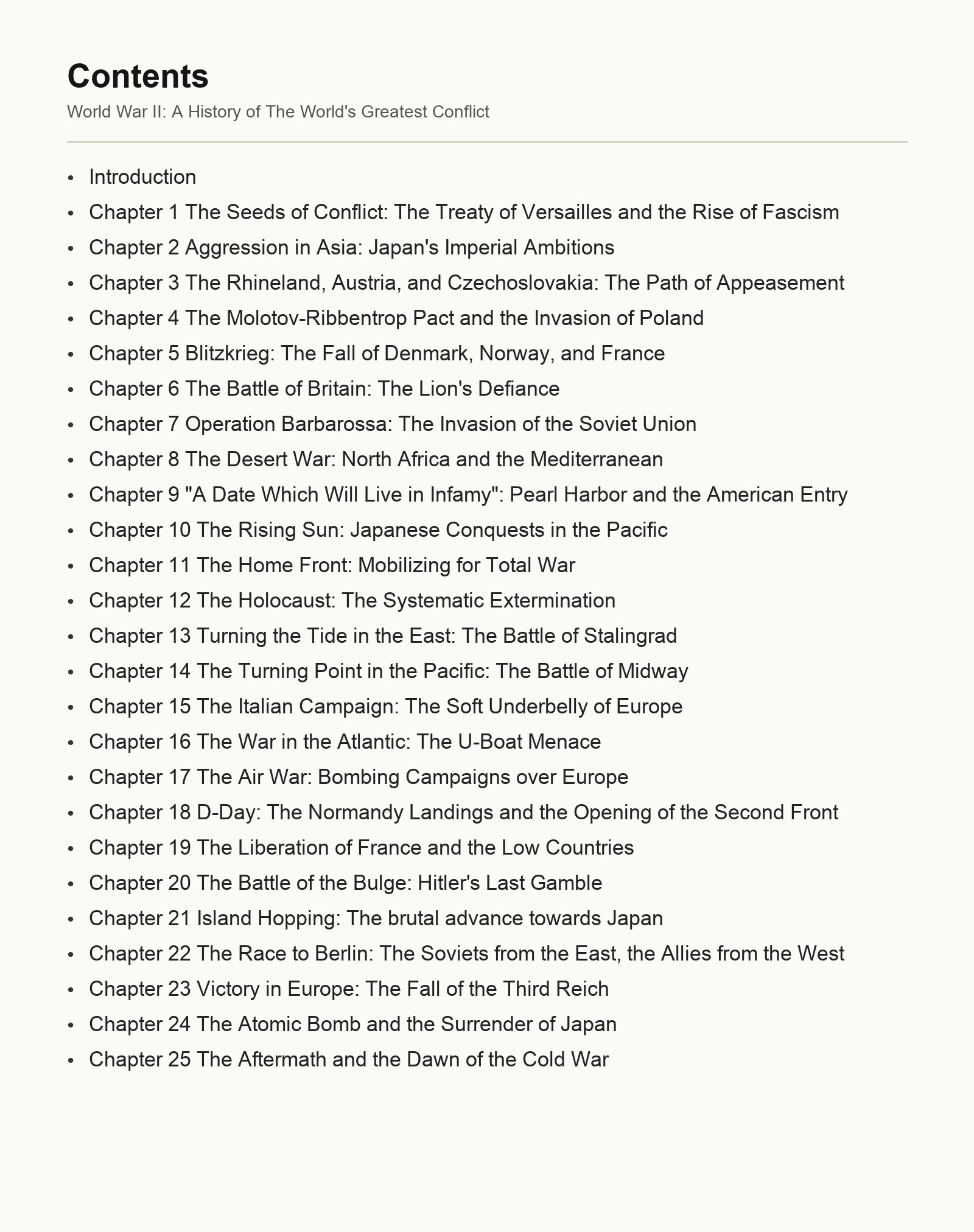
- Introduction
- Chapter 1 The Seeds of Conflict: The Treaty of Versailles and the Rise of Fascism
- Chapter 2 Aggression in Asia: Japan's Imperial Ambitions
- Chapter 3 The Rhineland, Austria, and Czechoslovakia: The Path of Appeasement
- Chapter 4 The Molotov-Ribbentrop Pact and the Invasion of Poland
- Chapter 5 Blitzkrieg: The Fall of Denmark, Norway, and France
- Chapter 6 The Battle of Britain: The Lion's Defiance
- Chapter 7 Operation Barbarossa: The Invasion of the Soviet Union
- Chapter 8 The Desert War: North Africa and the Mediterranean
- Chapter 9 "A Date Which Will Live in Infamy": Pearl Harbor and the American Entry
- Chapter 10 The Rising Sun: Japanese Conquests in the Pacific
- Chapter 11 The Home Front: Mobilizing for Total War
- Chapter 12 The Holocaust: The Systematic Extermination
- Chapter 13 Turning the Tide in the East: The Battle of Stalingrad
- Chapter 14 The Turning Point in the Pacific: The Battle of Midway
- Chapter 15 The Italian Campaign: The Soft Underbelly of Europe
- Chapter 16 The War in the Atlantic: The U-Boat Menace
- Chapter 17 The Air War: Bombing Campaigns over Europe
- Chapter 18 D-Day: The Normandy Landings and the Opening of the Second Front
- Chapter 19 The Liberation of France and the Low Countries
- Chapter 20 The Battle of the Bulge: Hitler's Last Gamble
- Chapter 21 Island Hopping: The brutal advance towards Japan
- Chapter 22 The Race to Berlin: The Soviets from the East, the Allies from the West
- Chapter 23 Victory in Europe: The Fall of the Third Reich
- Chapter 24 The Atomic Bomb and the Surrender of Japan
- Chapter 25 The Aftermath and the Dawn of the Cold War
Author:
Published By:
Date Published:
May 16, 2026
Type:
Nonfiction
Language:
English
Also Available In:
Word Count:
52,084 words
Reading Time:
3 hours 39 minutes
Sample:
Order:
Order World War II (Hardcover) on MixCache.com:
Buy NowPrint copy is made to order and ships worldwide. Includes the ebook free, ready to read instantly.
$5 account credit for all new MixCache.com accounts, usable toward any ebook purchase!*