Browse by Category
Fiction
- Action & Adventure
- African American
- Anthologies
- Children's Fiction
- Classics
- Comics & Graphic Novels
- Coming of Age
- Contemporary
- Cultural & Regional
- Drama
- Erotica
- Fantasy
- General
- Historical Fiction
- Horror
- Humor & Satire
- Literary Fiction
- Mystery, Thriller & Suspense
- Poetry
- Religious & Inspirational
- Romance
- Science Fiction
- Short Stories
- War & Military
- Westerns
- Women's Fiction
- Young Adult
Non-Fiction
- Antiques & Collectibles
- Arts & Photography
- Biographies & Memoirs
- Business & Money
- Children's Non-Fiction
-
Computers & Technology
- Artificial Intelligence
- Computer Science
- Cybersecurity & Cryptography
- Data Science & Analytics
- Databases & Big Data
- Game Development & Design
- General
- Hardware & DIY
- Mobile App Development
- Networking & Cloud Computing
- Operating Systems
- Programming
- Robotics
- Software
- Software Engineering
- User Experience (UX) & Design
- Web Development & Design
- Cooking, Food & Wine
- Crafts, Hobbies & Home
- Education & Teaching
- Engineering
- General
- Health, Fitness & Dieting
-
History
- African History
- African History - North Africa
- African History - Sub-Saharan Africa
- American History
- American History - 20th Century
- American History - Civil War
- American History - Colonial Period
- Ancient History
- Asian History
- Asian History - China
- Asian History - India
- Asian History - Japan
- Asian History - Southeast Asia
- European History
- European History - Ancient Greece
- European History - Ancient Rome
- European History - Medieval
- European History - Modern
- European History - Renaissance
- General
- Middle Eastern History
- Military History
- Military History - Aviation
- Military History - Naval
- Social & Cultural History
- World History
- Humor & Entertainment
- Industrial Technology
- Language Learning
- Law
- LGBTQ+ Non-Fiction
- Literary Criticism
- Medical Books
- Parenting & Relationships
- Philosophy
- Politics & Social Sciences
- Reference
- Religion & Spirituality
-
Science & Math
- Agricultural Sciences
- Astronomy & Space Science
- Behavioral Sciences
- Biological Sciences
- Botany & Plant Science
- Chemistry
- Earth Sciences
- Engineering - Chemical
- Engineering - Civil
- Engineering - Electrical
- Engineering - Mechanical
- Environment
- General
- Geology
- Mathematics
- Nature & Ecology
- Oceanography
- Paleontology
- Physics
- Statistics
- Self-Help
- Sports & Outdoors
- Study Aids
- Sustainability & Green Living
- Textbooks
- Transportation
- Travel
- True Crime
- Urban Planning & Development
- Veterinary Medicine
- Writing & Publishing
Jump to Section
MixCache.com Total Access
Unlimited reading and audiobooks for every book published by MixCache.com.
Included titles carry the MTA badge.
Learn more →
Cultural Revolution in Local Eyes: Class Struggle, Memory, and Rehabilitation
MTA
Microhistories of villages, schools, and factories during and after the Cultural Revolution
About this book:
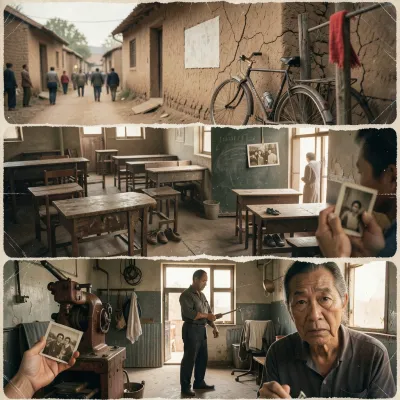
*Cultural Revolution in Local Eyes* explores the complex legacy of the decade of upheaval (1966–1976) by shifting the focus from national political figures to the granular experiences of ordinary people in villages, schools, factories, and borderlands. Utilizing local archives, personal dossiers, and oral testimonies, the book reconstructs how state-mandated class struggle was translated into daily life. It details the "making and unmaking" of political labels, the ritualized violence of rural struggle sessions, and the factionalization of urban institutions. By centering microhistories, the narrative reveals how local power dynamics and kinship networks often mediated, blunted, or weaponized central directives, turning abstract ideology into deeply personal conflicts over resources, status, and survival.
The book moves beyond the period of chaos to examine the long, bureaucratic process of rehabilitation and reconciliation following Mao’s death. It scrutinizes the "paper lives" of citizens, showing how the *danwei* (work unit) and personal dossiers governed mobility and identity well into the reform era. Chapters on the restoration of the national examination system in 1977 and the transition to a market economy illustrate the "transmission gap" of knowledge and the uneven restoration of professional expertise. The text highlights a "hierarchy of rehabilitation," where senior cadres often regained their status while ordinary peasants and workers faced significant obstacles in seeking redress or compensation for lost years and confiscated property.
A significant portion of the work is dedicated to the persistence of memory and the social "architecture of distrust" that survived the movement. It explores the gendered dimensions of labor and the specific persecution faced by ethnic minorities in borderland counties, where cultural erasure was often total. The book contrasts the official state narrative—which seeks to contain the revolution’s history within a framework of "individual errors"—with the private "kitchen archives" of families. Through stories told in whispers and the preservation of hidden artifacts, the text shows how intergenerational trauma is transmitted through silences and subtle behavioral cues, such as a learned reflex of political caution.
Ultimately, the book argues that the Cultural Revolution remains an "unfinished chronicle" in the Chinese landscape. Despite the demolition of revolutionary monuments and the redevelopment of sites of violence, the era’s impact persists in contemporary social hierarchies and interpersonal trust. By examining the limits of legal redress and the selective nature of local gazetteers, the book concludes that the revolution's deepest legacy is not found in public memorials, but in the enduring dispositions of the people who lived through it. The narrative suggests that while the "iron rice bowl" has been broken by market reforms, the scars of political classification continue to influence the distribution of opportunity and the texture of civic life in modern China.
What You'll Find Inside:
- The book presents microhistories of villages, schools, and factories to show how Cultural Revolution policies were enacted, contested, and remembered at the local level, revealing the gap between national directives and local improvisations.
- It examines how class labels (the 'Five Categories') functioned as lived practice, affecting marriage prospects, work opportunities, social standing, and intergenerational transmission of advantage or disadvantage long after official classifications were abolished.
- The book documents the mechanics and variations of village struggle sessions, including their official scripts, physical staging, deviations from protocol, and the lasting social knowledge these sessions produced in communities.
- It traces the experiences of sent-down youth (zhiqing) relocated to the countryside and their complex returns, highlighting the personal, educational, and social impacts of this massive migration on individuals and communities.
- The book analyzes the long rehabilitation process after 1976, including petitions, procedural reviews, precedents set, and the persistent limits of redress that left many harms unacknowledged despite formal reversals of classifications.
Who's It For:
This book is intended for scholars and students of modern Chinese history, particularly those interested in the Cultural Revolution, microhistory, and oral history methodologies. It will also appeal to researchers in sociology, anthropology, and political science studying mass movements, social memory, and the long-term impacts of political campaigns. The detailed archival research and focus on everyday experiences make it valuable for anyone seeking to understand how major historical events were lived and remembered by ordinary people across different regions and social contexts in China.
Table of Contents:
- Introduction
- Chapter 1 Mapping the Local: Archives, Testimony, and Microhistory
- Chapter 2 Class Labels at Street Level: Making and Unmaking the “Five Categories”
- Chapter 3 Village Struggle Sessions: Scripts, Stages, and Deviations
- Chapter 4 School Revolution: Red Guards, Rebel Factions, and the Politics of Youth
- Chapter 5 Factory Floors Under Siege: Production, Politics, and Safety
- Chapter 6 Women’s Work and the Gendered Everyday
- Chapter 7 The Sent-Down and the Return: Migration, Belonging, and Loss
- Chapter 8 Faith, Ancestry, and Space: Temples, Ancestral Halls, and Secularization
- Chapter 9 Borderland Translations: Minority Counties and Local Cadres
- Chapter 10 Rations, Queues, and Subsistence: The Economy of Daily Life
- Chapter 11 Rumors, Posters, and Soundscapes of the Street
- Chapter 12 Dossiers and Danwei: The Paper Lives of Ordinary People
- Chapter 13 Violence and Restraint: Policing the Periphery
- Chapter 14 Interrupted Schooling, Restored Examinations: 1977 and After
- Chapter 15 One Market Town, 1966–1969: A Chronology from Below
- Chapter 16 Families Divided: Kinship, Marriage, and Class
- Chapter 17 Rehabilitation After 1976: Petitions, Procedures, Precedents
- Chapter 18 Cadres, Accountability, and Return to Office
- Chapter 19 Writing the Past: County Gazetteers and Local Historiography
- Chapter 20 Courts, Compensation, and the Limits of Redress
- Chapter 21 Factories in Transition: Contracting and the Fate of the Work Unit
- Chapter 22 Knowledge Restored: Teachers, Engineers, and Expertise
- Chapter 23 Memorials, Museums, and Spaces of Silence
- Chapter 24 Remembering at Home: Intergenerational Memory and Transmission
- Chapter 25 Legacies Today: Class, Trust, and Civic Life
Author:
Published By:
Date Published:
May 15, 2026
Type:
Nonfiction
Language:
English
Word Count:
99,203 words
Reading Time:
6 hours 57 minutes
Sample:
Order:
Order Cultural Revolution in Local Eyes: Class Struggle, Memory, and Rehabilitation (Paperback) on MixCache.com:
Buy NowPrint copy is made to order and ships worldwide. Includes the ebook free, ready to read instantly.
$5 account credit for all new MixCache.com accounts, usable toward any ebook purchase!*