
Browse by Category
Fiction
- Action & Adventure
- African American
- Anthologies
- Children's Fiction
- Classics
- Comics & Graphic Novels
- Coming of Age
- Contemporary
- Cultural & Regional
- Drama
- Erotica
- Fantasy
- General
- Historical Fiction
- Horror
- Humor & Satire
- Literary Fiction
- Mystery, Thriller & Suspense
- Poetry
- Religious & Inspirational
- Romance
- Science Fiction
- Short Stories
- War & Military
- Westerns
- Women's Fiction
- Young Adult
Non-Fiction
- Antiques & Collectibles
- Arts & Photography
- Biographies & Memoirs
- Business & Money
- Children's Non-Fiction
-
Computers & Technology
- Artificial Intelligence
- Computer Science
- Cybersecurity & Cryptography
- Data Science & Analytics
- Databases & Big Data
- Game Development & Design
- General
- Hardware & DIY
- Mobile App Development
- Networking & Cloud Computing
- Operating Systems
- Programming
- Robotics
- Software
- Software Engineering
- User Experience (UX) & Design
- Web Development & Design
- Cooking, Food & Wine
- Crafts, Hobbies & Home
- Education & Teaching
- Engineering
- General
- Health, Fitness & Dieting
-
History
- African History
- African History - North Africa
- African History - Sub-Saharan Africa
- American History
- American History - 20th Century
- American History - Civil War
- American History - Colonial Period
- Ancient History
- Asian History
- Asian History - China
- Asian History - India
- Asian History - Japan
- Asian History - Southeast Asia
- European History
- European History - Ancient Greece
- European History - Ancient Rome
- European History - Medieval
- European History - Modern
- European History - Renaissance
- General
- Middle Eastern History
- Military History
- Military History - Aviation
- Military History - Naval
- Social & Cultural History
- World History
- Humor & Entertainment
- Industrial Technology
- Language Learning
- Law
- LGBTQ+ Non-Fiction
- Literary Criticism
- Medical Books
- Parenting & Relationships
- Philosophy
- Politics & Social Sciences
- Reference
- Religion & Spirituality
-
Science & Math
- Agricultural Sciences
- Astronomy & Space Science
- Behavioral Sciences
- Biological Sciences
- Botany & Plant Science
- Chemistry
- Earth Sciences
- Engineering - Chemical
- Engineering - Civil
- Engineering - Electrical
- Engineering - Mechanical
- Environment
- General
- Geology
- Mathematics
- Nature & Ecology
- Oceanography
- Paleontology
- Physics
- Statistics
- Self-Help
- Sports & Outdoors
- Study Aids
- Sustainability & Green Living
- Textbooks
- Transportation
- Travel
- True Crime
- Urban Planning & Development
- Veterinary Medicine
- Writing & Publishing
Jump to Section
MixCache.com Total Access
Unlimited reading and audiobooks for every book published by MixCache.com.
Included titles carry the MTA badge.
Learn more →
Paper, Print, and Power: Intellectual History and the Rise of Chinese Thought
MTA
How print culture, education, and intellectual networks shaped political and cultural change from Han to Republican China
About this book:
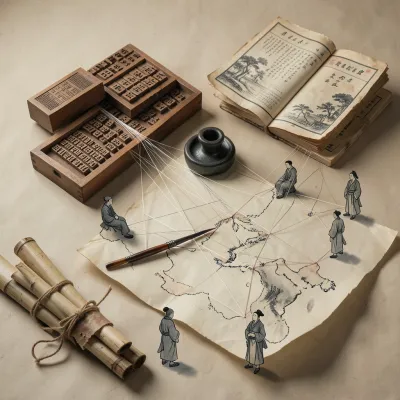
*Paper, Print, and Power* offers a comprehensive intellectual history of China by tracing the co-evolution of information technology and political authority. It argues that China’s history cannot be understood apart from its media, starting with the Han invention of paper, which allowed for a scale of bureaucratic governance and classical commentary that earlier bamboo and silk media could not sustain. The narrative moves through the Tang dynasty’s scriptoria and the Song dynasty’s woodblock printing revolution, showing how these technologies standardized the Confucian canon and facilitated the rise of the civil service examination system, which linked literacy to social mobility and state orthodoxy.
The book explores the dual nature of print as both a tool for state control—evident in imperial censorship and literary inquisitions—and a vehicle for dissent. It highlights how private academies, religious communities, and even marginalized groups like women utilized the page to create "markets of the mind" and private networks of knowledge. Technical innovations such as movable type and lithography are analyzed not just as mechanical milestones, but as shifts in the materiality of knowledge that altered how readers perceived textual authority and authenticity.
The later chapters focus on the seismic shifts of the late Qing and early Republican eras. The arrival of Western printing technologies and the treaty-port nexus in Shanghai accelerated the decline of the classical examination system and the birth of modern journalism and textbooks. This "vernacular turn" democratized literacy and enabled a new generation of intellectuals to use pamphlets, magazines, and satirical essays to mobilize the public for reform and eventual revolution in 1911.
Ultimately, the work concludes that the struggle over the page—who writes, what is printed, and how it is distributed—remains the central coordinate of Chinese power. By tracking the transition from the imperial archive to the digital landscape, the book demonstrates that while technologies like the smartphone have replaced the woodblock, the fundamental tension between state-controlled orthodoxy and the subversive potential of the written word remains a defining feature of Chinese civilization.
What You'll Find Inside:
- How paper's invention enabled imperial bureaucracy and scholarly commentary systems from Han through Tang dynasties, transforming administrative capacity and intellectual networks
- The Song print revolution's creation of urban reading publics and its symbiotic relationship with the examination system, driving both social mobility and knowledge standardization
- How Neo-Confucian curricula and academy institutions used printed commentaries to establish educational orthodoxy while facilitating philosophical debate across centuries
- The ongoing tension between state censorship mechanisms and dissident print culture, from literary inquisitions to revolutionary pamphlets that circumvented control through allegory and vernacular forms
- The transformation of Chinese literacy from classical Chinese to vernacular print in the 20th century, democratizing access to political discourse and reshaping national identity
Who's It For:
This book is ideal for students and scholars of Chinese intellectual history, media studies, and the history of education. It will particularly benefit readers interested in how technological innovations in paper and print interacted with bureaucratic systems, examination culture, and social movements across two millennia of Chinese history. Researchers examining the relationship between information infrastructure and political power will find valuable insights into China's unique trajectory from imperial bureaucracy to revolutionary modernity.
Table of Contents:
- Introduction
- Chapter 1 Paper and Empire: The Han Invention and Bureaucratic Knowledge
- Chapter 2 Canon and Commentary: Authority after the Classics
- Chapter 3 Scribes, Sutras, and the Buddhist Book
- Chapter 4 Tang Scriptoria and the Early Examination State
- Chapter 5 The Song Print Revolution and Urban Reading Publics
- Chapter 6 Neo-Confucian Curriculum and the Rise of Academies
- Chapter 7 Movable Type and the Materiality of Knowledge
- Chapter 8 Markets of the Mind: Bookshops, Libraries, and Private Collections
- Chapter 9 Testing the Empire: Examinations, Standardization, and Social Mobility
- Chapter 10 Orthodoxy and Dissent: Censorship, Inquisition, and Literary Politics
- Chapter 11 Gendering the Page: Women, Family Publishing, and Literacy
- Chapter 12 Evidential Learning: Philology, Proof, and Critical Method
- Chapter 13 Statecraft Writing: Governing the Realm on Paper
- Chapter 14 Religion in Print: Canons, Tracts, and Moral Persuasion
- Chapter 15 Borderlands and Scripts: Manchu, Mongolian, Tibetan, and Multilingual China
- Chapter 16 Treaty Ports and the Commercial Press
- Chapter 17 Missionary Print, Translation, and the Sciences
- Chapter 18 Curricula Remade: Textbooks and the End of the Exams, 1860–1905
- Chapter 19 Pamphlets and Prophecy: Reform, Revolution, and the 1911 Break
- Chapter 20 The Vernacular Turn: Journals, Magazines, and New Readers
- Chapter 21 Universities and Youth: May Fourth and the Politics of Knowledge
- Chapter 22 Dissenting Essays: Polemic, Satire, and Public Morality
- Chapter 23 Networks and Nodes: Publishers, Societies, and the Shanghai Nexus
- Chapter 24 Media Infrastructures: Lithography, Telegraphy, Post, and Mobilization
- Chapter 25 Conclusion: Paper, Print, and Power from Late Qing to Republican Futures
Author:
Published By:
Date Published:
May 14, 2026
Type:
Nonfiction
Language:
English
Word Count:
70,415 words
Reading Time:
4 hours 56 minutes
Sample:
MixCache.com Total Access
Get unlimited access to this book + all books published by MixCache.com for $11.99/month
Subscribe to MTAOr purchase this book individually below
Order:
Buy the Paper, Print, and Power: Intellectual History and the Rise of Chinese Thought ebook on MixCache.com:
Buy Now
Full ebook will be available immediately
- read online or download as a PDF file.
$5 account credit for all new MixCache.com accounts, usable toward any ebook purchase!*




Ratings & Reviews
Ask Questions About This Book
Have a question about the content? Ask our AI assistant!
Start by asking a question about "Paper, Print, and Power: Intellectual History and the Rise of Chinese Thought"
Example: "Does this book mention William Shakespeare?"
Thinking...