
Browse by Category
Fiction
- Action & Adventure
- African American
- Anthologies
- Children's Fiction
- Classics
- Comics & Graphic Novels
- Coming of Age
- Contemporary
- Cultural & Regional
- Drama
- Erotica
- Fantasy
- General
- Historical Fiction
- Horror
- Humor & Satire
- Literary Fiction
- Mystery, Thriller & Suspense
- Poetry
- Religious & Inspirational
- Romance
- Science Fiction
- Short Stories
- War & Military
- Westerns
- Women's Fiction
- Young Adult
Non-Fiction
- Antiques & Collectibles
- Arts & Photography
- Biographies & Memoirs
- Business & Money
- Children's Non-Fiction
-
Computers & Technology
- Artificial Intelligence
- Computer Science
- Cybersecurity & Cryptography
- Data Science & Analytics
- Databases & Big Data
- Game Development & Design
- General
- Hardware & DIY
- Mobile App Development
- Networking & Cloud Computing
- Operating Systems
- Programming
- Robotics
- Software
- Software Engineering
- User Experience (UX) & Design
- Web Development & Design
- Cooking, Food & Wine
- Crafts, Hobbies & Home
- Education & Teaching
- Engineering
- General
- Health, Fitness & Dieting
-
History
- African History
- African History - North Africa
- African History - Sub-Saharan Africa
- American History
- American History - 20th Century
- American History - Civil War
- American History - Colonial Period
- Ancient History
- Asian History
- Asian History - China
- Asian History - India
- Asian History - Japan
- Asian History - Southeast Asia
- European History
- European History - Ancient Greece
- European History - Ancient Rome
- European History - Medieval
- European History - Modern
- European History - Renaissance
- General
- Middle Eastern History
- Military History
- Military History - Aviation
- Military History - Naval
- Social & Cultural History
- World History
- Humor & Entertainment
- Industrial Technology
- Language Learning
- Law
- LGBTQ+ Non-Fiction
- Literary Criticism
- Medical Books
- Parenting & Relationships
- Philosophy
- Politics & Social Sciences
- Reference
- Religion & Spirituality
-
Science & Math
- Agricultural Sciences
- Astronomy & Space Science
- Behavioral Sciences
- Biological Sciences
- Botany & Plant Science
- Chemistry
- Earth Sciences
- Engineering - Chemical
- Engineering - Civil
- Engineering - Electrical
- Engineering - Mechanical
- Environment
- General
- Geology
- Mathematics
- Nature & Ecology
- Oceanography
- Paleontology
- Physics
- Statistics
- Self-Help
- Sports & Outdoors
- Study Aids
- Sustainability & Green Living
- Textbooks
- Transportation
- Travel
- True Crime
- Urban Planning & Development
- Veterinary Medicine
- Writing & Publishing
Jump to Section
MixCache.com Total Access
Unlimited reading and audiobooks for every book published by MixCache.com.
Included titles carry the MTA badge.
Learn more →
Museum of Memory: Memorialization, Monuments, and the Cultural Politics of War
MTA
How Societies Remember, Contest, and Teach Wartime Histories
About this book:
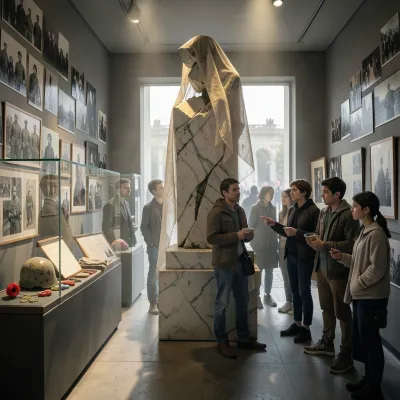
*Museum of Memory: Memorialization, Monuments, and the Cultural Politics of War* explores the multifaceted ways societies grapple with, remember, and teach wartime histories. The book argues that public memory is never neutral, but rather a constantly negotiated and contested arena shaped by institutions, rituals, laws, and cultural practices. It moves beyond a simple understanding of war's end, positing that conflict continues to resonate in stories, physical markers, and the collective consciousness, profoundly influencing national identity and future societal development. The author examines how different societies construct narratives of grief, pride, blame, and hope through comparative case studies spanning battlefields, cities, classrooms, and digital platforms.
The book delves into specific mechanisms of memory-making, beginning with monuments as fixed assertions of national narratives. It then expands to museums as storytellers, curating conflict through artifacts and exhibitions, and the diverse rituals of remembrance, including ceremonies and moments of silence. A significant portion is dedicated to "counter-memorials," artistic and activist interventions that challenge official narratives by embracing ephemerality, participation, and dissent. The text also investigates the legal frameworks governing historical discourse, known as "memory laws," and the critical role of education in shaping how difficult histories are transmitted to younger generations.
Further chapters explore the ethical complexities of representing trauma and witness testimony, the historically marginalized "gendered memories" of women in war, and the intricate relationship between race, empire, and colonial archives. The author examines the phenomena of "iconoclasm" and "statue wars," where public monuments become flashpoints for debates about historical justice and contested heritage. The book then moves into the spatial dimensions of memory, analyzing cemeteries and battlefields as "landscapes of loss" and the burgeoning field of "dark tourism." It also considers the profound significance of "names, lists, and the politics of counting the dead," along with the unique challenges of "diaspora, exile, and transnational remembrance."
Concluding chapters address the deep entanglement of religion and sacred memory in understanding wartime suffering, and the pervasive influence of media, film, and digital technologies on popularizing and shaping historical narratives, from traditional news to hashtags and holograms. It highlights the crucial role of "youth, protest, and mnemonic activism" in challenging established memories and driving demands for change. Finally, the book contemplates the "futures of remembering," exploring concepts of repair, imagination, and peace as societies strive to move beyond acknowledgment towards genuine reconciliation and the building of more just and inclusive memoryscapes, emphasizing that how the past is remembered is inextricably linked to the kind of future a society can envision.
What You'll Find Inside:
- The book examines how societies construct collective memory of war through diverse mechanisms including monuments, museums, rituals, education, and digital media, revealing the political nature of remembrance.
- It explores counter-memorials and artistic dissent that challenge official narratives, demonstrating how marginalized communities reclaim suppressed histories.
- The text analyzes the ethics of representing trauma and atrocity, questioning who has the authority to depict suffering and how to balance documentation with dignity.
- It investigates transnational dimensions of memory through diaspora communities, colonial archives, and global reckonings with imperial violence.
- The book considers contemporary challenges and futures of memory, including digital memorialization, youth activism, restitution debates, and approaches to repair and reconciliation.
Who's It For:
This book is essential reading for scholars and students in history, memory studies, museum studies, anthropology, and transitional justice who seek to understand how societies construct, contest, and teach wartime histories. It will also be valuable for museum curators, educators, policymakers, and professionals working in memorialization, heritage management, or post-conflict reconciliation who need to navigate the ethical and political complexities of representing difficult pasts. Anyone interested in the politics of memory, particularly how nations remember war and its implications for identity and justice, will find this interdisciplinary work illuminating.
Table of Contents:
- Introduction
- Chapter 1 The Afterlives of War: From Event to Memory
- Chapter 2 Monuments and the Making of National Narratives
- Chapter 3 Museums as Storytellers: Curating Conflict
- Chapter 4 Rituals of Remembrance: Ceremonies, Anniversaries, and Silence
- Chapter 5 Counter-Memorials and the Art of Dissent
- Chapter 6 Memory Laws and the Governance of the Past
- Chapter 7 Education and the Classroom: Teaching Difficult Histories
- Chapter 8 Trauma, Witness, and the Ethics of Representation
- Chapter 9 Gendered Memories: Women, War, and the Home Front
- Chapter 10 Race, Empire, and the Colonial Archive
- Chapter 11 Iconoclasm and Statue Wars in the Public Square
- Chapter 12 Landscapes of Loss: Cemeteries, Battlefields, and Dark Tourism
- Chapter 13 Names, Lists, and the Politics of Counting the Dead
- Chapter 14 Diaspora, Exile, and Transnational Remembrance
- Chapter 15 Religion, Ritual, and Sacred Memory
- Chapter 16 Media, Film, and the Popularization of the Past
- Chapter 17 Digital Memory: Hashtags, Holograms, and Virtual Museums
- Chapter 18 Youth, Protest, and Mnemonic Activism
- Chapter 19 Restitution and Repatriation: Objects That Remember
- Chapter 20 Archives, Evidence, and the Forensics of Atrocity
- Chapter 21 Truth Commissions and the Narratives of Reconciliation
- Chapter 22 Trials, Tribunals, and the Performance of Justice
- Chapter 23 Urban Memoryscapes: Streets, Squares, and Naming Contests
- Chapter 24 Economics of Memory: Funding, Philanthropy, and Power
- Chapter 25 Futures of Remembering: Repair, Imagination, and Peace
Author:
Published By:
Date Published:
May 13, 2026
Type:
Nonfiction
Language:
English
Word Count:
89,598 words
Reading Time:
6 hours 16 minutes
Sample:
MixCache.com Total Access
Get unlimited access to this book + all books published by MixCache.com for $11.99/month
Subscribe to MTAOr purchase this book individually below
Order:
Buy the Museum of Memory: Memorialization, Monuments, and the Cultural Politics of War ebook on MixCache.com:
Buy Now
Full ebook will be available immediately
- read online or download as a PDF file.
$5 account credit for all new MixCache.com accounts, usable toward any ebook purchase!*






Ratings & Reviews
Ask Questions About This Book
Have a question about the content? Ask our AI assistant!
Start by asking a question about "Museum of Memory: Memorialization, Monuments, and the Cultural Politics of War"
Example: "Does this book mention William Shakespeare?"
Thinking...