Browse by Category
Fiction
- Action & Adventure
- African American
- Anthologies
- Children's Fiction
- Classics
- Comics & Graphic Novels
- Coming of Age
- Contemporary
- Cultural & Regional
- Drama
- Erotica
- Fantasy
- General
- Historical Fiction
- Horror
- Humor & Satire
- Literary Fiction
- Mystery, Thriller & Suspense
- Poetry
- Religious & Inspirational
- Romance
- Science Fiction
- Short Stories
- War & Military
- Westerns
- Women's Fiction
- Young Adult
Non-Fiction
- Antiques & Collectibles
- Arts & Photography
- Biographies & Memoirs
- Business & Money
- Children's Non-Fiction
-
Computers & Technology
- Artificial Intelligence
- Computer Science
- Cybersecurity & Cryptography
- Data Science & Analytics
- Databases & Big Data
- Game Development & Design
- General
- Hardware & DIY
- Mobile App Development
- Networking & Cloud Computing
- Operating Systems
- Programming
- Robotics
- Software
- Software Engineering
- User Experience (UX) & Design
- Web Development & Design
- Cooking, Food & Wine
- Crafts, Hobbies & Home
- Education & Teaching
- Engineering
- General
- Health, Fitness & Dieting
-
History
- African History
- African History - North Africa
- African History - Sub-Saharan Africa
- American History
- American History - 20th Century
- American History - Civil War
- American History - Colonial Period
- Ancient History
- Asian History
- Asian History - China
- Asian History - India
- Asian History - Japan
- Asian History - Southeast Asia
- European History
- European History - Ancient Greece
- European History - Ancient Rome
- European History - Medieval
- European History - Modern
- European History - Renaissance
- General
- Middle Eastern History
- Military History
- Military History - Aviation
- Military History - Naval
- Social & Cultural History
- World History
- Humor & Entertainment
- Industrial Technology
- Language Learning
- Law
- LGBTQ+ Non-Fiction
- Literary Criticism
- Medical Books
- Parenting & Relationships
- Philosophy
- Politics & Social Sciences
- Reference
- Religion & Spirituality
-
Science & Math
- Agricultural Sciences
- Astronomy & Space Science
- Behavioral Sciences
- Biological Sciences
- Botany & Plant Science
- Chemistry
- Earth Sciences
- Engineering - Chemical
- Engineering - Civil
- Engineering - Electrical
- Engineering - Mechanical
- Environment
- General
- Geology
- Mathematics
- Nature & Ecology
- Oceanography
- Paleontology
- Physics
- Statistics
- Self-Help
- Sports & Outdoors
- Study Aids
- Sustainability & Green Living
- Textbooks
- Transportation
- Travel
- True Crime
- Urban Planning & Development
- Veterinary Medicine
- Writing & Publishing
Jump to Section
MixCache.com Total Access
Unlimited reading and audiobooks for every book published by MixCache.com.
Included titles carry the MTA badge.
Learn more →
Tao, Confucius, and Beyond: Religion and Philosophy Shaping Chinese Society
MTA
Religious traditions, philosophical debates, and their social applications across time
About this book:
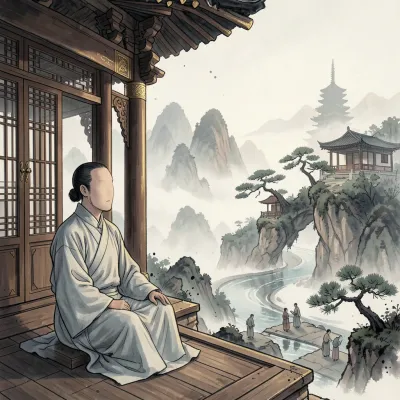
*Tao, Confucius, and Beyond* explores the intricate interplay between philosophy, religion, and statecraft in China from the classical era to the digital age. The book argues that intellectual traditions like Confucianism, Daoism, and Legalism were never merely abstract theories but practical "social technologies" that shaped every facet of Chinese life, including governance, family ethics, medicine, and the economy. By tracing the "Imperial Synthesis" of the Han dynasty through the Neo-Confucian revolutions of the Song and Ming, the text demonstrates how ritual (*li*) and cosmic order became the foundational grammar for maintaining social stability across a vast and diverse empire.
The narrative emphasizes that Chinese religious life is characterized by a pragmatic "division of spiritual labor" known as the Three Teachings, where different traditions addressed specific human needs—Confucianism for social hierarchy, Daoism for health and nature, and Buddhism for the afterlife. This pluralism extended to the "ritual economy," where temples and lineages acted as essential nodes for charity, credit, and community organization. The book also examines how these structures managed the tensions of the frontier, integrated with the landscape through *fengshui*, and provided a moral framework for the legal and educational systems that produced the imperial bureaucracy.
In its modern chapters, the book traces the profound ruptures and surprising continuities of the twentieth century. It details how the iconoclasm of the New Culture Movement and the radicalism of the socialist era attempted to dismantle "feudal" superstitions, only for traditional practices to survive by adapting to new ideological and market conditions. The resilience of these traditions is evidenced by the modern state's strategic embrace of "cultural heritage" and the integration of Traditional Chinese Medicine into contemporary public health.
The final section explores the twenty-first-century landscape, where digital technology and global flows have transformed religious practice. From "digital temples" and virtual ancestor worship to the global spread of *qigong* and TCM, the book concludes that Chinese traditions remain a living toolkit. Rather than being erased by modernity, these ancient ideas continue to be repurposed by the state, the market, and the individual to navigate the complexities of a globalized world, proving that the dialogue between the past and the present remains central to Chinese identity.
What You'll Find Inside:
- The book shows how Confucian, Daoist, and Buddhist ideas were woven together into a 'Three Teachings' framework that guided governance, family life, and popular religion across Chinese history.
- Ritual (li) and correlative cosmology (yin-yang, Five Phases) served as practical technologies for aligning personal ethics, state administration, medicine, and environmental management.
- Classical philosophies—Confucian ethics, Daoist naturalness, and Legalist statecraft—provided enduring tools for bureaucracy, education, and social order that were continually adapted by successive dynasties.
- Chinese religious life demonstrated remarkable resilience and adaptability, evolving from imperial-sponsored cults to local lineage practices, and finally to digital temples and global diaspora networks in the twenty-first century.
- The interplay between state ideology, legal institutions, and popular belief reveals a pattern of negotiation and continuity, where reforms and revolutions repurposed rather than erased older repertoires of meaning.
Who's It For:
This work is ideal for undergraduate and graduate students in Chinese history, religious studies, philosophy, or Asian studies who seek a comprehensive yet accessible overview of how ideas have shaped Chinese society over two millennia. It will also benefit general readers interested in the intersections of religion, philosophy, governance, and daily life in a non-Western cultural context, as well as scholars looking for a nuanced synthesis of textual analysis and social history that highlights continuities amid change.
Table of Contents:
- Introduction
- Chapter 1 Classical Foundations: Confucius, Laozi, and the Hundred Schools
- Chapter 2 Ritual and Governance: Li, Ren, and Early Statecraft
- Chapter 3 Cosmology and Correlative Thinking: Yin-Yang and the Five Phases
- Chapter 4 Legalism and the Arts of Rule
- Chapter 5 The Imperial Synthesis: Han Confucianism and State Ideology
- Chapter 6 Daoist Religion Emerges: Celestial Masters to Lingbao
- Chapter 7 Buddhism in Translation: Monks, Texts, and New Social Forms
- Chapter 8 The Three Teachings Together? Debates and Accommodations
- Chapter 9 Temples, Lineages, and Local Cults: The Fabric of Popular Religion
- Chapter 10 Medicine and the Body: Nourishing Life from Classics to Clinics
- Chapter 11 Education and Examinations: Cultivating Virtue and Bureaucrats
- Chapter 12 Women, Family, and Filial Piety: Ethics at Home
- Chapter 13 Ritual Economy: Charity, Merit, and Markets
- Chapter 14 Landscapes of Power: Sacred Geography, Fengshui, and City Design
- Chapter 15 Law, Morality, and Social Order: From Edicts to Community Compacts
- Chapter 16 Frontiers and Plural Traditions: Ethnicity, Empire, and Belief
- Chapter 17 Neo-Confucian Revolutions: Song–Ming Thought and Practice
- Chapter 18 Literati Culture: Poetry, Painting, and the Moral Self
- Chapter 19 Encounters with the West: Jesuits, Science, and Contested Rites
- Chapter 20 Reform, Revolution, and New Culture: Reimagining Tradition
- Chapter 21 Republican Experiments: Religion, Education, and the Modern State
- Chapter 22 Socialism and Spiritual Life: Ideology, Rupture, and Continuity
- Chapter 23 Reform and Revival: Religions in an Era of Opening and Markets
- Chapter 24 Medicine, Qigong, and Wellness: Bodies in Modern China
- Chapter 25 Digital Temples and Global Flows: Chinese Religions in the Twenty-First Century
Author:
Published By:
Date Published:
May 5, 2026
Type:
Nonfiction
Language:
English
Word Count:
63,268 words
Reading Time:
4 hours 26 minutes
Sample:
Order:
Order Tao, Confucius, and Beyond: Religion and Philosophy Shaping Chinese Society (Paperback) on MixCache.com:
Buy NowPrint copy is made to order and ships worldwide. Includes the ebook free, ready to read instantly.
$5 account credit for all new MixCache.com accounts, usable toward any ebook purchase!*