Browse by Category
Fiction
- Action & Adventure
- African American
- Anthologies
- Children's Fiction
- Classics
- Comics & Graphic Novels
- Coming of Age
- Contemporary
- Cultural & Regional
- Drama
- Erotica
- Fantasy
- General
- Historical Fiction
- Horror
- Humor & Satire
- Literary Fiction
- Mystery, Thriller & Suspense
- Poetry
- Religious & Inspirational
- Romance
- Science Fiction
- Short Stories
- War & Military
- Westerns
- Women's Fiction
- Young Adult
Non-Fiction
- Antiques & Collectibles
- Arts & Photography
- Biographies & Memoirs
- Business & Money
- Children's Non-Fiction
-
Computers & Technology
- Artificial Intelligence
- Computer Science
- Cybersecurity & Cryptography
- Data Science & Analytics
- Databases & Big Data
- Game Development & Design
- General
- Hardware & DIY
- Mobile App Development
- Networking & Cloud Computing
- Operating Systems
- Programming
- Robotics
- Software
- Software Engineering
- User Experience (UX) & Design
- Web Development & Design
- Cooking, Food & Wine
- Crafts, Hobbies & Home
- Education & Teaching
- Engineering
- General
- Health, Fitness & Dieting
-
History
- African History
- African History - North Africa
- African History - Sub-Saharan Africa
- American History
- American History - 20th Century
- American History - Civil War
- American History - Colonial Period
- Ancient History
- Asian History
- Asian History - China
- Asian History - India
- Asian History - Japan
- Asian History - Southeast Asia
- European History
- European History - Ancient Greece
- European History - Ancient Rome
- European History - Medieval
- European History - Modern
- European History - Renaissance
- General
- Middle Eastern History
- Military History
- Military History - Aviation
- Military History - Naval
- Social & Cultural History
- World History
- Humor & Entertainment
- Industrial Technology
- Language Learning
- Law
- LGBTQ+ Non-Fiction
- Literary Criticism
- Medical Books
- Parenting & Relationships
- Philosophy
- Politics & Social Sciences
- Reference
- Religion & Spirituality
-
Science & Math
- Agricultural Sciences
- Astronomy & Space Science
- Behavioral Sciences
- Biological Sciences
- Botany & Plant Science
- Chemistry
- Earth Sciences
- Engineering - Chemical
- Engineering - Civil
- Engineering - Electrical
- Engineering - Mechanical
- Environment
- General
- Geology
- Mathematics
- Nature & Ecology
- Oceanography
- Paleontology
- Physics
- Statistics
- Self-Help
- Sports & Outdoors
- Study Aids
- Sustainability & Green Living
- Textbooks
- Transportation
- Travel
- True Crime
- Urban Planning & Development
- Veterinary Medicine
- Writing & Publishing
Jump to Section

Want unlimited access to all books published by MixCache.com (plus their audiobooks)? Try MixCache.com Total Access. Look for the MTA badge on book covers to identify included titles.
Access to infinite ebooks: Don't see the book you want? Suggest it and we'll create it (free!) for you from scratch with our powerful AI book writer. Then read it with MTA - besides profiting from any sales it makes!
FDR
MTA
A Biography
About this book:
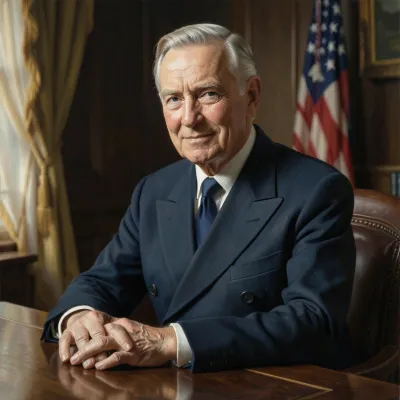
Franklin Delano Roosevelt’s life followed a remarkable arc from the aristocratic privilege of his Hyde Park youth to the heights of global leadership. This biography traces his early political apprenticeship in the New York State Senate and his role as Assistant Secretary of the Navy, formative years that were suddenly interrupted in 1921 by a devastating bout of polio. Rather than ending his career, his struggle with paralysis at Warm Springs deepened his empathy and resilience, forging a more disciplined and charismatic leader. With the support of his wife and political partner, Eleanor, he returned to the public stage as Governor of New York, utilizing the office as a laboratory for progressive reforms that would soon define his national agenda.
Elected to the presidency in the depths of the Great Depression, Roosevelt initiated a "First Hundred Days" of unprecedented legislative activity. His New Deal was a bold experiment in democratic renewal, creating a new social contract through programs like Social Security, the Works Progress Administration, and the Tennessee Valley Authority. While the New Deal remade the relationship between the citizen and the federal government, it also faced significant challenges, including a contentious battle with a conservative Supreme Court and the economic setbacks of the late 1930s. Throughout this era, Roosevelt used his "fireside chats" to cultivate a unique personal bond with the American people, transforming the presidency into a source of steady assurance.
As the 1930s drew to a close, Roosevelt’s focus shifted from domestic recovery to the rising threat of global totalitarianism. He successfully navigated a wary public from isolationism toward becoming the "Arsenal of Democracy," providing vital aid to Allies before formally entering World War II after the attack on Pearl Harbor. As a wartime commander in chief, he orchestrated a complex global alliance, balancing the competing interests of leaders like Churchill and Stalin while managing a massive domestic industrial mobilization. His leadership during the war was marked by strategic patience and a vision for a postwar international order rooted in the creation of the United Nations.
Roosevelt’s final years were a race against failing health and the mounting pressures of an unprecedented fourth term. Even as his physical strength waned, he remained centrally involved in the high-stakes diplomacy of the Yalta Conference, seeking to secure a lasting peace. He died at Warm Springs in April 1945, just months before the final Allied victory. His legacy remains a subject of profound study and debate; he left behind a transformed presidency and a nation that had moved from the brink of collapse to the center of global power, establishing a template for modern American leadership that continues to shape political life.
What You'll Find Inside:
- FDR's battle with polio forged his resilience, empathy, and political ingenuity, turning personal adversity into a source of public strength.
- The New Deal redefined the social contract through landmark programs like Social Security, the Wagner Act, and the TVA, establishing a lasting federal safety net and regulatory state.
- As commander in chief, FDR mobilized the 'Arsenal of Democracy,' pursued a Europe‑first strategy, and oversaw D‑Day, guiding the Allies to victory in World War II.
- His diplomatic evolution—from isolationist neutrality to Lend‑Lease, the Atlantic Charter, and Yalta—laid the groundwork for the United Nations and the postwar order.
- FDR's legacy is marked by both transformative achievements and profound contradictions, including the internment of Japanese Americans and compromises on civil rights.
Who's It For:
This biography is ideal for students, scholars, and general readers interested in 20th‑century American history, presidential leadership, the New Deal, and World War II. It offers a nuanced portrait of FDR that will appeal to those seeking to understand how personal adversity, political skill, and wartime decision‑making shaped modern America.
Author:
Published By:
Date Published:
April 30, 2026
Type:
Nonfiction
Language:
English
Word Count:
54,415 words
Reading Time:
3 hours 49 minutes
Sample:
Order:
Order FDR (Hardcover) on MixCache.com:
Buy NowPrint copy is made to order and ships worldwide. Includes the ebook free, ready to read instantly.
$5 account credit for all new MixCache.com accounts, usable toward any ebook purchase!*