Browse by Category
Fiction
- Action & Adventure
- African American
- Anthologies
- Children's Fiction
- Classics
- Comics & Graphic Novels
- Coming of Age
- Contemporary
- Cultural & Regional
- Drama
- Erotica
- Fantasy
- General
- Historical Fiction
- Horror
- Humor & Satire
- Literary Fiction
- Mystery, Thriller & Suspense
- Poetry
- Religious & Inspirational
- Romance
- Science Fiction
- Short Stories
- War & Military
- Westerns
- Women's Fiction
- Young Adult
Non-Fiction
- Antiques & Collectibles
- Arts & Photography
- Biographies & Memoirs
- Business & Money
- Children's Non-Fiction
-
Computers & Technology
- Artificial Intelligence
- Computer Science
- Cybersecurity & Cryptography
- Data Science & Analytics
- Databases & Big Data
- Game Development & Design
- General
- Hardware & DIY
- Mobile App Development
- Networking & Cloud Computing
- Operating Systems
- Programming
- Robotics
- Software
- Software Engineering
- User Experience (UX) & Design
- Web Development & Design
- Cooking, Food & Wine
- Crafts, Hobbies & Home
- Education & Teaching
- Engineering
- General
- Health, Fitness & Dieting
-
History
- African History
- African History - North Africa
- African History - Sub-Saharan Africa
- American History
- American History - 20th Century
- American History - Civil War
- American History - Colonial Period
- Ancient History
- Asian History
- Asian History - China
- Asian History - India
- Asian History - Japan
- Asian History - Southeast Asia
- European History
- European History - Ancient Greece
- European History - Ancient Rome
- European History - Medieval
- European History - Modern
- European History - Renaissance
- General
- Middle Eastern History
- Military History
- Military History - Aviation
- Military History - Naval
- Social & Cultural History
- World History
- Humor & Entertainment
- Industrial Technology
- Language Learning
- Law
- LGBTQ+ Non-Fiction
- Literary Criticism
- Medical Books
- Parenting & Relationships
- Philosophy
- Politics & Social Sciences
- Reference
- Religion & Spirituality
-
Science & Math
- Agricultural Sciences
- Astronomy & Space Science
- Behavioral Sciences
- Biological Sciences
- Botany & Plant Science
- Chemistry
- Earth Sciences
- Engineering - Chemical
- Engineering - Civil
- Engineering - Electrical
- Engineering - Mechanical
- Environment
- General
- Geology
- Mathematics
- Nature & Ecology
- Oceanography
- Paleontology
- Physics
- Statistics
- Self-Help
- Sports & Outdoors
- Study Aids
- Sustainability & Green Living
- Textbooks
- Transportation
- Travel
- True Crime
- Urban Planning & Development
- Veterinary Medicine
- Writing & Publishing
Jump to Section
MixCache.com Total Access
Unlimited reading and audiobooks for every book published by MixCache.com.
Included titles carry the MTA badge.
Learn more →
Islam in South and Southeast Asia: Pluralism, Scholarship, and Local Practices
MTA
An in-depth survey of diverse Muslim societies in India, Pakistan, Indonesia, Malaysia, and the Philippines
About this book:
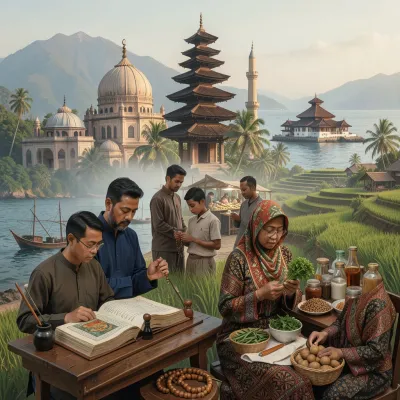
This book surveys Muslim societies across India, Pakistan, Indonesia, Malaysia, and the Philippines, emphasizing how pluralism, scholarship, and local practice shape diverse Islamic experiences. It traces historical diffusion through Indian Ocean trade, pilgrimage, and scholarly networks that transmitted texts, legal schools, and Sufi traditions, while showing how colonial and postcolonial state formations introduced new legal and educational frameworks that interacted with enduring customs (adat) and local interpretations of sharia.
Legal pluralism emerges as a central thread, with chapters examining how sharia courts operate alongside civil and customary courts in matters of marriage, inheritance, and family law, and how institutions such as zakat, waqf, halal certification, and Islamic finance embed religious ethics in economic life. The work highlights variations—from Pakistan’s state‑driven Islamization and Malaysia’s bureaucratized religious administration to Indonesia’s balance of Nahdlatul Ulama’s traditionalism and Muhammadiyah’s reformism, and the Philippines’ Bangsamoro autonomous experiment.
Attention is given to devotional and intellectual life: Sufi orders and saintly geographies, vernacular Qur’anic exegesis, ritual calendars, sacred architecture, and artistic expressions such as qawwali, selawat, and okir carvings. Chapters on education detail the evolution of madrasas, pesantren, and pondok institutions, their curricula reforms, and the growing role of women as scholars, leaders, and activists within Islamic law and civil society. Youth engagement with pop culture, digital da’wa, and global discourses on gender, environment, and interfaith relations further illustrates contemporary negotiations of tradition and modernity.
Finally, the book considers future trajectories—continuities in religious education and transnational ties, emerging contests over authority in digital spaces, the influence of climate action and sustainable halal economies, and ongoing struggles for minority rights and intra‑Muslim diversity. By weaving together history, law, and practice, it presents Islam in South and Southeast Asia as a dynamic, pluralistic civilization continually reshaped by local agency and global currents.
What You'll Find Inside:
- The book maps Islam's spread through Indian Ocean trade networks via merchants and Sufis, emphasizing peaceful integration with local traditions rather than replacement of indigenous beliefs.
- It analyzes legal pluralism across the region, examining how Sharia interacts with customary law (adat) and state legislation in personal status matters like marriage, inheritance, and family courts.
- It details the contrasting roles of major Islamic organizations such as Nahdlatul Ulama (traditionalist) and Muhammadiyah (modernist) in Indonesia, alongside Malaysia's state-led Islamization model.
- It explores educational reform in madrasas and pesantren, balancing traditional Islamic sciences with modern curricula to prepare students for religious leadership and contemporary professional roles.
- It addresses contemporary Muslim life including youth digital engagement in da'wa, women's leadership in Islamic law, halal industry growth, and environmental ethics grounded in Quranic stewardship principles.
Who's It For:
This book is ideal for regional specialists, development practitioners, policymakers, and general readers seeking to understand the diverse expressions of Islam in South and Southeast Asia. It will particularly benefit those working in interfaith relations, Islamic education, legal reform, or Muslim community development who need nuanced insights into how local customs, state policies, and global Islamic currents interact across India, Pakistan, Indonesia, Malaysia, and the Philippines.
Table of Contents:
- Introduction
- Chapter 1 Cartographies of Islam across South and Southeast Asia
- Chapter 2 Indian Ocean Networks: Trade, Pilgrimage, and Scholarship
- Chapter 3 Legal Pluralism: Sharia, Adat, and the Modern State
- Chapter 4 India: Plural Traditions from Delhi to the Deccan
- Chapter 5 Pakistan: Reform, Revival, and the Postcolonial State
- Chapter 6 Indonesia: Nahdlatul Ulama, Muhammadiyah, and Local Islam
- Chapter 7 Malaysia: Islamization, Bureaucracy, and Everyday Piety
- Chapter 8 The Philippines: Bangsamoro, Conversion, and Coastal Islam
- Chapter 9 Sufi Orders and Saintly Geographies
- Chapter 10 Madrasas, Pesantren, and Educational Reform
- Chapter 11 Qur’anic Interpretation and Vernacular Theologies
- Chapter 12 Ritual Calendars: Ramadan, Eid, Mawlid, and Muharram
- Chapter 13 Mosques, Shrines, and Sacred Architecture
- Chapter 14 Women’s Leadership, Education, and Islamic Law
- Chapter 15 Youth, Pop Culture, and Digital Da'wa
- Chapter 16 Minorities and Intra-Muslim Diversity
- Chapter 17 Zakat, Waqf, and Islamic Economies
- Chapter 18 Halal Certification, Markets, and Development
- Chapter 19 Conflict, Mediation, and Interfaith Initiatives
- Chapter 20 Courts and Family Law: Marriage, Inheritance, Custody
- Chapter 21 Environmental Ethics, Disaster Response, and Climate Action
- Chapter 22 Health, Healing, and Charismatic Therapies
- Chapter 23 Art, Poetry, and Devotional Soundscapes
- Chapter 24 Migration, Diaspora, and Transnational Ties
- Chapter 25 Futures of Pluralism: Continuity, Contestation, and Change
Author:
Published By:
Date Published:
May 20, 2026
Type:
Nonfiction
Language:
English
Word Count:
46,100 words
Reading Time:
3 hours 14 minutes
Sample:
Order:
Order Islam in South and Southeast Asia: Pluralism, Scholarship, and Local Practices (Paperback) on MixCache.com:
Buy NowPrint copy is made to order and ships worldwide. Includes the ebook free, ready to read instantly.
$5 account credit for all new MixCache.com accounts, usable toward any ebook purchase!*