Browse by Category
Fiction
- Action & Adventure
- African American
- Anthologies
- Children's Fiction
- Classics
- Comics & Graphic Novels
- Coming of Age
- Contemporary
- Cultural & Regional
- Drama
- Erotica
- Fantasy
- General
- Historical Fiction
- Horror
- Humor & Satire
- Literary Fiction
- Mystery, Thriller & Suspense
- Poetry
- Religious & Inspirational
- Romance
- Science Fiction
- Short Stories
- War & Military
- Westerns
- Women's Fiction
- Young Adult
Non-Fiction
- Antiques & Collectibles
- Arts & Photography
- Biographies & Memoirs
- Business & Money
- Children's Non-Fiction
-
Computers & Technology
- Artificial Intelligence
- Computer Science
- Cybersecurity & Cryptography
- Data Science & Analytics
- Databases & Big Data
- Game Development & Design
- General
- Hardware & DIY
- Mobile App Development
- Networking & Cloud Computing
- Operating Systems
- Programming
- Robotics
- Software
- Software Engineering
- User Experience (UX) & Design
- Web Development & Design
- Cooking, Food & Wine
- Crafts, Hobbies & Home
- Education & Teaching
- Engineering
- General
- Health, Fitness & Dieting
-
History
- African History
- African History - North Africa
- African History - Sub-Saharan Africa
- American History
- American History - 20th Century
- American History - Civil War
- American History - Colonial Period
- Ancient History
- Asian History
- Asian History - China
- Asian History - India
- Asian History - Japan
- Asian History - Southeast Asia
- European History
- European History - Ancient Greece
- European History - Ancient Rome
- European History - Medieval
- European History - Modern
- European History - Renaissance
- General
- Middle Eastern History
- Military History
- Military History - Aviation
- Military History - Naval
- Social & Cultural History
- World History
- Humor & Entertainment
- Industrial Technology
- Language Learning
- Law
- LGBTQ+ Non-Fiction
- Literary Criticism
- Medical Books
- Parenting & Relationships
- Philosophy
- Politics & Social Sciences
- Reference
- Religion & Spirituality
-
Science & Math
- Agricultural Sciences
- Astronomy & Space Science
- Behavioral Sciences
- Biological Sciences
- Botany & Plant Science
- Chemistry
- Earth Sciences
- Engineering - Chemical
- Engineering - Civil
- Engineering - Electrical
- Engineering - Mechanical
- Environment
- General
- Geology
- Mathematics
- Nature & Ecology
- Oceanography
- Paleontology
- Physics
- Statistics
- Self-Help
- Sports & Outdoors
- Study Aids
- Sustainability & Green Living
- Textbooks
- Transportation
- Travel
- True Crime
- Urban Planning & Development
- Veterinary Medicine
- Writing & Publishing
Jump to Section

Want unlimited access to all books published by MixCache.com (plus their audiobooks)? Try MixCache.com Total Access. Look for the MTA badge on book covers to identify included titles.
Access to infinite ebooks: Don't see the book you want? Suggest it and we'll create it (free!) for you from scratch with our powerful AI book writer. Then read it with MTA - besides profiting from any sales it makes!
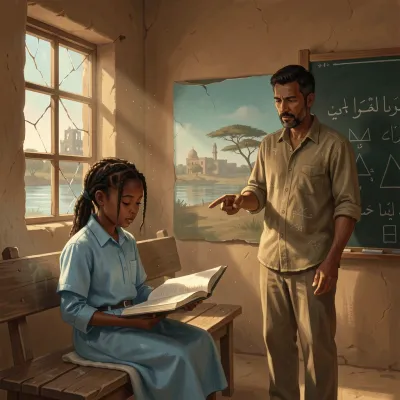
Education In Swaziland
MTA
A Comprehensive Overview from Early Childhood to Higher Education
About this book:

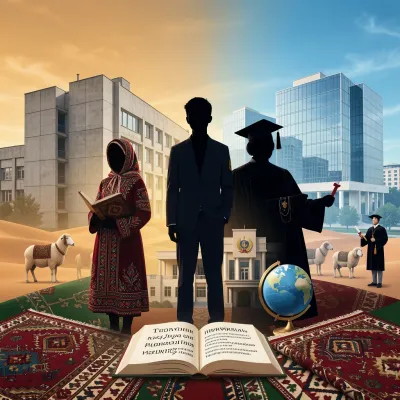
Education in Eswatini has evolved from informal, community‑based learning rooted in pre‑colonial traditions through missionary and colonial influences to a modern, state‑managed system that seeks to balance access, equity, and quality. Following independence in 1968, the government prioritized universal primary education, introduced Free Primary Education in 2010, and expanded secondary and tertiary opportunities, establishing the University of Eswatini and a network of teacher‑training colleges, TVET institutions, and private higher‑education providers. The system is organized into early childhood care and development, seven years of primary, five years of secondary (junior and senior), and post‑school education and training, with the Ministry of Education and Training steering policy, curriculum, and assessment through frameworks such as the 2018 National Curriculum Framework and the Education Sector Strategic Plan (2022‑2034).
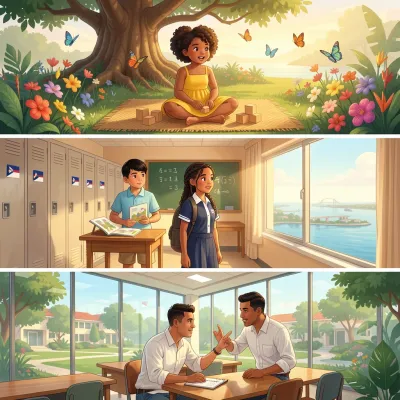
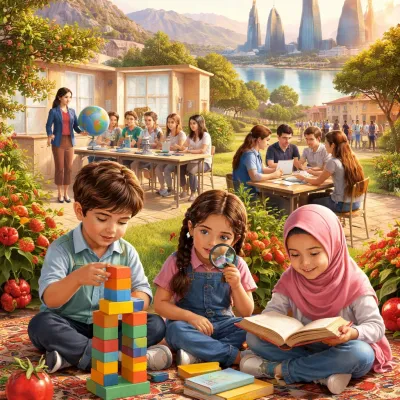
Significant attention has been given to early childhood initiatives like Neighborhood Care Points and Grade 0, primary‑level literacy and numeracy in Siswati and English, and a competency‑based curriculum that emphasizes critical thinking, problem‑solving, and practical skills across all levels. Secondary education offers academic and pre‑vocational pathways, while TVET institutions such as ECOT and VOCTIM provide trade‑specific skills linked to industry needs. Higher education, led by UNESWA, delivers undergraduate to doctoral programs, research, and community outreach, with quality assurance overseen by the Eswatini Higher Education Council. Persistent challenges include resource constraints, uneven teacher distribution, the digital divide, socioeconomic barriers, gender disparities, and the need for inclusive education for learners with special needs. Ongoing reforms focus on curriculum relevance, teacher professional development, infrastructure expansion, technology integration, and strengthening partnerships with industry and international donors.
Looking ahead, Eswatini’s vision for education aligns with national goals such as Vision 2040, aiming for equitable access, high‑quality competency‑based learning, a skilled and entrepreneurial workforce, robust research and innovation, fully inclusive classrooms, and sustainable financing through public‑private partnerships and diversified revenue streams. Case studies—from the Nkwalini Neighborhood Care Point and Lobamba Secondary School’s STEM revitalization to UNESWA’s agricultural extension and the Matsapha Skills Centre—demonstrate successful, scalable models that illustrate how policy, community engagement, and targeted investment can transform learning outcomes and contribute to the kingdom’s development.
What You'll Find Inside:
- A detailed examination of the 7-5-4 education system structure (7 years primary, 5 years secondary, 4 years tertiary) and the Ministry of Education and Training's role in policy and implementation.
- The evolution from traditional community-based learning through missionary and colonial influences to the modern system, highlighting the impact of Free Primary Education and competency-based curriculum reforms.
- Critical analysis of early childhood care and development (ECCD), primary and secondary education challenges (overcrowding, resource gaps, dropout rates), and the growing emphasis on inclusive education for learners with special needs.
- The pivotal role of Vocational and Technical Education and Training (TVET) in economic development, including industry partnerships, apprenticeship schemes, and entrepreneurship training to address youth unemployment.
- Comprehensive coverage of higher education institutions (University of Eswatini, teacher colleges, private universities), quality assurance through the Eswatini Higher Education Council (ESHEC), and the impact of international partnerships and educational aid.
Who's It For:
This book is ideal for policymakers, educational administrators, and development practitioners working within or alongside Eswatini's education sector. It also serves as a thorough resource for researchers and students of comparative education, African studies, or international development, as well as for teachers and school leaders seeking a deeper understanding of the national system's history, structure, and ongoing reforms.
Author:
Published By:
Date Published:
July 6, 2026
Type:
Nonfiction
Language:
English
Word Count:
50,400 words
Reading Time:
3 hours 32 minutes
Sample:
Order:
Order Education In Swaziland (Hardcover) on MixCache.com:
Buy NowPrint copy is made to order and ships worldwide. Includes the ebook free, ready to read instantly.
$5 account credit for all new MixCache.com accounts, usable toward any ebook purchase!*