Browse by Category
Fiction
- Action & Adventure
- African American
- Anthologies
- Children's Fiction
- Classics
- Comics & Graphic Novels
- Coming of Age
- Contemporary
- Cultural & Regional
- Drama
- Erotica
- Fantasy
- General
- Historical Fiction
- Horror
- Humor & Satire
- Literary Fiction
- Mystery, Thriller & Suspense
- Poetry
- Religious & Inspirational
- Romance
- Science Fiction
- Short Stories
- War & Military
- Westerns
- Women's Fiction
- Young Adult
Non-Fiction
- Antiques & Collectibles
- Arts & Photography
- Biographies & Memoirs
- Business & Money
- Children's Non-Fiction
-
Computers & Technology
- Artificial Intelligence
- Computer Science
- Cybersecurity & Cryptography
- Data Science & Analytics
- Databases & Big Data
- Game Development & Design
- General
- Hardware & DIY
- Mobile App Development
- Networking & Cloud Computing
- Operating Systems
- Programming
- Robotics
- Software
- Software Engineering
- User Experience (UX) & Design
- Web Development & Design
- Cooking, Food & Wine
- Crafts, Hobbies & Home
- Education & Teaching
- Engineering
- General
- Health, Fitness & Dieting
-
History
- African History
- African History - North Africa
- African History - Sub-Saharan Africa
- American History
- American History - 20th Century
- American History - Civil War
- American History - Colonial Period
- Ancient History
- Asian History
- Asian History - China
- Asian History - India
- Asian History - Japan
- Asian History - Southeast Asia
- European History
- European History - Ancient Greece
- European History - Ancient Rome
- European History - Medieval
- European History - Modern
- European History - Renaissance
- General
- Middle Eastern History
- Military History
- Military History - Aviation
- Military History - Naval
- Social & Cultural History
- World History
- Humor & Entertainment
- Industrial Technology
- Language Learning
- Law
- LGBTQ+ Non-Fiction
- Literary Criticism
- Medical Books
- Parenting & Relationships
- Philosophy
- Politics & Social Sciences
- Reference
- Religion & Spirituality
-
Science & Math
- Agricultural Sciences
- Astronomy & Space Science
- Behavioral Sciences
- Biological Sciences
- Botany & Plant Science
- Chemistry
- Earth Sciences
- Engineering - Chemical
- Engineering - Civil
- Engineering - Electrical
- Engineering - Mechanical
- Environment
- General
- Geology
- Mathematics
- Nature & Ecology
- Oceanography
- Paleontology
- Physics
- Statistics
- Self-Help
- Sports & Outdoors
- Study Aids
- Sustainability & Green Living
- Textbooks
- Transportation
- Travel
- True Crime
- Urban Planning & Development
- Veterinary Medicine
- Writing & Publishing
Jump to Section
MixCache.com Total Access
Unlimited reading and audiobooks for every book published by MixCache.com.
Included titles carry the MTA badge.
Learn more →
Education In Canada
MTA
A Comprehensive Overview from Early Childhood to Higher Education
About this book:
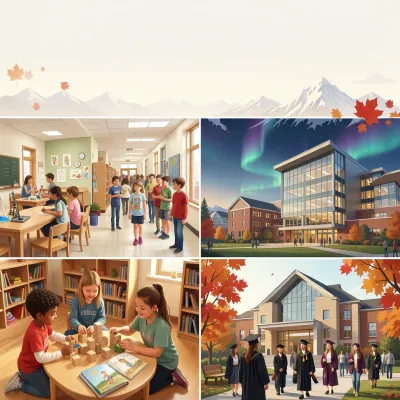
Education in Canada is characterized by a decentralized system where provinces and territories hold primary jurisdiction over curriculum, funding, and governance, resulting in a diverse mosaic of policies and practices that reflect regional needs while maintaining a shared commitment to publicly funded, accessible, and quality education. Historical foundations reveal a evolution from religiously influenced colonial schooling and the tragic legacy of Indian Residential Schools to modern reforms emphasizing inclusivity, multiculturalism, and reconciliation with Indigenous peoples. The system spans early childhood education—marked by play‑based learning, a shift toward affordable $10‑a‑day child care, and Indigenous‑led programs—through kindergarten, where full‑day models and play‑based pedagogy dominate, and elementary and secondary levels, which balance core academics with differentiated instruction, inclusive practices, and multiple pathways to university, college, apprenticeship, or the workforce.
Integral to the Canadian approach are strong supports for diverse learners, including robust special education frameworks guided by Individual Education Plans, extensive French‑language education through Francophone schools and French immersion, and comprehensive services for Indigenous, immigrant, and refugee students that emphasize language acquisition, culturally responsive pedagogy, and trauma‑informed care. Educational technology is increasingly integrated to enable personalized learning, collaboration, and digital literacy, while efforts to bridge the digital divide ensure equitable access. Teacher education emphasizes practicum experience, ongoing professional development, and preparation for inclusive, technologically enhanced classrooms, with assessment practices combining formative, observational, and standardized measures to inform instruction and uphold accountability.
Post‑secondary education features a binary structure of research‑intensive universities and career‑oriented colleges and polytechnics, both supported by provincial funding, federal research grants, and student financial aid programs that combine loans, grants, and scholarships to improve accessibility. International students contribute significantly to Canada’s economy and cultural fabric, with clear pathways to permanent residency reinforcing the link between education and immigration. Adult education and lifelong learning provide essential skills, language training, upskilling, and credential recognition through colleges, universities, school boards, and community organizations. Ongoing policy reforms focus on equity, diversity, and inclusion—addressing systemic barriers, anti‑racism, decolonization, LGBTQ2S+ support, and accessibility—while preparing students for future skills such as critical thinking, creativity, global competencies, and sustainability amid challenges like AI integration, mental health, and climate change. In global comparison, Canada’s decentralized yet collaborative model yields strong performance on international assessments, high equity of outcomes, and a distinctive commitment to multiculturalism, official bilingualism, and immigration‑friendly post‑secondary pathways, positioning its system as both adaptable and internationally respected.
What You'll Find Inside:
- Canada's decentralized education system grants provinces and territories primary jurisdiction, creating diverse approaches to curriculum, governance, and funding while maintaining national educational standards.
- Indigenous education emphasizes reconciliation through self-determination, language revitalization, and culturally responsive pedagogy, addressing historical injustices while promoting Indigenous-led educational initiatives.
- International students play a vital economic and cultural role, with Canada offering unique post-graduation immigration pathways that link education directly to permanent residency opportunities.
- Lifelong learning extends beyond traditional schooling, with robust adult education programs supporting essential skills, career transitions, and community-based learning for learners of all ages.
- Multicultural education policies and French-language rights create inclusive environments that celebrate diversity while ensuring equitable access to both English and French instruction across the nation.
Who's It For:
This comprehensive overview is essential for educators seeking to understand Canada's diverse educational landscape, policymakers working on curriculum and funding initiatives, researchers studying comparative education systems, parents navigating the provincial variations in schooling, and international students considering Canadian educational opportunities.
Table of Contents:
- Introduction
- Chapter 1: The Historical Foundations of Canadian Education
- Chapter 2: Governance and Funding of Education in Canada
- Chapter 3: Early Childhood Education: Programs and Philosophies
- Chapter 4: The Kindergarten Experience Across Provinces and Territories
- Chapter 5: Elementary Education: Curriculum and Pedagogy
- Chapter 6: Secondary Education: Pathways and Challenges
- Chapter 7: Indigenizing Education: First Nations, Inuit, and Métis Perspectives
- Chapter 8: French-Language Education and Bilingualism
- Chapter 9: Special Education: Supporting Diverse Learners
- Chapter 10: Educational Technology in Canadian Classrooms
- Chapter 11: Teacher Education and Professional Development
- Chapter 12: Assessment and Evaluation Practices
- Chapter 13: Parental Involvement and Community Engagement
- Chapter 14: Urban, Rural, and Remote Education Challenges
- Chapter 15: Immigration and Multiculturalism in Schools
- Chapter 16: Post-Secondary Education: An Overview
- Chapter 17: Universities: Research, Teaching, and Impact
- Chapter 18: Colleges and Polytechnics: Skills and Vocational Training
- Chapter 19: Student Funding and Financial Aid
- Chapter 20: International Students in Canada
- Chapter 21: Adult Education and Lifelong Learning
- Chapter 22: Education Policy and Reform
- Chapter 23: Equity, Diversity, and Inclusion in Education
- Chapter 24: The Future of Education in Canada
- Chapter 25: Comparative Perspectives: Canadian Education in a Global Context
Author:
Published By:
Date Published:
June 19, 2026
Type:
Nonfiction
Language:
English
Word Count:
76,807 words
Reading Time:
5 hours 23 minutes
Sample:
Order:
Order Education In Canada (Hardcover) on MixCache.com:
Buy NowPrint copy is made to order and ships worldwide. Includes the ebook free, ready to read instantly.
$5 account credit for all new MixCache.com accounts, usable toward any ebook purchase!*