Browse by Category
Fiction
- Action & Adventure
- African American
- Anthologies
- Children's Fiction
- Classics
- Comics & Graphic Novels
- Coming of Age
- Contemporary
- Cultural & Regional
- Drama
- Erotica
- Fantasy
- General
- Historical Fiction
- Horror
- Humor & Satire
- Literary Fiction
- Mystery, Thriller & Suspense
- Poetry
- Religious & Inspirational
- Romance
- Science Fiction
- Short Stories
- War & Military
- Westerns
- Women's Fiction
- Young Adult
Non-Fiction
- Antiques & Collectibles
- Arts & Photography
- Biographies & Memoirs
- Business & Money
- Children's Non-Fiction
-
Computers & Technology
- Artificial Intelligence
- Computer Science
- Cybersecurity & Cryptography
- Data Science & Analytics
- Databases & Big Data
- Game Development & Design
- General
- Hardware & DIY
- Mobile App Development
- Networking & Cloud Computing
- Operating Systems
- Programming
- Robotics
- Software
- Software Engineering
- User Experience (UX) & Design
- Web Development & Design
- Cooking, Food & Wine
- Crafts, Hobbies & Home
- Education & Teaching
- Engineering
- General
- Health, Fitness & Dieting
-
History
- African History
- African History - North Africa
- African History - Sub-Saharan Africa
- American History
- American History - 20th Century
- American History - Civil War
- American History - Colonial Period
- Ancient History
- Asian History
- Asian History - China
- Asian History - India
- Asian History - Japan
- Asian History - Southeast Asia
- European History
- European History - Ancient Greece
- European History - Ancient Rome
- European History - Medieval
- European History - Modern
- European History - Renaissance
- General
- Middle Eastern History
- Military History
- Military History - Aviation
- Military History - Naval
- Social & Cultural History
- World History
- Humor & Entertainment
- Industrial Technology
- Language Learning
- Law
- LGBTQ+ Non-Fiction
- Literary Criticism
- Medical Books
- Parenting & Relationships
- Philosophy
- Politics & Social Sciences
- Reference
- Religion & Spirituality
-
Science & Math
- Agricultural Sciences
- Astronomy & Space Science
- Behavioral Sciences
- Biological Sciences
- Botany & Plant Science
- Chemistry
- Earth Sciences
- Engineering - Chemical
- Engineering - Civil
- Engineering - Electrical
- Engineering - Mechanical
- Environment
- General
- Geology
- Mathematics
- Nature & Ecology
- Oceanography
- Paleontology
- Physics
- Statistics
- Self-Help
- Sports & Outdoors
- Study Aids
- Sustainability & Green Living
- Textbooks
- Transportation
- Travel
- True Crime
- Urban Planning & Development
- Veterinary Medicine
- Writing & Publishing
Jump to Section
MixCache.com Total Access
Unlimited reading and audiobooks for every book published by MixCache.com.
Included titles carry the MTA badge.
Learn more →
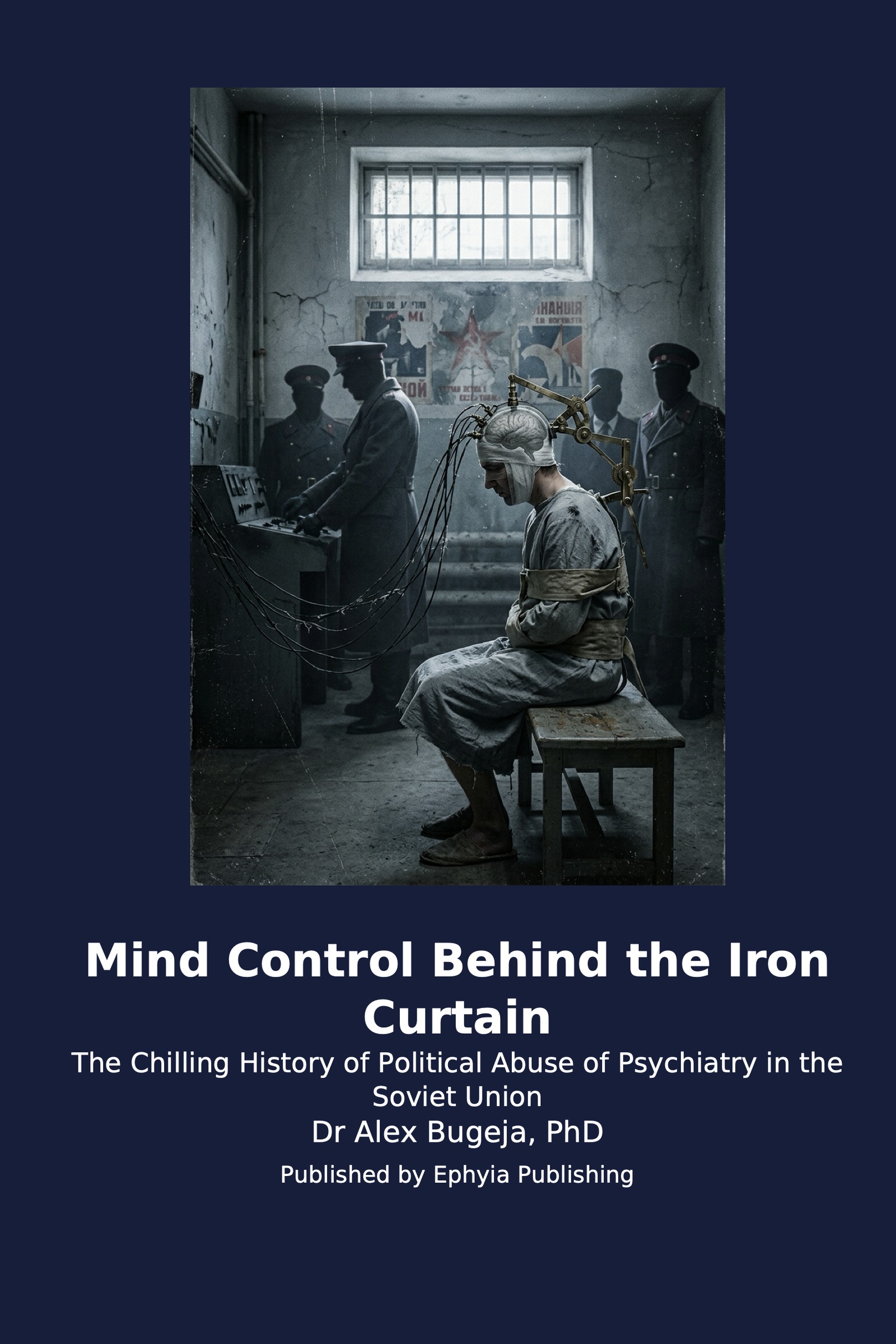
Mind Control Behind the Iron Curtain
The Chilling History of Political Abuse of Psychiatry in the Soviet Union
About this book:
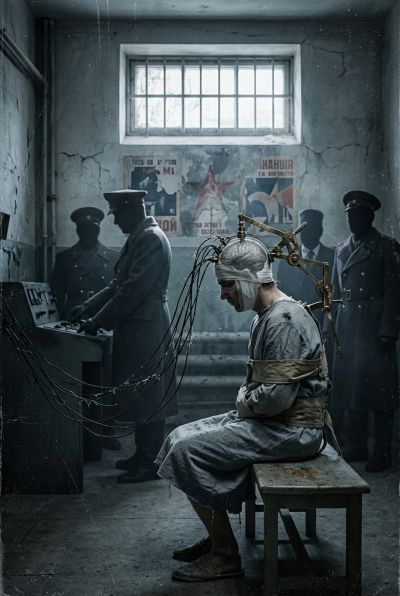
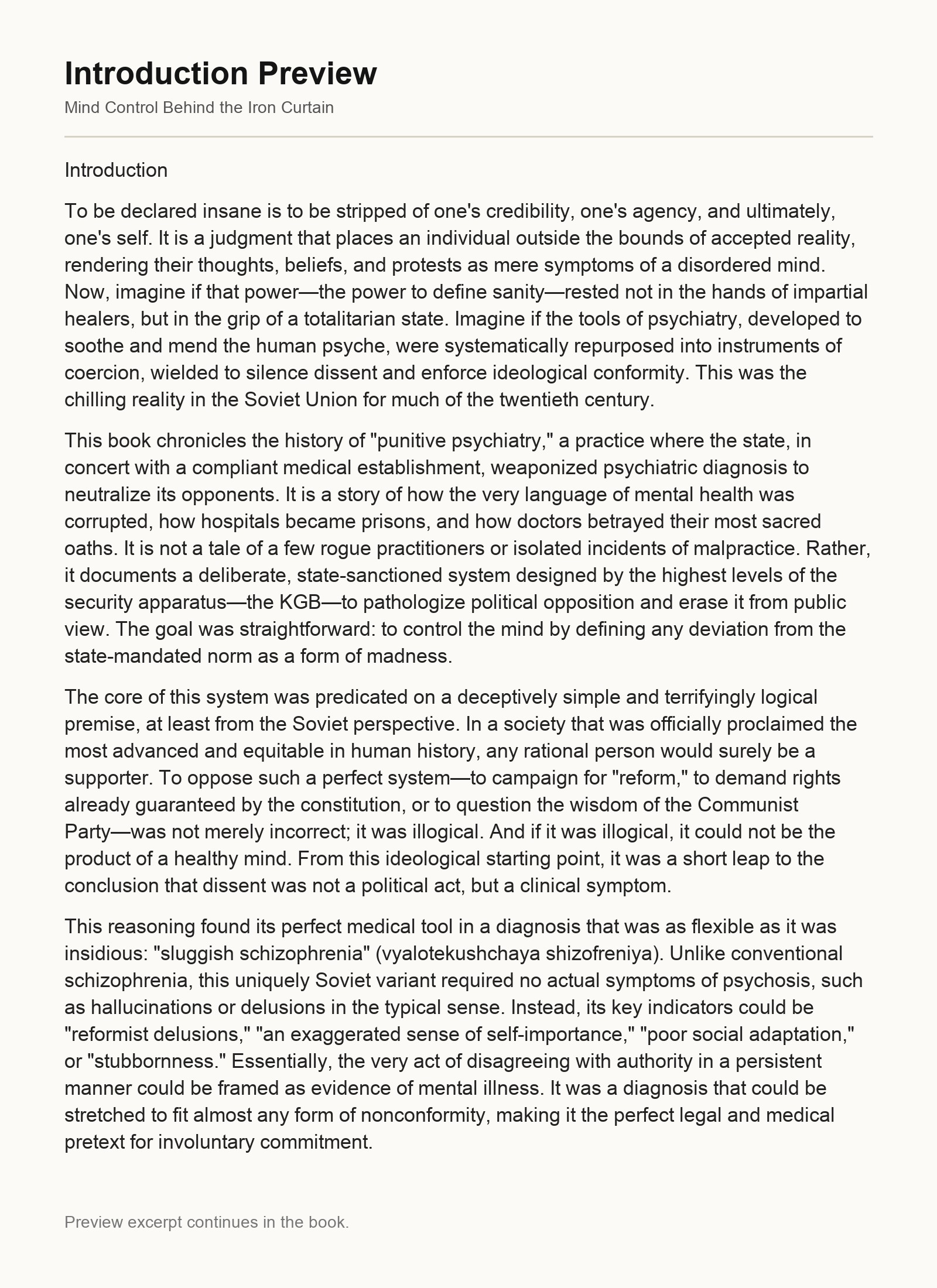
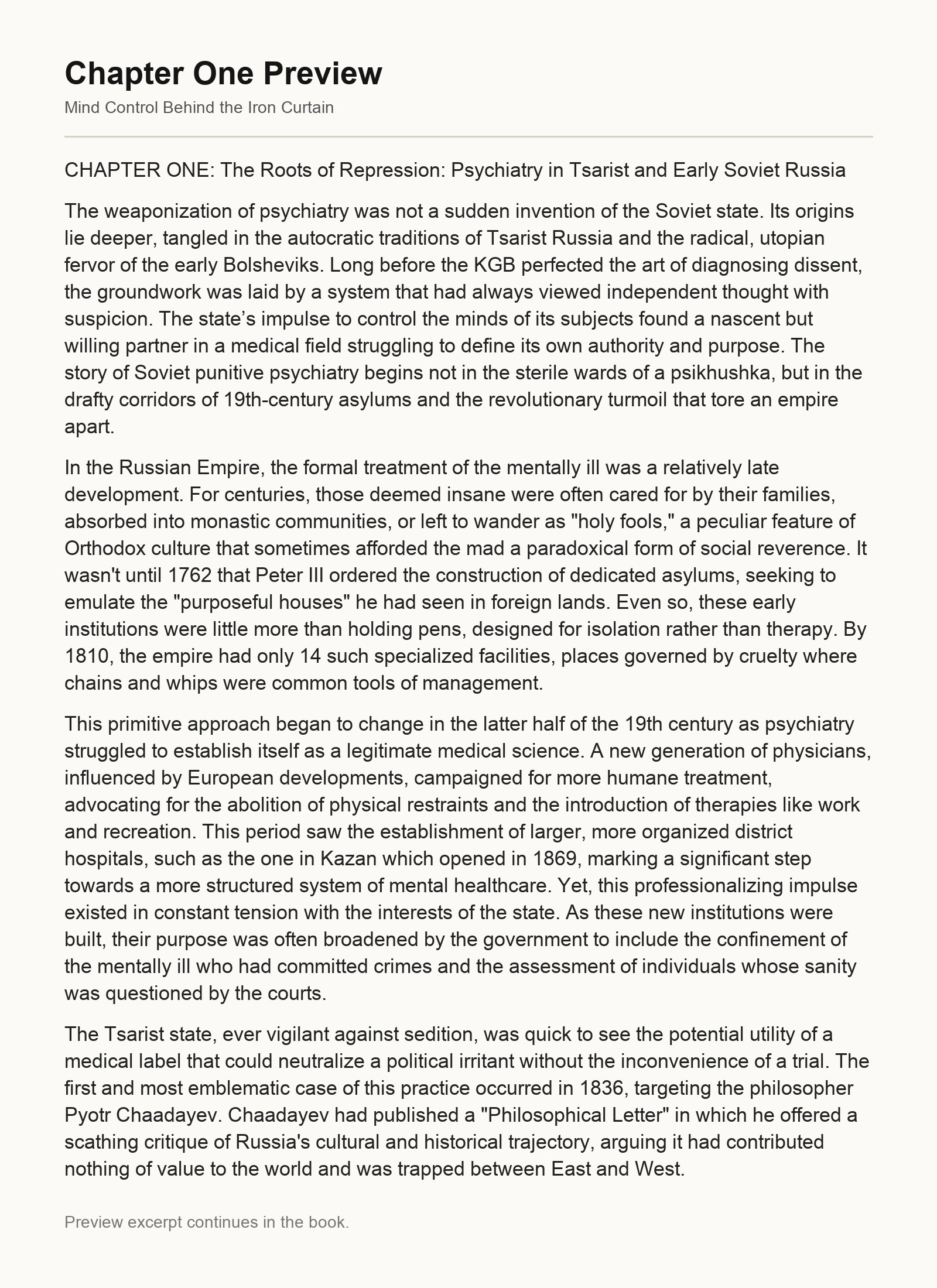
This groundbreaking work exposes one of the most disturbing chapters in medical history: how the Soviet state systematically perverted psychiatry into a weapon of political repression. Readers will discover how mental health diagnosis was transformed from a healing practice into a tool for eliminating dissent, with hospitals converted into prisons for those whose only "crime" was thinking independently. Dr. Alex Bugeja meticulously documents how the powerful to define sanity became the ultimate instrument of state control, stripping dissidents of their credibility, freedom, and often their very humanity.
Through chilling detail, the book reveals the ingenious cruelty of the Soviet system - the invention of "sluggish schizophrenia," a diagnosis requiring no actual psychotic symptoms but capable of labeling any persistent disagreement with authority as mental illness. Readers will learn how the Serbsky Institute became the epicenter of this abuse, where political evaluations were predetermined performances with KGB officers in white coats. The narrative examines the brutal "treatments" administered not to heal but to break wills: massive doses of neuroleptics inducing agonizing side effects, sulfazine therapy causing dangerous fevers, insulin coma therapy, and even electroconvulsive therapy used as punishment - all while patients were confined in nightmarish psychiatric prisons alongside genuine mental patients and violent criminals.
Beyond the institutional mechanics, this work delivers the profound human experience of those trapped in the system. Readers will encounter the testimonies of victims like Vladimir Bukovsky, Natalya Gorbanevskaya, and General Pyotr Grigorenko - intellectuals, poets, war heroes, and ordinary citizens whose lives were destroyed for advocating reform, religious freedom, or human rights. The book explores the psychological torture of being declared insane for holding sane beliefs, the forced proximity to genuine suffering and criminal violence, and the devastating impact on families who faced stigma, job loss, and the unbearable choice of either abandoning their loved ones or becoming complicit in their psychological breaking.
The narrative culminates in the courageous resistance that eventually exposed this atrocity - from samizdat networks smuggling truth to the West, to doctors who risked everything to challenge the system from within, to the international psychiatric community's eventual condemnation. Readers will understand how glasnost finally allowed the truth to surface, how the system collapsed with the Soviet Union, and the long, difficult road to healing for survivors. Most importantly, this history serves as a vital warning for contemporary society about the fragility of medical ethics when divorced from human rights, demonstrating why the power to define sanity must always be guarded against political manipulation - a lesson as urgent today as it was during the Cold War.
What You'll Find Inside:
- The book reveals how Soviet psychiatrists invented 'sluggish schizophrenia' - a diagnosis requiring no psychotic symptoms - to label political dissenters as mentally ill based solely on their beliefs and activism.
- It details the Serbsky Institute's role as the KGB-controlled epicenter where forensic commissions routinely declared dissidents insane through predetermined evaluations focused on political nonconformity rather than medical symptoms.
- Readers will learn about the brutal 'treatments' in psychiatric prisons: high-dose neuroleptics causing agonizing side effects, sulfazine fever therapy as punishment, and insulin coma therapy used to break victims' wills through physical and mental torture.
- Through victims' testimonies, the book exposes how indefinite confinement in psikhushkas was contingent on political recantation, creating a torture scenario where freedom required betraying one's conscience.
- It chronicles how evidence smuggled to the West by dissidents like Vladimir Bukovsky forced the international psychiatric community to confront and condemn Soviet abuses, leading to the USSR's temporary expulsion from the World Psychiatric Association.
Who's It For:
This book is essential reading for students and scholars of Soviet history, medical ethics, and political repression who seek to understand how psychiatric systems can be weaponized by totalitarian states. It will particularly benefit mental health professionals, human rights advocates, and researchers studying the corruption of medical institutions under authoritarian regimes. General readers interested in Cold War history, political dissident movements, or the relationship between state power and individual liberty will also find this meticulously documented account both informative and profoundly relevant to contemporary concerns about the abuse of diagnostic labeling.
Table of Contents:
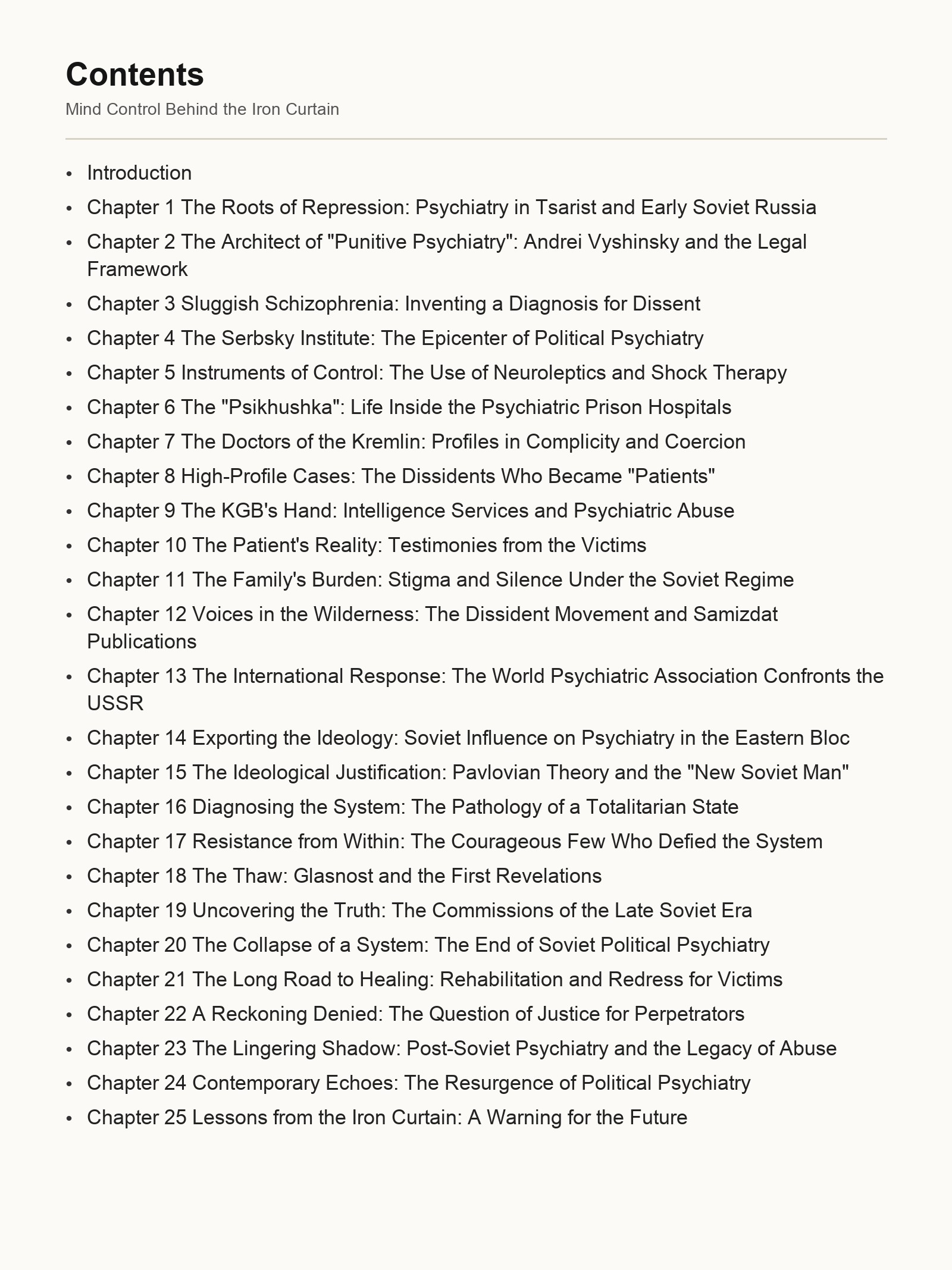
- Introduction
- Chapter 1 The Roots of Repression: Psychiatry in Tsarist and Early Soviet Russia
- Chapter 2 The Architect of "Punitive Psychiatry": Andrei Vyshinsky and the Legal Framework
- Chapter 3 Sluggish Schizophrenia: Inventing a Diagnosis for Dissent
- Chapter 4 The Serbsky Institute: The Epicenter of Political Psychiatry
- Chapter 5 Instruments of Control: The Use of Neuroleptics and Shock Therapy
- Chapter 6 The "Psikhushka": Life Inside the Psychiatric Prison Hospitals
- Chapter 7 The Doctors of the Kremlin: Profiles in Complicity and Coercion
- Chapter 8 High-Profile Cases: The Dissidents Who Became "Patients"
- Chapter 9 The KGB's Hand: Intelligence Services and Psychiatric Abuse
- Chapter 10 The Patient's Reality: Testimonies from the Victims
- Chapter 11 The Family's Burden: Stigma and Silence Under the Soviet Regime
- Chapter 12 Voices in the Wilderness: The Dissident Movement and Samizdat Publications
- Chapter 13 The International Response: The World Psychiatric Association Confronts the USSR
- Chapter 14 Exporting the Ideology: Soviet Influence on Psychiatry in the Eastern Bloc
- Chapter 15 The Ideological Justification: Pavlovian Theory and the "New Soviet Man"
- Chapter 16 Diagnosing the System: The Pathology of a Totalitarian State
- Chapter 17 Resistance from Within: The Courageous Few Who Defied the System
- Chapter 18 The Thaw: Glasnost and the First Revelations
- Chapter 19 Uncovering the Truth: The Commissions of the Late Soviet Era
- Chapter 20 The Collapse of a System: The End of Soviet Political Psychiatry
- Chapter 21 The Long Road to Healing: Rehabilitation and Redress for Victims
- Chapter 22 A Reckoning Denied: The Question of Justice for Perpetrators
- Chapter 23 The Lingering Shadow: Post-Soviet Psychiatry and the Legacy of Abuse
- Chapter 24 Contemporary Echoes: The Resurgence of Political Psychiatry
- Chapter 25 Lessons from the Iron Curtain: A Warning for the Future
Author:
Published By:
Date Published:
May 21, 2026
Type:
Nonfiction
Language:
English
Also Available In:
Word Count:
42,845 words
Reading Time:
3 hours
Sample:
Order:
Order Mind Control Behind the Iron Curtain (Hardcover) on MixCache.com:
Buy NowPrint copy is made to order and ships worldwide. Includes the ebook free, ready to read instantly.
$5 account credit for all new MixCache.com accounts, usable toward any ebook purchase!*