
Browse by Category
Fiction
- Action & Adventure
- African American
- Anthologies
- Children's Fiction
- Classics
- Comics & Graphic Novels
- Coming of Age
- Contemporary
- Cultural & Regional
- Drama
- Erotica
- Fantasy
- General
- Historical Fiction
- Horror
- Humor & Satire
- Literary Fiction
- Mystery, Thriller & Suspense
- Poetry
- Religious & Inspirational
- Romance
- Science Fiction
- Short Stories
- War & Military
- Westerns
- Women's Fiction
- Young Adult
Non-Fiction
- Antiques & Collectibles
- Arts & Photography
- Biographies & Memoirs
- Business & Money
- Children's Non-Fiction
-
Computers & Technology
- Artificial Intelligence
- Computer Science
- Cybersecurity & Cryptography
- Data Science & Analytics
- Databases & Big Data
- Game Development & Design
- General
- Hardware & DIY
- Mobile App Development
- Networking & Cloud Computing
- Operating Systems
- Programming
- Robotics
- Software
- Software Engineering
- User Experience (UX) & Design
- Web Development & Design
- Cooking, Food & Wine
- Crafts, Hobbies & Home
- Education & Teaching
- Engineering
- General
- Health, Fitness & Dieting
-
History
- African History
- African History - North Africa
- African History - Sub-Saharan Africa
- American History
- American History - 20th Century
- American History - Civil War
- American History - Colonial Period
- Ancient History
- Asian History
- Asian History - China
- Asian History - India
- Asian History - Japan
- Asian History - Southeast Asia
- European History
- European History - Ancient Greece
- European History - Ancient Rome
- European History - Medieval
- European History - Modern
- European History - Renaissance
- General
- Middle Eastern History
- Military History
- Military History - Aviation
- Military History - Naval
- Social & Cultural History
- World History
- Humor & Entertainment
- Industrial Technology
- Language Learning
- Law
- LGBTQ+ Non-Fiction
- Literary Criticism
- Medical Books
- Parenting & Relationships
- Philosophy
- Politics & Social Sciences
- Reference
- Religion & Spirituality
-
Science & Math
- Agricultural Sciences
- Astronomy & Space Science
- Behavioral Sciences
- Biological Sciences
- Botany & Plant Science
- Chemistry
- Earth Sciences
- Engineering - Chemical
- Engineering - Civil
- Engineering - Electrical
- Engineering - Mechanical
- Environment
- General
- Geology
- Mathematics
- Nature & Ecology
- Oceanography
- Paleontology
- Physics
- Statistics
- Self-Help
- Sports & Outdoors
- Study Aids
- Sustainability & Green Living
- Textbooks
- Transportation
- Travel
- True Crime
- Urban Planning & Development
- Veterinary Medicine
- Writing & Publishing
Jump to Section
MixCache.com Total Access
Unlimited reading and audiobooks for every book published by MixCache.com.
Included titles carry the MTA badge.
Learn more →
The Bible and Archaeology Atlas
MTA
Site Reports, Artifacts, and Their Relevance for Biblical Interpretation
About this book:
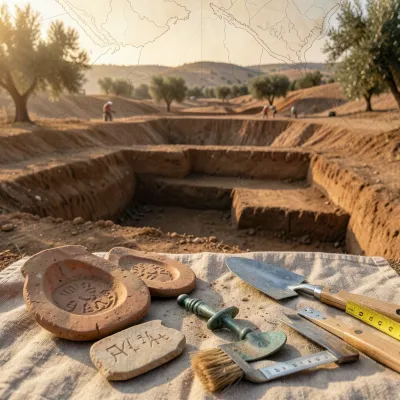
This atlas presents a comprehensive exploration of the interplay between biblical narratives and archaeological evidence across the southern Levant, emphasizing rigorous methodology and nuanced interpretation rather than seeking definitive "proofs." It begins by establishing foundational tools—stratigraphy, ceramic typology, radiocarbon dating, GIS mapping, and epigraphy—to anchor biblical texts in their historical and geographical contexts. The work surveys key periods and sites, from the Early Bronze Age urban centers and the debated conquest narratives at Jericho and Ai, through the monumental architecture and destruction layers of Hazor, Lachish, and Megiddo (engaging with debates over Solomon’s building program versus Omride achievements), to Jerusalem’s water systems exemplified by Hezekiah’s Tunnel and the Siloam Inscription. It further examines extra-biblical inscriptions like the Tel Dan Stele (confirming the "House of David") and the Mesha Stele (providing Moab’s perspective on conflicts with Israel and referencing Yahweh), alongside Assyrian and Babylonian records that corroborate campaigns against Israel and Judah, the exile, and the Persian-period province of Yehud.
The atlas delves into later periods, illuminating Hellenistic Judea through fortress architecture, coinage, and cultural adaptation; the sectarian community at Qumran and the Dead Sea Scrolls; Galilee’s villages, synagogues, and economic life during the time of Jesus; Herod the Great’s extensive building projects at Caesarea, Masada, and Herodium; early Christian spaces from house churches to basilicas; and the socioeconomic realities revealed through storage jars, seals, weights, and household archaeology. Throughout, it models responsible interpretation by distinguishing between confirmation (showing plausibility), correlation (fitting known contexts), and illumination (shedding light on themes), while acknowledging uncertainties, fragmentary evidence, and the dangers of conflating theological narratives with historical claims. Chapters on Jericho, Ai, and the Low versus High Chronology debates exemplify how archaeological data can complicate literal readings without negating theological significance, advocating instead for understanding genre, memory, and cultural context.
Ultimately, the book provides a framework for moving from potsherds to theology, stressing that archaeology excels at revealing the material world—settlement patterns, economy, daily life, and external corroboration of certain historical figures and events—but rarely addresses miraculous or theological tenets directly. It advocates for interpretations grounded in chronological and geographical context, attentive to the biases and limitations of both texts and trenches, and open to multiple readings where evidence is ambiguous or contested. Ethical considerations—transparent methodology, avoiding looted antiquities, respecting living communities—are woven throughout, underscoring that sound interpretation depends on reliable data. The atlas concludes by encouraging readers to engage critically with both biblical texts and archaeological findings, using material culture to deepen historical sensitivity and enrich theological reflection without collapsing either discipline into the other.
What You'll Find Inside:
- A framework for responsible interpretation that distinguishes between confirmation, correlation, and illumination when integrating archaeological evidence with biblical texts
- Detailed case studies of contested sites like Jericho and Ai, examining stratigraphy and dating debates to assess historical claims about conquest narratives
- Analysis of key extra-biblical inscriptions (Tel Dan Stele, Mesha Stele, Assyrian records) that provide independent witnesses to biblical figures like David and Omri
- Exploration of how material culture—storage jars, seals, weights, and water systems—illuminates daily life, economy, and social contexts behind biblical narratives
- Overview of methodological advances including GIS, radiocarbon dating, and remote sensing that have transformed chronological frameworks and landscape analysis in biblical archaeology
Who's It For:
This book is designed for pastors, theology students, biblical scholars, archaeology students, and curious lay readers who seek to understand how archaeological evidence informs biblical interpretation. It will particularly benefit those wanting to read the Bible with historical sensitivity while weighing archaeological claims critically, and who appreciate a nuanced approach that avoids simplistic 'proofs' in favor of responsible integration of text and material evidence.
Table of Contents:
- Introduction
- Chapter 1 Mapping the Biblical World: Methods, Chronologies, and GIS
- Chapter 2 Egypt and the Exodus Debates: Delta Sites, Itineraries, and Memory
- Chapter 3 Jericho (Tell es-Sultan): Stratigraphy and the Conquest Question
- Chapter 4 Ai and the Problem of Identification: et-Tell, Khirbet el-Maqatir, and Beyond
- Chapter 5 Hazor: Royal City, Destruction Layers, and 1 Kings 9
- Chapter 6 Lachish: Siege Ramp, Reliefs, and Assyrian Campaigns
- Chapter 7 Megiddo: Gates, Stables, and the Omride/Solomonic Debate
- Chapter 8 Jerusalem’s Water Systems: Hezekiah’s Tunnel and the Siloam Inscription
- Chapter 9 Samaria (Sebaste): Palaces, Ivories, and the Omrides
- Chapter 10 The Tel Dan Stele: Reading “House of David”
- Chapter 11 The Mesha Stele: Moab’s Voice on the Highland Wars
- Chapter 12 Assyrian Records and Israel/Judah: Black Obelisk and Royal Annals
- Chapter 13 Exile and Return: Babylonian Evidence and Yehud
- Chapter 14 Elephantine and Persian-Period Judaism: Papyri and Temples
- Chapter 15 Hellenistic Judea: Fortresses, Coins, and Cultural Change
- Chapter 16 Qumran and the Dead Sea Scrolls: Sect, Scribes, and Caves
- Chapter 17 Galilee in the Time of Jesus: Villages, Workshops, and Roads
- Chapter 18 Herod the Great’s Building Program: Caesarea, Masada, and Herodium
- Chapter 19 Early Synagogues: Architecture, Inscriptions, and Community Life
- Chapter 20 Crucifixion, Tombs, and Burial: Bodies, Ossuaries, and Memory
- Chapter 21 Paul’s Cities: Corinth, Ephesus, Philippi, and Roman Networks
- Chapter 22 Early Christian Spaces and Inscriptions: From House Churches to Basilicas
- Chapter 23 Economy and Household Archaeology: Storage Jars, Seals, and Weights
- Chapter 24 New Tools: Radiocarbon, Dendrochronology, and Remote Sensing in the Levant
- Chapter 25 From Potsherds to Theology: A Framework for Responsible Interpretation
Author:
Published By:
Date Published:
May 20, 2026
Type:
Nonfiction
Language:
English
Word Count:
51,474 words
Reading Time:
3 hours 36 minutes
Sample:
MixCache.com Total Access
Get unlimited access to this book + all books published by MixCache.com for $11.99/month
Subscribe to MTAOr purchase this book individually below
Order:
Buy the The Bible and Archaeology Atlas ebook on MixCache.com:
Buy Now
Full ebook will be available immediately
- read online or download as a PDF file.
$5 account credit for all new MixCache.com accounts, usable toward any ebook purchase!*



Ratings & Reviews
Ask Questions About This Book
Have a question about the content? Ask our AI assistant!
Start by asking a question about "The Bible and Archaeology Atlas"
Example: "Does this book mention William Shakespeare?"
Thinking...