Browse by Category
Fiction
- Action & Adventure
- African American
- Anthologies
- Children's Fiction
- Classics
- Comics & Graphic Novels
- Coming of Age
- Contemporary
- Cultural & Regional
- Drama
- Erotica
- Fantasy
- General
- Historical Fiction
- Horror
- Humor & Satire
- Literary Fiction
- Mystery, Thriller & Suspense
- Poetry
- Religious & Inspirational
- Romance
- Science Fiction
- Short Stories
- War & Military
- Westerns
- Women's Fiction
- Young Adult
Non-Fiction
- Antiques & Collectibles
- Arts & Photography
- Biographies & Memoirs
- Business & Money
- Children's Non-Fiction
-
Computers & Technology
- Artificial Intelligence
- Computer Science
- Cybersecurity & Cryptography
- Data Science & Analytics
- Databases & Big Data
- Game Development & Design
- General
- Hardware & DIY
- Mobile App Development
- Networking & Cloud Computing
- Operating Systems
- Programming
- Robotics
- Software
- Software Engineering
- User Experience (UX) & Design
- Web Development & Design
- Cooking, Food & Wine
- Crafts, Hobbies & Home
- Education & Teaching
- Engineering
- General
- Health, Fitness & Dieting
-
History
- African History
- African History - North Africa
- African History - Sub-Saharan Africa
- American History
- American History - 20th Century
- American History - Civil War
- American History - Colonial Period
- Ancient History
- Asian History
- Asian History - China
- Asian History - India
- Asian History - Japan
- Asian History - Southeast Asia
- European History
- European History - Ancient Greece
- European History - Ancient Rome
- European History - Medieval
- European History - Modern
- European History - Renaissance
- General
- Middle Eastern History
- Military History
- Military History - Aviation
- Military History - Naval
- Social & Cultural History
- World History
- Humor & Entertainment
- Industrial Technology
- Language Learning
- Law
- LGBTQ+ Non-Fiction
- Literary Criticism
- Medical Books
- Parenting & Relationships
- Philosophy
- Politics & Social Sciences
- Reference
- Religion & Spirituality
-
Science & Math
- Agricultural Sciences
- Astronomy & Space Science
- Behavioral Sciences
- Biological Sciences
- Botany & Plant Science
- Chemistry
- Earth Sciences
- Engineering - Chemical
- Engineering - Civil
- Engineering - Electrical
- Engineering - Mechanical
- Environment
- General
- Geology
- Mathematics
- Nature & Ecology
- Oceanography
- Paleontology
- Physics
- Statistics
- Self-Help
- Sports & Outdoors
- Study Aids
- Sustainability & Green Living
- Textbooks
- Transportation
- Travel
- True Crime
- Urban Planning & Development
- Veterinary Medicine
- Writing & Publishing
Jump to Section
MixCache.com Total Access
Unlimited reading and audiobooks for every book published by MixCache.com.
Included titles carry the MTA badge.
Learn more →
The Language of Empire: Script, Standardization, and Literacy in China
MTA
An analysis of how writing reforms, standardization, and language policy shaped administration and culture
About this book:
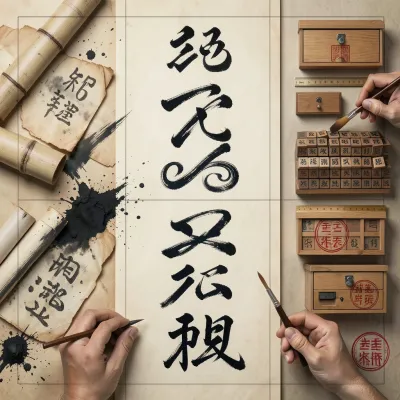
*The Language of Empire* provides a comprehensive historical analysis of how script, standardization, and language policy have served as fundamental technologies of power in China. The narrative begins in antiquity with oracle bones and bronze inscriptions, tracing the pivotal shift during the Qin dynasty when the state first mandated orthographic standardization to ensure administrative coherence. This imperial tradition was refined through the Han bureaucracy and the millenary prestige of Classical Chinese, creating a transregional elite culture where mastery of a difficult script acted as the primary gatekeeper for political and social authority.
The book transitions into the modern era by examining the profound disruptions caused by Western imperialism, missionary romanization experiments, and the introduction of the telegraph. These forces exposed the limitations of the classical system in a modernizing world, catalyzing the May Fourth Movement’s "Vernacular Revolution." This shift toward *baihua* (plain speech) sought to bridge the chasm between the written word and spoken reality, paving the way for Republican-era efforts to engineer a national language (*Guoyu*) and phonetic tools like *Zhuyin Fuhao*.
Under the People's Republic, these projects reached an unprecedented scale through massive literacy drives, the promotion of *Putonghua*, and the implementation of simplified characters. The text explores how these reforms aimed to unify a vast, multilingual population while also creating tensions on the frontiers of Tibet, Xinjiang, and Inner Mongolia, where language policy became a tool for national integration. It further contrasts the mainland’s path with the divergent linguistic identities of Hong Kong, Macau, and Taiwan, where Cantonese and traditional characters persist as markers of local autonomy and cultural heritage.
Finally, the book analyzes the digital age, detailing how Chinese script survived the transition to keyboards and code. It examines the development of input methods, the global standardization of Unicode, and the rise of a unique internet vernacular that often bypasses state regulation. By placing China’s experience in a comparative global context alongside the Roman, Ottoman, and Soviet empires, the book concludes that while China's script is distinctively resilient, its use of language as an instrument of statecraft reflects a universal struggle to balance the efficiency of a unified standard with the irreducible diversity of human speech.
What You'll Find Inside:
- Writing has served as a technology of power in China, shaping administration from oracle bones to digital scripts while enabling taxation, justice, and ideological control.
- The Qin dynasty established the foundational principle that script standardization is essential for political unity, a concept that persisted through two millennia of Chinese statecraft.
- Major language reforms—including the May Fourth vernacular revolution, Putonghua campaigns, and character simplification—were driven by visions of mass literacy and national modernization.
- China's language policy has constantly negotiated between standardization efforts and linguistic diversity, particularly in frontier regions like Tibet, Xinjiang, and Inner Mongolia.
- Communication technologies from paper and printing to telegraphs and the internet have repeatedly transformed how language policy is implemented and experienced across Chinese society.
Who's It For:
This book is designed for educators, historians, linguists, and policymakers interested in the intersection of language policy, empire, and administration. It will particularly benefit those studying Chinese history, literacy development, or the sociopolitical dimensions of language standardization, offering both historical analysis and practical insights for understanding how writing systems shape governance and cultural identity in multilingual societies.
Table of Contents:
- Introduction
- Chapter 1 The Origins of Script: Oracle Bones and Bronze Inscriptions
- Chapter 2 Writing and Unification: Qin Standardization and the Birth of Imperial Script
- Chapter 3 Empire by Brush: Han Bureaucracy, Archives, and Administrative Writing
- Chapter 4 The Cosmopolis of Classical Chinese: Literacy and Elite Culture
- Chapter 5 Translation and Transformation: Buddhist Texts and Vernacular Currents
- Chapter 6 Paper, Printing, and the Public: From Song Innovations to Ming Readers
- Chapter 7 Examinations and Empire: The Civil Service as Linguistic Gatekeeper
- Chapter 8 Missionaries, Modernity, and Romanization Experiments
- Chapter 9 Treaty Ports to Telegraphs: Communication Networks and New Scripts
- Chapter 10 The Vernacular Revolution: May Fourth and the Rise of Baihua
- Chapter 11 Nation in Words: Republican-Era Guoyu and Phonetic Reforms
- Chapter 12 The New China Speaks: Putonghua Campaigns and Mass Media
- Chapter 13 Simplifying the State: Character Reform and Literacy Drives
- Chapter 14 Multilingual Empire: Minority Languages, Scripts, and Policy
- Chapter 15 On the Frontiers: Language Politics in Tibet, Xinjiang, and Inner Mongolia
- Chapter 16 Cantonese Publics: Hong Kong, Macau, and Urban Vernaculars
- Chapter 17 Taiwan’s Divergent Path: Guoyu, Minnan, and Identity
- Chapter 18 Writing Revolution: Propaganda, Schooling, and the Cultural Revolution
- Chapter 19 Reform and Opening: Markets, Migration, and Linguistic Change
- Chapter 20 Keyboards and Codes: Input Methods, Unicode, and Digital Script Ecologies
- Chapter 21 The Internet Tongue: Slang, Regulation, and Platform Governance
- Chapter 22 Law and Administration: Bureaucratic Language and the Governance of Rights
- Chapter 23 Classrooms and Curricula: Teaching Literacy in a Vast Nation
- Chapter 24 Beyond the Mainland: Diasporas, Standardization, and Global Chinese
- Chapter 25 Comparative Horizons: China’s Language Empire in World Perspective
Author:
Published By:
Date Published:
May 15, 2026
Type:
Nonfiction
Language:
English
Word Count:
70,901 words
Reading Time:
4 hours 58 minutes
Sample:
Order:
Order The Language of Empire: Script, Standardization, and Literacy in China (Paperback) on MixCache.com:
Buy NowPrint copy is made to order and ships worldwide. Includes the ebook free, ready to read instantly.
$5 account credit for all new MixCache.com accounts, usable toward any ebook purchase!*