
Browse by Category
Fiction
- Action & Adventure
- African American
- Anthologies
- Children's Fiction
- Classics
- Comics & Graphic Novels
- Coming of Age
- Contemporary
- Cultural & Regional
- Drama
- Erotica
- Fantasy
- General
- Historical Fiction
- Horror
- Humor & Satire
- Literary Fiction
- Mystery, Thriller & Suspense
- Poetry
- Religious & Inspirational
- Romance
- Science Fiction
- Short Stories
- War & Military
- Westerns
- Women's Fiction
- Young Adult
Non-Fiction
- Antiques & Collectibles
- Arts & Photography
- Biographies & Memoirs
- Business & Money
- Children's Non-Fiction
-
Computers & Technology
- Artificial Intelligence
- Computer Science
- Cybersecurity & Cryptography
- Data Science & Analytics
- Databases & Big Data
- Game Development & Design
- General
- Hardware & DIY
- Mobile App Development
- Networking & Cloud Computing
- Operating Systems
- Programming
- Robotics
- Software
- Software Engineering
- User Experience (UX) & Design
- Web Development & Design
- Cooking, Food & Wine
- Crafts, Hobbies & Home
- Education & Teaching
- Engineering
- General
- Health, Fitness & Dieting
-
History
- African History
- African History - North Africa
- African History - Sub-Saharan Africa
- American History
- American History - 20th Century
- American History - Civil War
- American History - Colonial Period
- Ancient History
- Asian History
- Asian History - China
- Asian History - India
- Asian History - Japan
- Asian History - Southeast Asia
- European History
- European History - Ancient Greece
- European History - Ancient Rome
- European History - Medieval
- European History - Modern
- European History - Renaissance
- General
- Middle Eastern History
- Military History
- Military History - Aviation
- Military History - Naval
- Social & Cultural History
- World History
- Humor & Entertainment
- Industrial Technology
- Language Learning
- Law
- LGBTQ+ Non-Fiction
- Literary Criticism
- Medical Books
- Parenting & Relationships
- Philosophy
- Politics & Social Sciences
- Reference
- Religion & Spirituality
-
Science & Math
- Agricultural Sciences
- Astronomy & Space Science
- Behavioral Sciences
- Biological Sciences
- Botany & Plant Science
- Chemistry
- Earth Sciences
- Engineering - Chemical
- Engineering - Civil
- Engineering - Electrical
- Engineering - Mechanical
- Environment
- General
- Geology
- Mathematics
- Nature & Ecology
- Oceanography
- Paleontology
- Physics
- Statistics
- Self-Help
- Sports & Outdoors
- Study Aids
- Sustainability & Green Living
- Textbooks
- Transportation
- Travel
- True Crime
- Urban Planning & Development
- Veterinary Medicine
- Writing & Publishing
Jump to Section
MixCache.com Total Access
Unlimited reading and audiobooks for every book published by MixCache.com.
Included titles carry the MTA badge.
Learn more →
Mapping Empire: Cartography, Territory, and Border Making in Chinese History
MTA
How maps, surveys, and frontier policies defined territory and identity from Han expansion to modern borders
About this book:
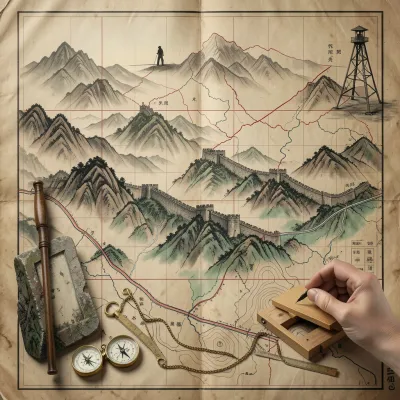
*Mapping Empire: Cartography, Territory, and Border Making in Chinese History* provides a comprehensive longitudinal study of how the practice of mapping transitioned from a tool of imperial administration to a constitutive element of modern Chinese nationhood. The book traces this evolution across two millennia, beginning with the Han dynasty’s early attempts to organize space through roads and postal relays. It highlights how successive dynasties—from the grid innovations of the Song to the vast Eurasian synthesis of the Mongol Yuan—refined technical instruments to govern a multi-ethnic realm. The arrival of Jesuit surveyors during the Qing dynasty marked a pivotal shift, integrating European mathematical rigor with Chinese statecraft to produce scientifically grounded imperial atlases that formalized the borders of Manchuria, Mongolia, Tibet, and Xinjiang.
The narrative details the nineteenth-century rupture caused by Western and Japanese imperialism, which challenged China’s traditional tributary imagination with European concepts of fixed, linear sovereignty. The author examines how the "unequal treaties" necessitated a new cartographic urgency, leading to the creation of the Maritime Customs Service and the mapping of treaty ports. This period set the stage for the Republic of China’s efforts to remap the fragmented empire as a modern nation-state, a project characterized by the tension between maximalist historical claims and the limited reach of central authority during decades of war and occupation.
In the twentieth century, the book explores the People's Republic of China’s institutionalization of mapping as a centralized, highly secretive industry. Influenced by Soviet methods, the PRC completed a national topographic survey of unprecedented scale, using cartography to implement revolutionary land reforms and secure borders with socialist neighbors like Mongolia and the USSR. The text provides a deep analysis of the 1962 Sino-Indian War and the 1969 Ussuri River clashes, illustrating how maps served as both operational military tools and legal instruments in enduring territorial disputes.
The final chapters address the contemporary digital revolution, where satellite technology, the BeiDou navigation system, and "Smart City" projects have transformed the map into a real-time infrastructure of governance. The author argues that while digital platforms appear technically neutral, they continue to reinforce national identity through the visual assertion of maritime claims, such as the nine-dash line, and the strict state control of geographic data. Ultimately, the book concludes that in Chinese history, the map has never merely reflected the territory; it has actively produced and contested the spatial reality of the state.
What You'll Find Inside:
- Han dynasty's foundational role in establishing imperial space through administrative divisions, infrastructure like roads and postal systems, and early cartographic practices that transformed aspirational unity into tangible territory
- Song dynasty's cartographic innovations including systematic grid mapping, the Yu Ji Tu stone map, and proliferation of local gazetteers that advanced precision and administrative utility of maps
- Kangxi Emperor's collaborative surveys with Jesuit missionaries that introduced triangulation and astronomical observation to produce China's first scientifically rigorous imperial maps
- Evolution of China's northern frontier through key treaties from Nerchinsk (1689) to Aigun and Peking (1858-1860), demonstrating how cartography served as both tool and consequence of shifting power dynamics
- Modern transformation of Chinese cartography through digital technology, BeiDou satellite system, and big data, revealing how contemporary mapping reinforces national identity while navigating state secrecy and geopolitical claims
Who's It For:
This book is ideal for readers of geopolitics, historical geography, and border studies who seek to understand how mapping practices have shaped China's territorial evolution from Han expansion to contemporary borders. It will particularly benefit academics, students, and professionals interested in the interplay between cartography, state power, and national identity formation across Chinese history.
Table of Contents:
- Introduction
- Chapter 1 Han Frontiers and the Invention of Imperial Space
- Chapter 2 Media and Methods: From Bamboo Slips to Paper Atlases
- Chapter 3 Roads, Posts, and Itinerary Maps: Mapping by Movement
- Chapter 4 Cadastral Beginnings: Commanderies, Counties, and Fields
- Chapter 5 Tang Cosmography and the Tributary Imagination
- Chapter 6 Song Innovations: Grid Maps, Yu Ji Tu, and Gazetteers
- Chapter 7 Conquest and Synthesis: Yuan Cartography in a Mongol World
- Chapter 8 Maritime Horizons: Early Ming Charts, Zheng He, and Coastal Defense
- Chapter 9 Households and Fields: Ming Yellow Registers and Fish-Scale Maps
- Chapter 10 Governing the Southwest: Tusi Domains and Gaitu Guiliu
- Chapter 11 Jesuits at Court: Kangxi’s Surveys and the Map of All Under Heaven
- Chapter 12 Fixing the Northwest: Qing Xinjiang, Zunghars, and the Problem of Scale
- Chapter 13 Tibet and Mongolia: Sacred Geography, Banners, and Ambiguous Sovereignties
- Chapter 14 Drawing the North: From Nerchinsk to Aigun and Peking
- Chapter 15 Himalayan Lines: Simla, McMahon, and the Cartographies of Dispute
- Chapter 16 Treaty Ports and Maritime Customs: Charts, Lighthouses, and Coastal Borders
- Chapter 17 From Empire to Republic: National Territory and the 1912–1949 Mapping Projects
- Chapter 18 Occupation and War: Manchukuo, Wartime Surveys, and Propaganda Maps
- Chapter 19 Revolution and Institutions: The PRC Mapping System and State Secrecy
- Chapter 20 Socialist Neighbors: Mongolia, the USSR, and Border Demarcation
- Chapter 21 The Sino-Indian Frontier: Aksai Chin, Arunachal, and 1962
- Chapter 22 Rivers and Islands in the North: Ussuri, Amur, and Post-1969 Adjustments
- Chapter 23 The Southern Arc: Yunnan, Guangxi, and the Vietnam–Laos–Myanmar Boundaries
- Chapter 24 Seas and Sovereignty: The U-shaped/Nine-Dash Line and Maritime Claims
- Chapter 25 Digital Maps, Big Data, and National Identity in the Twenty-First Century
Author:
Published By:
Date Published:
May 15, 2026
Type:
Nonfiction
Language:
English
Word Count:
69,551 words
Reading Time:
4 hours 52 minutes
Sample:
MixCache.com Total Access
Get unlimited access to this book + all books published by MixCache.com for $11.99/month
Subscribe to MTAOr purchase this book individually below
Order:
Buy the Mapping Empire: Cartography, Territory, and Border Making in Chinese History ebook on MixCache.com:
Buy Now
Full ebook will be available immediately
- read online or download as a PDF file.
$5 account credit for all new MixCache.com accounts, usable toward any ebook purchase!*





Ratings & Reviews
Ask Questions About This Book
Have a question about the content? Ask our AI assistant!
Start by asking a question about "Mapping Empire: Cartography, Territory, and Border Making in Chinese History"
Example: "Does this book mention William Shakespeare?"
Thinking...