
Browse by Category
Fiction
- Action & Adventure
- African American
- Anthologies
- Children's Fiction
- Classics
- Comics & Graphic Novels
- Coming of Age
- Contemporary
- Cultural & Regional
- Drama
- Erotica
- Fantasy
- General
- Historical Fiction
- Horror
- Humor & Satire
- Literary Fiction
- Mystery, Thriller & Suspense
- Poetry
- Religious & Inspirational
- Romance
- Science Fiction
- Short Stories
- War & Military
- Westerns
- Women's Fiction
- Young Adult
Non-Fiction
- Antiques & Collectibles
- Arts & Photography
- Biographies & Memoirs
- Business & Money
- Children's Non-Fiction
-
Computers & Technology
- Artificial Intelligence
- Computer Science
- Cybersecurity & Cryptography
- Data Science & Analytics
- Databases & Big Data
- Game Development & Design
- General
- Hardware & DIY
- Mobile App Development
- Networking & Cloud Computing
- Operating Systems
- Programming
- Robotics
- Software
- Software Engineering
- User Experience (UX) & Design
- Web Development & Design
- Cooking, Food & Wine
- Crafts, Hobbies & Home
- Education & Teaching
- Engineering
- General
- Health, Fitness & Dieting
-
History
- African History
- African History - North Africa
- African History - Sub-Saharan Africa
- American History
- American History - 20th Century
- American History - Civil War
- American History - Colonial Period
- Ancient History
- Asian History
- Asian History - China
- Asian History - India
- Asian History - Japan
- Asian History - Southeast Asia
- European History
- European History - Ancient Greece
- European History - Ancient Rome
- European History - Medieval
- European History - Modern
- European History - Renaissance
- General
- Middle Eastern History
- Military History
- Military History - Aviation
- Military History - Naval
- Social & Cultural History
- World History
- Humor & Entertainment
- Industrial Technology
- Language Learning
- Law
- LGBTQ+ Non-Fiction
- Literary Criticism
- Medical Books
- Parenting & Relationships
- Philosophy
- Politics & Social Sciences
- Reference
- Religion & Spirituality
-
Science & Math
- Agricultural Sciences
- Astronomy & Space Science
- Behavioral Sciences
- Biological Sciences
- Botany & Plant Science
- Chemistry
- Earth Sciences
- Engineering - Chemical
- Engineering - Civil
- Engineering - Electrical
- Engineering - Mechanical
- Environment
- General
- Geology
- Mathematics
- Nature & Ecology
- Oceanography
- Paleontology
- Physics
- Statistics
- Self-Help
- Sports & Outdoors
- Study Aids
- Sustainability & Green Living
- Textbooks
- Transportation
- Travel
- True Crime
- Urban Planning & Development
- Veterinary Medicine
- Writing & Publishing
Jump to Section
MixCache.com Total Access
Unlimited reading and audiobooks for every book published by MixCache.com.
Included titles carry the MTA badge.
Learn more →
The Quiet Therapy of Ruins
MTA
A psychological novel and field guide exploring trauma, phobia therapy, and communal healing in post-zombie settlements
About this book:
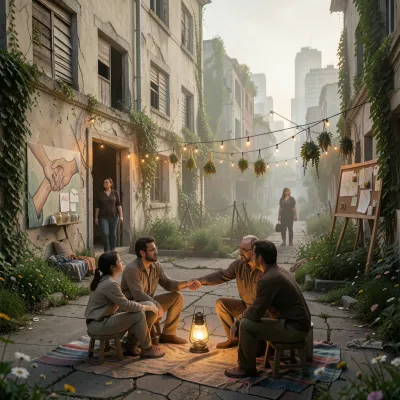
"The Quiet Therapy of Ruins" is a psychological novel framed as a therapist's field guide through a post-zombie apocalypse world. The protagonist, Maren Solis, is a traveling clinical psychologist who moves between isolated human settlements, helping communities confront and heal from the profound trauma left by the collapse of civilization. Lacking traditional clinical settings, Maren improvises therapeutic interventions using salvaged materials and adapting established techniques like exposure therapy and ritual design to the unique challenges of each community.
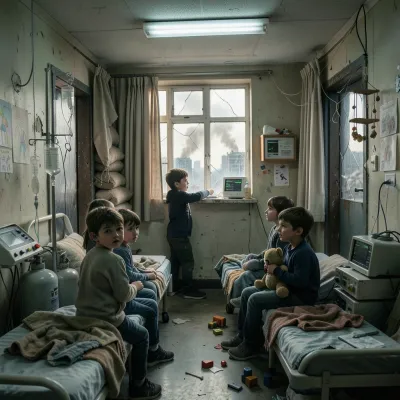
The book details Maren's encounters with various settlements, each grappling with a distinct collective trauma. In Thornfield, she helps residents overcome their phobia of a gate that once allowed walkers to breach their defenses. In The Rookery, she addresses a community's fear of the open sky, which they associate with a past catastrophic event. The Bend requires rituals to reconcile residents with a river that became a graveyard. Fort Ironwood suffers from interpersonal suspicion, which Maren addresses by creating a "market wall" for anonymous confessions. She also visits places like Calloway, "The Phobia Orchard," where fears are cultivated rather than eliminated, and The Asylum, an old psychiatric hospital where survivors have recreated institutional trauma by obsessively sorting fragments.
Throughout her journey, Maren acts as a catalyst for communal healing, helping residents articulate their fears, develop shared rituals of remembrance and release, and rebuild trust in one another. She witnesses profound acts of resilience, from children learning to make noise again in Oakhaven to a community in Meridian honoring their dead through a "night parade of empty boots." However, Maren also grapples with her own unaddressed trauma, using constant motion and dedication to others as a means of avoiding her personal grief and the silence of her past.
The narrative culminates in Maren's arrival at Sala, a coastal settlement that practices radical presence and acceptance. Here, she is confronted with the unsustainable nature of her itinerant healing practice and the illusion that helping others can substitute for healing oneself. By finally acknowledging her own grief and fear, prompted by the community's gentle witnessing, Maren decides to cease her relentless travels. She unburdens herself of the symbolic tokens collected from each settlement by placing them in Sala's communal "Archive of Hands" and commits to a slower, more grounded life, finding her own place within a community that prioritizes being over doing. The book ultimately offers a blueprint for a "softer tomorrow," not as a rigid plan, but as a practice of collective vulnerability, connection, and the quiet courage to simply stay and live within the ruins.
Table of Contents:
- Introduction
- Chapter 1 After the Sirens, Before the Songs
- Chapter 2 The Therapist with No Clinic
- Chapter 3 Maps Drawn in Ash
- Chapter 4 First Session: At the Threshold
- Chapter 5 Rituals for Returning
- Chapter 6 Case Notes from the Market Wall
- Chapter 7 The Phobia Orchard
- Chapter 8 Council Fire: A Group Speaks
- Chapter 9 The House That Counts Breaths
- Chapter 10 Children of the Quiet Barricade
- Chapter 11 What the Water Remembers
- Chapter 12 A Manual Written in Chalk
- Chapter 13 The Night Parade of Empty Boots
- Chapter 14 Confession in the Radio Room
- Chapter 15 The Language of Triggers and Bells
- Chapter 16 The Bridge with No Middle
- Chapter 17 Aftercare in a World Without Appointments
- Chapter 18 The Bones of an Institution
- Chapter 19 The Fear Tax
- Chapter 20 Pilgrimage to the Red Zone
- Chapter 21 A Carnival of Return
- Chapter 22 The Archive of Hands
- Chapter 23 Infections of Memory
- Chapter 24 The Therapist Breaks Protocol
- Chapter 25 Blueprint for a Softer Tomorrow
Author:
Published By:
Date Published:
May 14, 2026
Type:
Fiction
Language:
English
Word Count:
85,952 words
Reading Time:
6 hours 1 minutes
Sample:
MixCache.com Total Access
Get unlimited access to this book + all books published by MixCache.com for $11.99/month
Subscribe to MTAOr purchase this book individually below
Order:
Buy the The Quiet Therapy of Ruins ebook on MixCache.com:
Buy Now
Full ebook will be available immediately
- read online or download as a PDF file.
$5 account credit for all new MixCache.com accounts, usable toward any ebook purchase!*





Ratings & Reviews
Ask Questions About This Book
Have a question about the content? Ask our AI assistant!
Start by asking a question about "The Quiet Therapy of Ruins"
Example: "Does this book mention William Shakespeare?"
Thinking...