Browse by Category
Fiction
- Action & Adventure
- African American
- Anthologies
- Children's Fiction
- Classics
- Comics & Graphic Novels
- Coming of Age
- Contemporary
- Cultural & Regional
- Drama
- Erotica
- Fantasy
- General
- Historical Fiction
- Horror
- Humor & Satire
- Literary Fiction
- Mystery, Thriller & Suspense
- Poetry
- Religious & Inspirational
- Romance
- Science Fiction
- Short Stories
- War & Military
- Westerns
- Women's Fiction
- Young Adult
Non-Fiction
- Antiques & Collectibles
- Arts & Photography
- Biographies & Memoirs
- Business & Money
- Children's Non-Fiction
-
Computers & Technology
- Artificial Intelligence
- Computer Science
- Cybersecurity & Cryptography
- Data Science & Analytics
- Databases & Big Data
- Game Development & Design
- General
- Hardware & DIY
- Mobile App Development
- Networking & Cloud Computing
- Operating Systems
- Programming
- Robotics
- Software
- Software Engineering
- User Experience (UX) & Design
- Web Development & Design
- Cooking, Food & Wine
- Crafts, Hobbies & Home
- Education & Teaching
- Engineering
- General
- Health, Fitness & Dieting
-
History
- African History
- African History - North Africa
- African History - Sub-Saharan Africa
- American History
- American History - 20th Century
- American History - Civil War
- American History - Colonial Period
- Ancient History
- Asian History
- Asian History - China
- Asian History - India
- Asian History - Japan
- Asian History - Southeast Asia
- European History
- European History - Ancient Greece
- European History - Ancient Rome
- European History - Medieval
- European History - Modern
- European History - Renaissance
- General
- Middle Eastern History
- Military History
- Military History - Aviation
- Military History - Naval
- Social & Cultural History
- World History
- Humor & Entertainment
- Industrial Technology
- Language Learning
- Law
- LGBTQ+ Non-Fiction
- Literary Criticism
- Medical Books
- Parenting & Relationships
- Philosophy
- Politics & Social Sciences
- Reference
- Religion & Spirituality
-
Science & Math
- Agricultural Sciences
- Astronomy & Space Science
- Behavioral Sciences
- Biological Sciences
- Botany & Plant Science
- Chemistry
- Earth Sciences
- Engineering - Chemical
- Engineering - Civil
- Engineering - Electrical
- Engineering - Mechanical
- Environment
- General
- Geology
- Mathematics
- Nature & Ecology
- Oceanography
- Paleontology
- Physics
- Statistics
- Self-Help
- Sports & Outdoors
- Study Aids
- Sustainability & Green Living
- Textbooks
- Transportation
- Travel
- True Crime
- Urban Planning & Development
- Veterinary Medicine
- Writing & Publishing
Jump to Section
MixCache.com Total Access
Unlimited reading and audiobooks for every book published by MixCache.com.
Included titles carry the MTA badge.
Learn more →
Herbs for Pollinators and Biodiversity
MTA
Planting Guides to Support Bees, Butterflies, and Beneficial Insects
About this book:
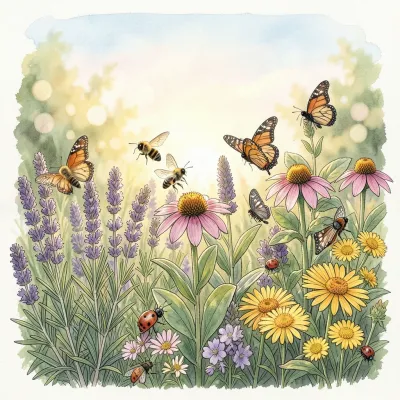
"Herbs for Pollinators and Biodiversity" is a comprehensive guide to creating thriving habitats for bees, butterflies, moths, and other beneficial insects by strategically planting herbs. The book emphasizes that herbs, traditionally valued for culinary and medicinal uses, are also exceptionally potent pollinator plants due to their abundant, accessible nectar and pollen, long bloom periods, and diverse structural benefits. It challenges the conventional view of gardening, advocating for a shift from aesthetic-only choices to ecologically-driven design, stressing the interconnectedness of soil health, plant resilience, and insect well-being.
The book delves into foundational ecological principles, beginning with understanding various pollinator needs, including specific dietary requirements (nectar and pollen quality), life cycles (larval host plants), and habitat preferences (nesting sites, water, shelter). It then transitions into practical garden design, advocating for structural diversity, plant clustering for efficient foraging, and meticulous bloom sequencing to ensure continuous resources from early spring to late autumn, even addressing nocturnal pollinators. A significant portion is dedicated to organic and low-input practices, highlighting the critical link between healthy soil and robust plant defense, and providing detailed strategies for minimizing pesticide impacts on beneficial insects.
Specific chapters offer detailed profiles of high-value herbs for different pollinator groups—bees, butterflies, moths, and beneficial predators/parasitoids—explaining why certain flower shapes, colors, and fragrances appeal to each. The book navigates the complex native versus non-native plant debate, promoting a balanced approach that leverages the strengths of both while prioritizing non-invasiveness. It also scales these principles from small-space container gardens and urban balconies to community projects like school gardens and parks, and even large-scale farm integrations in field margins and agroforestry systems.
Ultimately, "Herbs for Pollinators and Biodiversity" empowers gardeners of all scales to become active stewards of their local ecosystems. It encourages adaptive management through monitoring and citizen science, learning from observation, and adjusting practices to build resilient gardens that can withstand climate extremes. The book concludes with a focus on long-term stewardship, including seed saving and sharing, fostering a community-driven approach to pollinator conservation that ensures the sustained health and biodiversity of our landscapes.
What You'll Find Inside:
- Herbs supply abundant nectar, pollen, and structural habitat that support a wide range of pollinators from bees to butterflies and beneficial insects.
- Designing for continuous bloom, floral diversity, and layered habitat creates year‑round resources and shelter for pollinator life cycles.
- Balancing native and carefully chosen non‑native herbs provides both specialist pollinator support and generalist forage while minimizing ecological risk.
- Organic, low‑input practices—healthy soil, proper watering, and targeted interventions—protect pollinators by reducing pesticide exposure.
- Regular observation, citizen‑science monitoring, and adaptive management let gardeners refine plantings and improve pollinator outcomes over time.
Who's It For:
This book is ideal for home gardeners, urban balcony growers, educators, community organizers, and land managers who want to create or enhance pollinator‑friendly herb gardens using science‑based, practical approaches that work across spaces from containers to farm margins.
Table of Contents:
- Introduction
- Chapter 1 Why Herbs Matter to Pollinators: Nectar, Pollen, and Habitat
- Chapter 2 Understanding Pollinators: Bees, Butterflies, Moths, and Beneficial Insects
- Chapter 3 Garden Design Principles for Pollinator Diversity
- Chapter 4 Soil Health and Water: Foundations for Resilient Herb Gardens
- Chapter 5 Choosing Native vs. Non‑Native Herbs: Ecological Trade‑offs
- Chapter 6 Seasonal Bloom Sequencing: From Early Spring to Winter Interest
- Chapter 7 From Seed to Stand: Propagation, Transplanting, and Establishment
- Chapter 8 Organic and Low‑Input Practices: Minimizing Pesticide Impacts
- Chapter 9 Herbs for Bees: High‑Value Species and Cultivars
- Chapter 10 Herbs for Butterflies and Moths: Nectar Sources and Host Plants
- Chapter 11 Herbs for Predators and Parasitoids: Allies in Natural Pest Control
- Chapter 12 Culinary Herbs That Feed Wildlife and People
- Chapter 13 Fragrant and Medicinal Herbs with Exceptional Pollinator Value
- Chapter 14 Container and Small‑Space Herb Gardens for Urban Pollinators
- Chapter 15 Meadows, Borders, and Hedgerows: Structuring Habitat with Herbs
- Chapter 16 Water, Shelter, and Nesting: Beyond Flowers
- Chapter 17 Climate‑Smart Herb Gardening: Drought, Heat, and Extremes
- Chapter 18 Regional Planting Guides: Northeast, Southeast, Midwest, Plains, Southwest, Northwest
- Chapter 19 Designing Night and Shoulder‑Season Resources
- Chapter 20 Weeds or Wild Herbs? Rethinking Volunteer Species
- Chapter 21 Monitoring, Citizen Science, and Adaptive Management
- Chapter 22 Community Spaces: Schools, Parks, and Roadside Projects
- Chapter 23 Farm‑Scale Integrations: Field Margins, Orchards, and Agroforestry
- Chapter 24 Troubleshooting: Diagnosing Problems Without Harmful Chemicals
- Chapter 25 Long‑Term Stewardship: Succession, Seed Saving, and Sharing
Author:
Published By:
Date Published:
May 13, 2026
Type:
Nonfiction
Language:
English
Word Count:
67,371 words
Reading Time:
4 hours 43 minutes
Sample:
Order:
Order Herbs for Pollinators and Biodiversity (Paperback) on MixCache.com:
Buy NowPrint copy is made to order and ships worldwide. Includes the ebook free, ready to read instantly.
$5 account credit for all new MixCache.com accounts, usable toward any ebook purchase!*