Browse by Category
Fiction
- Action & Adventure
- African American
- Anthologies
- Children's Fiction
- Classics
- Comics & Graphic Novels
- Coming of Age
- Contemporary
- Cultural & Regional
- Drama
- Erotica
- Fantasy
- General
- Historical Fiction
- Horror
- Humor & Satire
- Literary Fiction
- Mystery, Thriller & Suspense
- Poetry
- Religious & Inspirational
- Romance
- Science Fiction
- Short Stories
- War & Military
- Westerns
- Women's Fiction
- Young Adult
Non-Fiction
- Antiques & Collectibles
- Arts & Photography
- Biographies & Memoirs
- Business & Money
- Children's Non-Fiction
-
Computers & Technology
- Artificial Intelligence
- Computer Science
- Cybersecurity & Cryptography
- Data Science & Analytics
- Databases & Big Data
- Game Development & Design
- General
- Hardware & DIY
- Mobile App Development
- Networking & Cloud Computing
- Operating Systems
- Programming
- Robotics
- Software
- Software Engineering
- User Experience (UX) & Design
- Web Development & Design
- Cooking, Food & Wine
- Crafts, Hobbies & Home
- Education & Teaching
- Engineering
- General
- Health, Fitness & Dieting
-
History
- African History
- African History - North Africa
- African History - Sub-Saharan Africa
- American History
- American History - 20th Century
- American History - Civil War
- American History - Colonial Period
- Ancient History
- Asian History
- Asian History - China
- Asian History - India
- Asian History - Japan
- Asian History - Southeast Asia
- European History
- European History - Ancient Greece
- European History - Ancient Rome
- European History - Medieval
- European History - Modern
- European History - Renaissance
- General
- Middle Eastern History
- Military History
- Military History - Aviation
- Military History - Naval
- Social & Cultural History
- World History
- Humor & Entertainment
- Industrial Technology
- Language Learning
- Law
- LGBTQ+ Non-Fiction
- Literary Criticism
- Medical Books
- Parenting & Relationships
- Philosophy
- Politics & Social Sciences
- Reference
- Religion & Spirituality
-
Science & Math
- Agricultural Sciences
- Astronomy & Space Science
- Behavioral Sciences
- Biological Sciences
- Botany & Plant Science
- Chemistry
- Earth Sciences
- Engineering - Chemical
- Engineering - Civil
- Engineering - Electrical
- Engineering - Mechanical
- Environment
- General
- Geology
- Mathematics
- Nature & Ecology
- Oceanography
- Paleontology
- Physics
- Statistics
- Self-Help
- Sports & Outdoors
- Study Aids
- Sustainability & Green Living
- Textbooks
- Transportation
- Travel
- True Crime
- Urban Planning & Development
- Veterinary Medicine
- Writing & Publishing
Jump to Section

Want unlimited access to all books published by MixCache.com (plus their audiobooks)? Try MixCache.com Total Access. Look for the MTA badge on book covers to identify included titles.
Access to infinite ebooks: Don't see the book you want? Suggest it and we'll create it (free!) for you from scratch with our powerful AI book writer. Then read it with MTA - besides profiting from any sales it makes!
War Economies: Financing Conflict, Sanctions, and the Business of Arms
MTA
How States Mobilize Money, Industry, and Trade to Wage War
About this book:
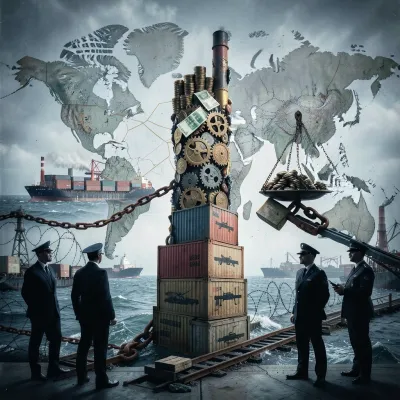
*War Economies: Financing Conflict, Sanctions, and the Business of Arms* provides a comprehensive analysis of how states organize their fiscal, industrial, and trade systems to sustain military power. The book traces the evolution of war finance from ancient tribute and medieval debasement to modern instruments like war bonds, progressive taxation, and central bank monetization. It argues that while tactical brilliance is vital, the ultimate outcome of prolonged conflict is dictated by a state’s ability to raise revenue, manage inflation, and allocate scarce resources through planning and rationing without collapsing the domestic social contract.
The text details the transformation of the home front into a specialized "arsenal of democracy" or command economy, emphasizing the concept of "learning-by-doing," where wartime industrial mobilization accelerates technological breakthroughs in fields like aerospace, nuclear energy, and computing. It explores the intricate business of arms, highlighting the symbiotic but often inefficient relationship between governments and private defense contractors. Furthermore, the book examines the logistical challenges of modern warfare, noting that the capacity to maintain supply chains for fuel, food, and ammunition is often the decisive factor in military endurance.
A significant portion of the work is dedicated to the external dimensions of economic warfare, including the strategic use of blockades, sanctions, and asset freezes. It describes a sophisticated "gray zone" of trade where neutral havens, arms brokers, and shadow fleets facilitate sanctions evasion. The narrative also addresses the darker side of conflict economics, such as the extraction of wealth in occupation economies, the role of black markets, and the use of illicit finance—including narcotics and cryptocurrency—to fund insurgencies.
Finally, the book looks toward the future, analyzing how artificial intelligence, autonomous systems, and cyber warfare are shifting the political economy of war. It concludes that as warfare becomes increasingly digitized and data-driven, strategic advantage will belong to states that can secure complex microchip supply chains and dominate the "innovation arms race." Throughout, the author maintains that economic design is not merely a support function for strategy but is strategy itself, determining which nations thrive, which endure, and which are shattered by the costs of conflict.
What You'll Find Inside:
- How states mobilize money, industry, and trade to wage war, revealing economic design as strategy rather than mere support
- Mechanisms of wartime finance including war bonds, taxation, monetary expansion, sanctions, and shadow economies that emerge when formal systems break down
- Industrial mobilization processes that convert peacetime production into military capability, from factory conversion to innovation ecosystems
- How economic choices during conflict determine battlefield outcomes and shape postwar recovery, development, and the social contract
- Analysis of future conflicts through the lens of emerging technologies like AI, autonomous systems, and digital currencies rewriting the economics of war
Who's It For:
This book is designed for scholars, policymakers, and strategists who need to understand the economic foundations of warfare. It provides a framework for evaluating financial, industrial, and trade decisions before, during, and after conflict, making it essential reading for those involved in national security planning, defense economics, and international relations who seek to grasp how money, industry, and trade translate into military power and political outcomes.
Author:
Published By:
Date Published:
May 13, 2026
Type:
Nonfiction
Language:
English
Word Count:
80,488 words
Reading Time:
5 hours 38 minutes
Sample:
Order:
Order War Economies: Financing Conflict, Sanctions, and the Business of Arms (Paperback) on MixCache.com:
Buy NowPrint copy is made to order and ships worldwide. Includes the ebook free, ready to read instantly.
$5 account credit for all new MixCache.com accounts, usable toward any ebook purchase!*