
Browse by Category
Fiction
- Action & Adventure
- African American
- Anthologies
- Children's Fiction
- Classics
- Comics & Graphic Novels
- Coming of Age
- Contemporary
- Cultural & Regional
- Drama
- Erotica
- Fantasy
- General
- Historical Fiction
- Horror
- Humor & Satire
- Literary Fiction
- Mystery, Thriller & Suspense
- Poetry
- Religious & Inspirational
- Romance
- Science Fiction
- Short Stories
- War & Military
- Westerns
- Women's Fiction
- Young Adult
Non-Fiction
- Antiques & Collectibles
- Arts & Photography
- Biographies & Memoirs
- Business & Money
- Children's Non-Fiction
-
Computers & Technology
- Artificial Intelligence
- Computer Science
- Cybersecurity & Cryptography
- Data Science & Analytics
- Databases & Big Data
- Game Development & Design
- General
- Hardware & DIY
- Mobile App Development
- Networking & Cloud Computing
- Operating Systems
- Programming
- Robotics
- Software
- Software Engineering
- User Experience (UX) & Design
- Web Development & Design
- Cooking, Food & Wine
- Crafts, Hobbies & Home
- Education & Teaching
- Engineering
- General
- Health, Fitness & Dieting
-
History
- African History
- African History - North Africa
- African History - Sub-Saharan Africa
- American History
- American History - 20th Century
- American History - Civil War
- American History - Colonial Period
- Ancient History
- Asian History
- Asian History - China
- Asian History - India
- Asian History - Japan
- Asian History - Southeast Asia
- European History
- European History - Ancient Greece
- European History - Ancient Rome
- European History - Medieval
- European History - Modern
- European History - Renaissance
- General
- Middle Eastern History
- Military History
- Military History - Aviation
- Military History - Naval
- Social & Cultural History
- World History
- Humor & Entertainment
- Industrial Technology
- Language Learning
- Law
- LGBTQ+ Non-Fiction
- Literary Criticism
- Medical Books
- Parenting & Relationships
- Philosophy
- Politics & Social Sciences
- Reference
- Religion & Spirituality
-
Science & Math
- Agricultural Sciences
- Astronomy & Space Science
- Behavioral Sciences
- Biological Sciences
- Botany & Plant Science
- Chemistry
- Earth Sciences
- Engineering - Chemical
- Engineering - Civil
- Engineering - Electrical
- Engineering - Mechanical
- Environment
- General
- Geology
- Mathematics
- Nature & Ecology
- Oceanography
- Paleontology
- Physics
- Statistics
- Self-Help
- Sports & Outdoors
- Study Aids
- Sustainability & Green Living
- Textbooks
- Transportation
- Travel
- True Crime
- Urban Planning & Development
- Veterinary Medicine
- Writing & Publishing
Jump to Section
MixCache.com Total Access
Unlimited reading and audiobooks for every book published by MixCache.com.
Included titles carry the MTA badge.
Learn more →
Law in War: Treaties, War Crimes, and the Evolution of the Laws of Armed Conflict
MTA
From Hague to Nuremberg and Contemporary Accountability Mechanisms
About this book:
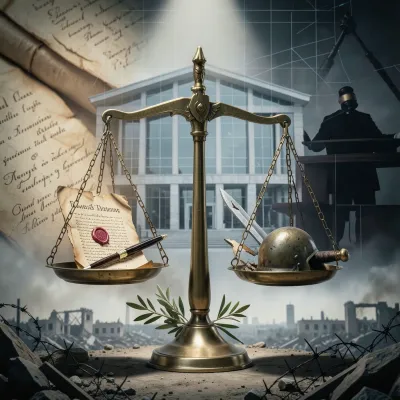
*Law in War: Treaties, War Crimes, and the Evolution of the Laws of Armed Conflict* provides a comprehensive examination of International Humanitarian Law (IHL), tracing its development from 19th-century codifications to modern accountability mechanisms. The book establishes the foundational "Hague" and "Geneva" traditions, which respectively regulate the methods of warfare and the protection of non-combatants. It explores the critical distinction between international and non-international armed conflicts, noting how this classification dictates the applicable legal protections for combatants, prisoners of war, and civilians. By balancing the competing principles of military necessity and humanity, the text explains the operational reality of rules of engagement, targeting laws, and the prohibition of weapons that cause unnecessary suffering.
The book transitions from battlefield conduct to individual accountability, beginning with the landmark Nuremberg trials that birthed the modern project of international criminal law. It provides rigorous definitions for the "core crimes": war crimes, crimes against humanity, genocide, and the crime of aggression. Detailed analysis is given to modes of liability—such as command responsibility and joint criminal enterprise—which allow for the prosecution of high-level architects of atrocity who may not have personally committed the acts. The text also navigates the complex landscape of legal defenses, the controversial nature of head-of-state immunity, and the procedural challenges of gathering evidence in volatile conflict zones.
A significant portion of the work is dedicated to the institutional architecture of justice, specifically the International Criminal Court (ICC) and various ad hoc and hybrid tribunals. The book evaluates the principle of complementarity, where the ICC serves as a court of last resort when national systems are unable or unwilling to act. It also highlights the growing importance of universal jurisdiction and domestic prosecutions in closing the "impunity gap." Beyond criminal trials, the text addresses transitional justice, emphasizing that long-term peace often requires a combination of truth commissions, reparations, and institutional reform to heal societal trauma and prevent the recurrence of violence.
The concluding chapters confront contemporary challenges that threaten to outpace traditional legal frameworks. The rise of non-state actors, private military companies, and transnational terrorist networks complicates the state-centric nature of IHL. Furthermore, the advent of cyber operations, armed drones, and lethal autonomous weapons systems introduces profound ethical and legal questions regarding attribution and meaningful human control. While acknowledging a persistent gap between legal obligations and battlefield compliance, the book argues that the laws of armed conflict remain an essential, though evolving, moral and legal bulwark against the unrestrained cruelty of war.
What You'll Find Inside:
- The historical evolution of international humanitarian law from Hague conventions through Nuremberg to contemporary accountability mechanisms, showing how law responds to warfare's changing nature
- The dual structure of IHL: Hague law regulating means and methods of warfare versus Geneva law protecting persons, explaining the two foundational traditions that shape modern armed conflict regulation
- The critical distinction between international and non-international armed conflicts and how this classification determines applicable rules, protections, and enforcement mechanisms
- Contemporary accountability mechanisms including the ICC, ad hoc tribunals, universal jurisdiction, and transitional justice approaches that complement traditional judicial processes
- Emerging challenges to IHL from new technologies like cyber operations, drones, and autonomous weapons, and how traditional principles of distinction, proportionality, and precaution apply to these domains
Who's It For:
This book is written for students and practitioners of international humanitarian law who need clear, practice-oriented guidance. It specifically benefits those working on rules of engagement, war crimes investigation and prosecution, and understanding enforcement challenges in modern conflict settings. The book bridges doctrine and practice for readers seeking to apply IHL in real-world scenarios.
Table of Contents:
- Introduction
- Chapter 1 The Architecture of International Humanitarian Law
- Chapter 2 Sources of Law: Treaties, Custom, and General Principles
- Chapter 3 The Hague and Geneva Traditions: From 1899 to 1977
- Chapter 4 The Nuremberg Legacy and the Birth of International Criminal Law
- Chapter 5 Defining Armed Conflict: International vs. Non-International
- Chapter 6 Combatant Status, Privileges, and Protections
- Chapter 7 Rules of Engagement and Military Necessity
- Chapter 8 Targeting Law: Distinction, Proportionality, and Precautions
- Chapter 9 Weapons Law: Prohibitions and Emerging Technologies
- Chapter 10 Detention, POWs, and Humane Treatment
- Chapter 11 Occupation, Neutrality, and Protection of Civilians
- Chapter 12 War Crimes, Crimes Against Humanity, Genocide, and Aggression
- Chapter 13 Modes of Liability: Command Responsibility and Joint Enterprise
- Chapter 14 Defenses and Immunities: Superior Orders, Duress, and Head-of-State Immunity
- Chapter 15 Evidence, Procedure, and Fair Trial Guarantees
- Chapter 16 The International Criminal Court: Jurisdiction, Complementarity, and Practice
- Chapter 17 Ad Hoc Tribunals and Hybrid Courts: ICTY, ICTR, SCSL, and Beyond
- Chapter 18 Universal Jurisdiction and Domestic Prosecutions
- Chapter 19 Transitional Justice: Truth Commissions, Reparations, and Institutional Reform
- Chapter 20 Sexual and Gender-Based Violence in Conflict
- Chapter 21 Children in Armed Conflict and the Recruitment of Child Soldiers
- Chapter 22 Non-State Actors, Private Military Companies, and Accountability
- Chapter 23 Cyber Operations, Drones, and Autonomous Weapons
- Chapter 24 Humanitarian Access, Sanctions, and Contemporary Accountability Mechanisms
- Chapter 25 Compliance, Enforcement, and the Future of the Laws of Armed Conflict
Author:
Published By:
Date Published:
May 13, 2026
Type:
Nonfiction
Language:
English
Word Count:
82,582 words
Reading Time:
5 hours 47 minutes
Sample:
MixCache.com Total Access
Get unlimited access to this book + all books published by MixCache.com for $11.99/month
Subscribe to MTAOr purchase this book individually below
Order:
Buy the Law in War: Treaties, War Crimes, and the Evolution of the Laws of Armed Conflict ebook on MixCache.com:
Buy Now
Full ebook will be available immediately
- read online or download as a PDF file.
$5 account credit for all new MixCache.com accounts, usable toward any ebook purchase!*




Ratings & Reviews
Ask Questions About This Book
Have a question about the content? Ask our AI assistant!
Start by asking a question about "Law in War: Treaties, War Crimes, and the Evolution of the Laws of Armed Conflict"
Example: "Does this book mention William Shakespeare?"
Thinking...