
Browse by Category
Fiction
- Action & Adventure
- African American
- Anthologies
- Children's Fiction
- Classics
- Comics & Graphic Novels
- Coming of Age
- Contemporary
- Cultural & Regional
- Drama
- Erotica
- Fantasy
- General
- Historical Fiction
- Horror
- Humor & Satire
- Literary Fiction
- Mystery, Thriller & Suspense
- Poetry
- Religious & Inspirational
- Romance
- Science Fiction
- Short Stories
- War & Military
- Westerns
- Women's Fiction
- Young Adult
Non-Fiction
- Antiques & Collectibles
- Arts & Photography
- Biographies & Memoirs
- Business & Money
- Children's Non-Fiction
-
Computers & Technology
- Artificial Intelligence
- Computer Science
- Cybersecurity & Cryptography
- Data Science & Analytics
- Databases & Big Data
- Game Development & Design
- General
- Hardware & DIY
- Mobile App Development
- Networking & Cloud Computing
- Operating Systems
- Programming
- Robotics
- Software
- Software Engineering
- User Experience (UX) & Design
- Web Development & Design
- Cooking, Food & Wine
- Crafts, Hobbies & Home
- Education & Teaching
- Engineering
- General
- Health, Fitness & Dieting
-
History
- African History
- African History - North Africa
- African History - Sub-Saharan Africa
- American History
- American History - 20th Century
- American History - Civil War
- American History - Colonial Period
- Ancient History
- Asian History
- Asian History - China
- Asian History - India
- Asian History - Japan
- Asian History - Southeast Asia
- European History
- European History - Ancient Greece
- European History - Ancient Rome
- European History - Medieval
- European History - Modern
- European History - Renaissance
- General
- Middle Eastern History
- Military History
- Military History - Aviation
- Military History - Naval
- Social & Cultural History
- World History
- Humor & Entertainment
- Industrial Technology
- Language Learning
- Law
- LGBTQ+ Non-Fiction
- Literary Criticism
- Medical Books
- Parenting & Relationships
- Philosophy
- Politics & Social Sciences
- Reference
- Religion & Spirituality
-
Science & Math
- Agricultural Sciences
- Astronomy & Space Science
- Behavioral Sciences
- Biological Sciences
- Botany & Plant Science
- Chemistry
- Earth Sciences
- Engineering - Chemical
- Engineering - Civil
- Engineering - Electrical
- Engineering - Mechanical
- Environment
- General
- Geology
- Mathematics
- Nature & Ecology
- Oceanography
- Paleontology
- Physics
- Statistics
- Self-Help
- Sports & Outdoors
- Study Aids
- Sustainability & Green Living
- Textbooks
- Transportation
- Travel
- True Crime
- Urban Planning & Development
- Veterinary Medicine
- Writing & Publishing
Jump to Section
MixCache.com Total Access
Unlimited reading and audiobooks for every book published by MixCache.com.
Included titles carry the MTA badge.
Learn more →
Cities of Change: Urbanization and Megacities in China
MTA
Migration, planning, housing, and the social consequences of rapid urban growth
About this book:
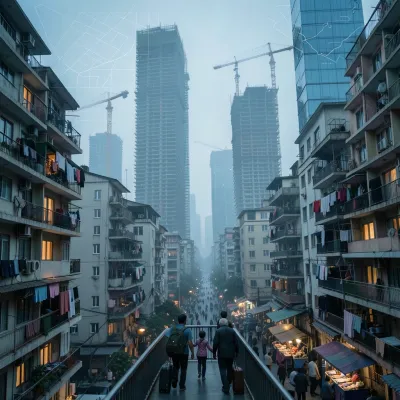
*Cities of Change: Urbanization and Megacities in China* provides a comprehensive analysis of the unprecedented urban transformation that has reshaped China over the last several decades. The book traces the historical arc from colonial treaty ports and state-led industrial hubs to the emergence of massive, globally connected city-regions. It positions urbanization as a complex interplay between central mandates and local experiments, where land monetization and infrastructure development have served as the primary engines of economic growth. Central to this narrative is the *hukou* (household registration) system, which the authors argue has created a "two-track" citizenship, providing the labor necessary for megacity expansion while simultaneously institutionalizing social and spatial inequalities for millions of migrant workers.
The text delves into the mechanical and financial underpinnings of this growth, specifically examining the "urban growth machine" fueled by land-value capture and real estate speculation. While these mechanisms have enabled the rapid construction of world-class transit networks and smart-city technologies, they have also resulted in significant environmental degradation, housing affordability crises, and the proliferation of "urban villages"—informal enclaves that provide essential low-cost housing in the shadows of gleaming skyscrapers. The authors explore how these physical and administrative structures dictate the daily lives of residents, shaping access to education, healthcare, and social insurance based on legal status and geographic location.
Looking toward the future, the book addresses the looming challenges of a shrinking labor pool, an aging population, and the necessity of climate resilience. It suggests that the era of rapid horizontal expansion is yielding to a period of "stewardship," where governance must shift from building new infrastructure to maintaining and retrofitting existing urban fabrics. By comparing China’s trajectory with other global urban narratives, the book highlights the unique capacity of the Chinese state for large-scale mobilization while warning that long-term stability will depend on the successful integration of migrants and the equitable redistribution of urban wealth. Ultimately, the summary argues that the future of China’s megacities will be defined by their ability to transition from engines of production to inclusive, humane, and sustainable environments.
What You'll Find Inside:
- Traces China's urban transformation from treaty ports to megacities, showing how historical legacies shape contemporary growth patterns.
- Examines the hukou system and its impact on migrant access to housing, public services, and urban citizenship.
- Analyzes the land‑finance‑growth machine that drives infrastructure expansion, real‑speculation, and local fiscal incentives.
- Investigates social consequences of rapid urbanization: inequality, spatial segregation, precarious labor, and challenges in education, health, and social insurance.
- Explores future pathways—stewardship vs. expansion, hukou reform, digital urbanism, and regional governance—to imagine more inclusive and resilient cities.
Who's It For:
This book is designed for students seeking a comprehensive overview of China's urbanization, policy makers and practitioners looking for evidence‑based strategies, investors and business leaders needing to understand the institutional logic of land and infrastructure, and general readers curious about how megacities function and evolve.
Table of Contents:
- Introduction
- Chapter 1 From Treaty Ports to Megacities: A Historical Arc
- Chapter 2 The Hukou System and Urban Citizenship
- Chapter 3 Migration Streams and Labor Markets
- Chapter 4 National Planning and Local Experiments
- Chapter 5 Land, Finance, and the Urban Growth Machine
- Chapter 6 Building the Megacity: Infrastructure and Networks
- Chapter 7 Housing Markets: Ownership, Rental, and Speculation
- Chapter 8 Urban Villages and Informality
- Chapter 9 Governance in the Megacity
- Chapter 10 Work, Precarity, and Migrant Lives
- Chapter 11 Public Services: Education, Health, and Social Insurance
- Chapter 12 Environment and Urban Ecologies
- Chapter 13 Mobility and Transport Transitions
- Chapter 14 Digital Urbanism: Smart Cities and Data Governance
- Chapter 15 Culture, Consumption, and the Middle Class City
- Chapter 16 Inequality and Spatial Segregation
- Chapter 17 Gender, Family, and Care in the City
- Chapter 18 Demography, Aging, and Urban Welfare
- Chapter 19 Heritage, Renewal, and Displacement
- Chapter 20 Risk, Resilience, and Public Health
- Chapter 21 Land Politics and Urban Contentions
- Chapter 22 City-Regions and Megalopolitan Governance
- Chapter 23 Globalization, Capital, and Talent
- Chapter 24 China in Comparative Perspective
- Chapter 25 Futures of Urban China: Scenarios and Reforms
Author:
Published By:
Date Published:
May 4, 2026
Type:
Nonfiction
Language:
English
Word Count:
71,308 words
Reading Time:
5 hours
Sample:
MixCache.com Total Access
Get unlimited access to this book + all books published by MixCache.com for $11.99/month
Subscribe to MTAOr purchase this book individually below
Order:
Buy the Cities of Change: Urbanization and Megacities in China ebook on MixCache.com:
Buy Now
Full ebook will be available immediately
- read online or download as a PDF file.
$5 account credit for all new MixCache.com accounts, usable toward any ebook purchase!*






Ratings & Reviews
Ask Questions About This Book
Have a question about the content? Ask our AI assistant!
Start by asking a question about "Cities of Change: Urbanization and Megacities in China"
Example: "Does this book mention William Shakespeare?"
Thinking...