
Browse by Category
Fiction
- Action & Adventure
- African American
- Anthologies
- Children's Fiction
- Classics
- Comics & Graphic Novels
- Coming of Age
- Contemporary
- Cultural & Regional
- Drama
- Erotica
- Fantasy
- General
- Historical Fiction
- Horror
- Humor & Satire
- Literary Fiction
- Mystery, Thriller & Suspense
- Poetry
- Religious & Inspirational
- Romance
- Science Fiction
- Short Stories
- War & Military
- Westerns
- Women's Fiction
- Young Adult
Non-Fiction
- Antiques & Collectibles
- Arts & Photography
- Biographies & Memoirs
- Business & Money
- Children's Non-Fiction
-
Computers & Technology
- Artificial Intelligence
- Computer Science
- Cybersecurity & Cryptography
- Data Science & Analytics
- Databases & Big Data
- Game Development & Design
- General
- Hardware & DIY
- Mobile App Development
- Networking & Cloud Computing
- Operating Systems
- Programming
- Robotics
- Software
- Software Engineering
- User Experience (UX) & Design
- Web Development & Design
- Cooking, Food & Wine
- Crafts, Hobbies & Home
- Education & Teaching
- Engineering
- General
- Health, Fitness & Dieting
-
History
- African History
- African History - North Africa
- African History - Sub-Saharan Africa
- American History
- American History - 20th Century
- American History - Civil War
- American History - Colonial Period
- Ancient History
- Asian History
- Asian History - China
- Asian History - India
- Asian History - Japan
- Asian History - Southeast Asia
- European History
- European History - Ancient Greece
- European History - Ancient Rome
- European History - Medieval
- European History - Modern
- European History - Renaissance
- General
- Middle Eastern History
- Military History
- Military History - Aviation
- Military History - Naval
- Social & Cultural History
- World History
- Humor & Entertainment
- Industrial Technology
- Language Learning
- Law
- LGBTQ+ Non-Fiction
- Literary Criticism
- Medical Books
- Parenting & Relationships
- Philosophy
- Politics & Social Sciences
- Reference
- Religion & Spirituality
-
Science & Math
- Agricultural Sciences
- Astronomy & Space Science
- Behavioral Sciences
- Biological Sciences
- Botany & Plant Science
- Chemistry
- Earth Sciences
- Engineering - Chemical
- Engineering - Civil
- Engineering - Electrical
- Engineering - Mechanical
- Environment
- General
- Geology
- Mathematics
- Nature & Ecology
- Oceanography
- Paleontology
- Physics
- Statistics
- Self-Help
- Sports & Outdoors
- Study Aids
- Sustainability & Green Living
- Textbooks
- Transportation
- Travel
- True Crime
- Urban Planning & Development
- Veterinary Medicine
- Writing & Publishing
Jump to Section
MixCache.com Total Access
Unlimited reading and audiobooks for every book published by MixCache.com.
Included titles carry the MTA badge.
Learn more →
Silk Routes to Spice Ports
MTA
Trade, Exchange, and Cultural Networks Across South Asia and the Indian Ocean
About this book:

*Silk Routes to Spice Ports* explores the multi-millennial history of South Asia as a central hub in a vast network of overland and maritime exchange. The book argues that these trade routes did far more than move commodities like spices, textiles, and horses; they acted as conduits for the diffusion of religions, languages, and artistic traditions. Driven by the seasonal rhythms of the monsoon winds and the strategic management of mountain passes, these networks connected the Indian subcontinent to the Mediterranean, East Africa, Central Asia, and Southeast Asia, fostering a uniquely cosmopolitan "monsoon world."
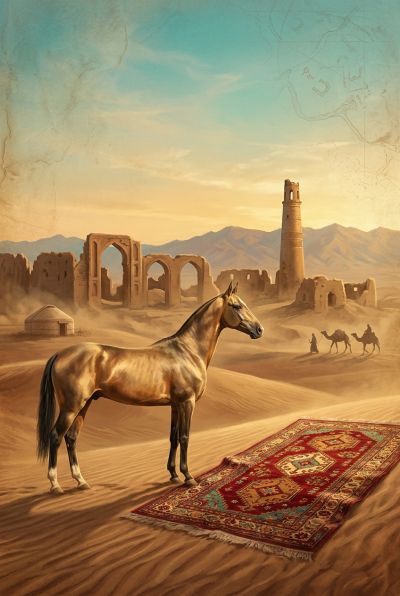
The narrative spans from the Bronze Age interactions between the Indus Valley and Mesopotamia to the rise of early historic ports and the subsequent dominance of medieval "caravan kingdoms" like the Kushans. The text highlights how institutional frameworks—such as merchant guilds, temple economies, and Buddhist monastic credit systems—provided the necessary trust and financial infrastructure for long-distance commerce. This indigenous economic sophistication predated European arrival and sustained a vibrant exchange of high-value goods, including Malabar pepper, Gujarati cotton, and Central Asian warhorses.
The latter portion of the book examines the transition into the early modern era, marked by the arrival of Islamic merchant networks and later European powers like the Portuguese, Dutch, and English. The authors detail how these European chartered companies attempted to monopolize established spice and textile routes, often through naval violence and fortified factories. However, the book emphasizes that regional merchants and diasporic communities remained resilient, adapting to these imperial shocks by leveraging deep-rooted kinship and credit networks.
Ultimately, the book frames the Indian Ocean as a dynamic laboratory of pluralism where everyday exchanges in food, language, and culture created a shared littoral identity. By examining the impact of environmental shifts, warfare, and disease, the text concludes that the modern Indian Ocean is the product of both enduring connectivity and sudden disruptions. It invites a reimagining of global history as a decentralized web of multiple centers of gravity, where South Asia served as a primary engine of global integration long before the modern era.
What You'll Find Inside:
- The monsoon winds created predictable seasonal circuits that enabled millennia of maritime trade between South Asia, East Africa, and Southeast Asia, forming the backbone of Indian Ocean exchange networks.
- Overland corridors from the Indus to the Oxus connected South Asia to Central Asia, with empires like the Kushans acting as crucial brokers who facilitated trans-Asian trade and cultural synthesis.
- Religious institutions—Buddhist monasteries, Hindu temples, and Muslim networks—provided essential infrastructure, financial services, and trust mechanisms that facilitated long-distance trade across the Indian Ocean world.
- European powers (Portuguese, Dutch, English) inserted themselves into existing Indian Ocean trade networks through fortified outposts and monopolistic policies, transforming but not erasing indigenous commercial systems.
- Cosmopolitan port cities and diasporic communities fostered cultural hybridity, creating shared lifeworlds where languages, foods, and traditions blended across the Indian Ocean littoral.
Who's It For:
This book is ideal for students and scholars of global history, maritime studies, and South Asian studies who seek to understand the deep historical roots of Indian Ocean trade networks. It will particularly benefit researchers interested in cultural exchange, economic history, and the interplay between environment and human societies. Academics in anthropology, archaeology, and religious studies focusing on pre-modern globalization will find valuable insights into how trade shaped religions, cities, and identities across vast distances.
Table of Contents:
- Introduction
- Chapter 1 Mapping the Monsoon World
- Chapter 2 Overland Corridors: From the Indus to the Oxus
- Chapter 3 Early Maritime Horizons: Meluhha, Mesopotamia, and the Indian Ocean
- Chapter 4 Ports of the Early Historic Age: Arikamedu to Barygaza
- Chapter 5 Caravan Kingdoms and the Kushan Nexus
- Chapter 6 Buddhist Roads and Monastic Economies
- Chapter 7 Guilds, Money, and Markets in Classical India
- Chapter 8 Pepper and the Spice Coasts of the Malabar
- Chapter 9 Cotton, Indigo, and the Textile Revolutions
- Chapter 10 Horses, Ivory, and the Commodities of Power
- Chapter 11 Sail, Ship, and Star: Techniques of Navigation
- Chapter 12 Trust, Credit, and Contract: The Law of the Sea
- Chapter 13 The Arabian and Persian Gateways: Aden, Hormuz, and Muscat
- Chapter 14 Across the Bay of Bengal: Coromandel, Sri Lanka, and Beyond
- Chapter 15 Straits and Archipelagos: Malacca, Aceh, and Java
- Chapter 16 East African Entanglements: Kilwa, Mombasa, and Zanzibar
- Chapter 17 Islam, Sufism, and Merchant Networks
- Chapter 18 Temples, Shrines, and Pilgrim Routes
- Chapter 19 The Cholas, Sultanates, and Vijayanagara at Sea
- Chapter 20 The Mughal Maritime Turn and Western Indian Ports
- Chapter 21 The Portuguese Estado da Índia
- Chapter 22 Dutch and English Companies: Competition and Collaboration
- Chapter 23 Diasporas and Cosmopolitan Lifeworlds
- Chapter 24 Foodways, Languages, and Everyday Exchange
- Chapter 25 Shocks and Legacies: Climate, War, and the Making of the Modern Indian Ocean
Author:
Published By:
Date Published:
March 5, 2026
Type:
Nonfiction
Language:
English
Word Count:
38,413 words
Reading Time:
2 hours 41 minutes
Sample:
MixCache.com Total Access
Get unlimited access to this book + all books published by MixCache.com for $11.99/month
Subscribe to MTAOr purchase this book individually below
Order:
Buy the Silk Routes to Spice Ports ebook on MixCache.com:
Buy Now
Full ebook will be available immediately
- read online or download as a PDF file.
$5 account credit for all new MixCache.com accounts, usable toward any ebook purchase!*


 Includes Audiobook


Ratings & Reviews
Ask Questions About This Book
Have a question about the content? Ask our AI assistant!
Start by asking a question about "Silk Routes to Spice Ports"
Example: "Does this book mention William Shakespeare?"
Thinking...