

When the Earth Roared: Living with Volcanoes Through History and Science
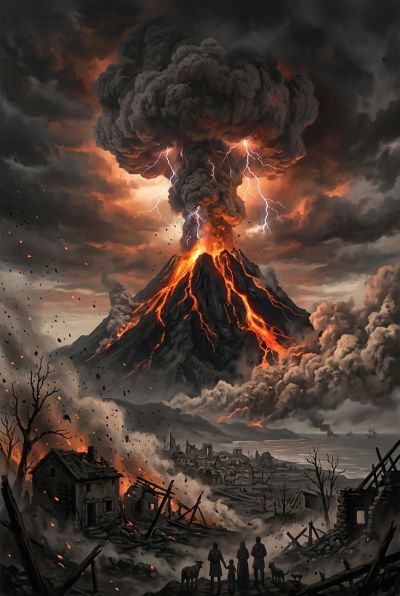
When the Earth Roared invites readers to stand at the edge of catastrophe and wonder, not just at the spectacle of lava and ash, but at the ways people have responded—sometimes wisely, sometimes tragically—to the planet’s most violent outbursts. Dr Alex Bugeja, a volcanologist with a PhD, does not merely list dates and volumes; he weaves together the geological mechanics, the personal dramas, and the lasting cultural echoes that follow each eruption. The result is a book that feels both like a field guide and a collection of human stories, offering anyone curious about our restless planet a chance to understand why we continue to live in the shadow of fire.
What the book is about
The work covers twenty‑five eruptions ranging from the Bronze Age blast at Thera to the 2021 Cumbre Vieja event on La Palma. Each chapter follows a consistent pattern: a vivid, narrative‑driven account of the eruption’s onset and immediate impact, a clear explanation of the underlying science (magma viscosity, gas content, plume dynamics), and a section on the aftermath—human loss, survival, cultural influence, and lessons for future risk management. The intended audience is the general reader with an interest in Earth science, history, or disaster studies; no specialized background is required, yet the detail satisfies those who want more than a superficial overview.
The Human Side of Eruption: Evacuation and Ignored Warnings
One of the book’s strongest threads is how human decisions—both heroic and fatal—shape the outcome of a volcanic crisis. In the Mount Pelée chapter, Bugeja recounts the tragic false sense of safety that prevailed despite clear warning signs: "The commission, which included a local high school science teacher but no trained volcanologists, examined the evidence and, on the evening of May 7th, issued a tragically flawed report. It concluded that the phenomena were normal, the open craters would prevent a catastrophic explosion, and 'the City of St. Pierre is perfectly safe.'" This misplaced confidence led to the near‑total annihilation of Saint‑Pierre when the nuee ardente struck. Conversely, the Eldfell story shows what can happen when a community acts decisively: residents pumped seawater onto the lava flow, diverting it from their harbor and saving the town. These contrasting cases illustrate the book’s central argument that understanding volcanic signals is only half the battle; acting on them is what saves lives.
Science Meets Story: How the Book Explains Volcanic Processes
Bugeja excels at turning complex geology into accessible prose without sacrificing accuracy. Early in the introduction he outlines plate tectonics and magma chemistry in plain language: "Viscosity, in simple terms, is a measure of a fluid's resistance to flow. Magma with a low viscosity, typically basaltic magma, is runny and allows gases to escape easily." Later, when discussing Tambora’s global climate impact, he links the eruption’s sulfur output to the infamous "Year Without a Summer": "The injection of large quantities of sulfur dioxide into the stratosphere can lead to the formation of sulfate aerosols, which reflect sunlight back into space and can cause a temporary cooling of the Earth's climate." By anchoring each scientific concept to a specific eruption—such as the pyroclastic flows that buried Pompeii or the lahars that devastated Armero—the reader grasps not just abstract theory but the tangible consequences of those forces.
Resilience in the Ash: Communities That Rebuilt
Beyond destruction, the book highlights humanity’s capacity to recover and even thrive after volcanic devastation. The Eldfell chapter details how Icelanders used seawater to cool lava, then turned the still‑hot rock into a district heating system that warmed homes for years: "Engineers sank pipes into the cooling rock and circulated water, creating a district heating system that provided hot water and heat to nearly every home on the island for years to come, a phoenix rising quite literally from the ashes." Similarly, the Pinatubo narrative notes how, despite the massive lahar problem, timely evacuations saved tens of thousands of lives, and the scientific response became a model for future crises. These stories reinforce the book’s message that volcanoes are not just agents of ruin; they also catalyze innovation, cooperation, and renewed respect for the environment.
Climate, Culture, and the Long Reach of Ash
Several chapters explore how eruptions reverberate far beyond their immediate locales, influencing climate, art, and even myth. The Tambora section describes how the 1815 eruption triggered crop failures, famine, and a cultural outpouring that gave rise to Mary Shelley’s Frankenstein and Lord Byron’s poem "Darkness". The Chichón episode links a sulfur‑rich eruption to possible climatic disruptions that may have contributed to a hiatus in Mayan monument building. Even the distant effects of Krakatoa’s ash are noted: "The stratospheric dust also acted as a planetary sunshade, reflecting sunlight back into space and causing global temperatures to drop by an average of up to 1.2 degrees Celsius in the year following the eruption." By tracing these far‑flung consequences, Bugeja shows that a volcanic eruption is never just a local event; it can ripple through ecosystems, economies, and imaginations across the globe.
Modern Lessons: Monitoring, Prediction, and the Cost of Complacency
The final third of the book turns to contemporary volcanology, emphasizing how technology and collaboration have improved our ability to anticipate danger—while also warning against overconfidence. The Pinatubo chapter highlights the successful joint Philippine‑USGS effort that predicted the eruption and organized mass evacuations, noting that "without the scientific warnings, it would have been catastrophically higher, likely numbering in the tens of thousands." In contrast, the Nevado del Ruiz tragedy illustrates how even accurate hazard maps can be ignored: "The map was not a secret. It was published in a major newspaper a full month before the disaster. Scientists held meetings with government officials, police, and civil defense agencies... Yet, they were met with a fatal cocktail of bureaucratic inertia, political distraction, and public skepticism." These modern cases underscore the book’s closing appeal: we now have the tools to read the mountain’s "fever chart," but we must also have the wisdom and political will to listen.
Read “When the Earth Roared” on MixCache.com →
Please log in or create an account to leave a comment.
No comments yet. Be the first to say something.