

An Excerpt from “FDR”
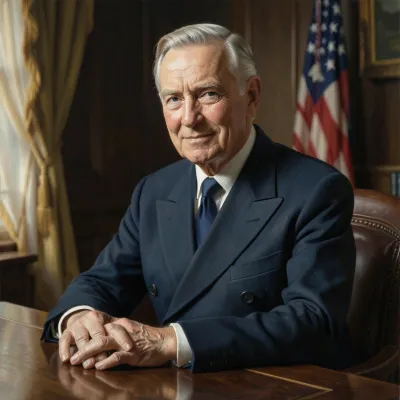
The following is an excerpt from “FDR” by Mary Stephens, available on MixCache.com.
Introduction
Franklin Delano Roosevelt’s story begins on the banks of the Hudson River and ends at the dawn of a new world order. Born in 1882 to privilege and expectation, he would become the only American president elected to four terms, leading the United States through the twin crucibles of the Great Depression and the Second World War before his death in 1945. His arc—aristocratic heir, ambitious reformer, disabled statesman, wartime strategist—traces the contours of a century in motion. This book follows that arc from Hyde Park to Warm Springs, from Albany to Washington, and from domestic upheaval to global conflict.
To write a biography of FDR is to grapple with paradox. He was both supremely confident and intensely private, a master of improvisation who also prized patience; he embraced experimentation at home while projecting steady assurance abroad. His smile and geniality were famous, but so too were his capacity for political maneuver and his willingness to wield power. These contradictions were not incidental to his leadership; they were central to his ability to navigate crises that defied conventional solutions.
The United States Roosevelt inherited in March 1933 was a nation adrift—banks failing, factories silent, families uprooted. In response, he invited Americans to join a bold experiment in democratic renewal. The New Deal was not a single program but a living process: emergency relief intertwined with structural reforms, trial and error elevated to governing philosophy, and a new social contract forged through conflict and compromise. It remade the relationship between citizen and state, set precedents that still shape public life, and sparked debates—over the scope of federal power, the obligations of wealth, and the boundaries of equality—that remain unsettled.
Yet Roosevelt’s life cannot be understood through domestic policy alone. Across the oceans, authoritarian regimes gathered force, and the United States confronted the limits of isolation. Roosevelt navigated the treacherous 1930s with a mix of caution and foresight, edging the nation toward preparedness while respecting a wary public. As commander in chief after 1941, he helped orchestrate a global alliance, balancing egos and empires while keeping sight of strategic priorities. The road from the Arsenal of Democracy to victory in 1945 ran through his office—through radio addresses and late-night conferences, through maps spread across a White House desk.
No account of FDR is complete without acknowledging the personal ordeal that reshaped him. Struck by polio in 1921, he confronted physical limitation with persistence and ingenuity, transforming Warm Springs into both a sanctuary and a school in resilience. The experience deepened his empathy and sharpened his political instincts, teaching him how to build coalitions, inspire confidence, and recognize strength in unexpected places. It also demanded constant management of image and access, revealing the discipline behind the charm.
This biography is, finally, about the uses of power in a democracy under strain. Roosevelt’s achievements were vast, but they were not unblemished. The exclusions of the New Deal, the internment of Japanese Americans during wartime, and the compromises of coalition politics reveal the boundaries of his vision and the costs of his choices. By tracing both accomplishment and shortcoming, we can see how leadership operates when time is short, information is imperfect, and stakes are immense.
FDR’s legacy endures not only in programs and precedents but in a civic ethic: that government can be an instrument of collective action; that optimism can be disciplined rather than naïve; and that in moments of profound uncertainty, steady words and pragmatic deeds can widen the realm of the possible. In the chapters that follow, we will meet the young man in Hyde Park, the apprentice in Albany, the reformer in New York, and the president who guided a nation through fear and war—each stage revealing how Franklin Roosevelt became, and remains, a defining figure of American democracy.
Please log in or create an account to leave a comment.
No comments yet. Be the first to say something.