

An Excerpt from “Black Gold”
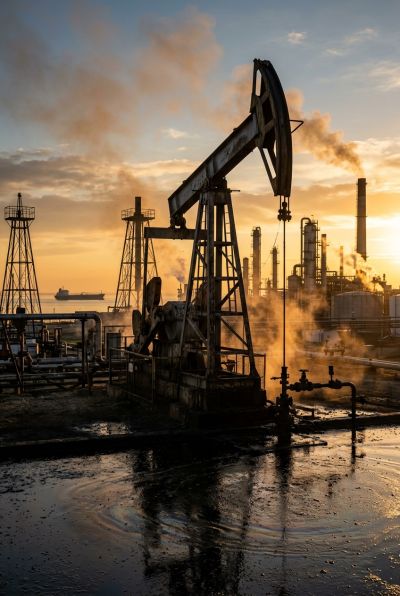
The following is an excerpt from “Black Gold” by Thomas Dwyer, available on MixCache.com.
Introduction
It flows beneath deserts, arctic tundra, and deep oceans. It fuels our cars, heats our homes, generates electricity, and forms the building blocks for countless products we use every single day, from plastics to pharmaceuticals. It shapes economies, influences geopolitics, sparks innovation, and ignites fierce debate. It’s been called Texas Tea, Rock Oil, and, most famously, Black Gold. We’re talking, of course, about petroleum – crude oil and natural gas – the lifeblood of modern industrial society and the focus of one of the world's largest, most complex, and most consequential industries.
Welcome to Black Gold: The Oil & Gas Industry. This book is designed as a comprehensive journey into that world. Whether you're considering a career within its vast network, thinking about investing in the energy sector, or simply curious about the intricate system that powers so much of our contemporary life, you've come to the right place. Our goal is to demystify this often-opaque industry, providing a clear, factual, and engaging overview of how it works, from the microscopic origins of hydrocarbons deep within the Earth to the global markets where energy is traded and the future challenges it faces.
The term "Black Gold" itself captures the essence of oil's value and allure throughout modern history. Like gold, it is a valuable commodity extracted from the earth, capable of generating immense wealth and driving exploration into remote and challenging environments. But unlike gold, its value lies primarily in its utility – its unparalleled energy density and chemical versatility have fundamentally reshaped human civilization over the past century and a half. Natural gas, often found alongside oil, was once considered a nuisance byproduct but has emerged as a crucial energy source in its own right, valued for its cleaner-burning properties.
Think about your day. Did you drive a car, take a bus, or fly in a plane? Did you turn on a light, use a computer, or cook a meal? Did you handle a plastic container, wear synthetic fabrics, or benefit from modern medicine? Chances are, the oil and gas industry played a vital role in making those activities possible. Its reach is so pervasive that escaping its influence is virtually impossible in the developed world, and its expansion continues to underpin economic development across the globe. This sheer ubiquity makes understanding the industry not just interesting, but arguably essential for informed citizenship in the 21st century.
However, the industry's importance is matched by its complexity. It's a sprawling global enterprise encompassing an incredible range of disciplines: geology, physics, chemistry, engineering (mechanical, chemical, petroleum, civil, electrical, and more), logistics, finance, law, international relations, environmental science, and data science, to name just a few. It involves operations on a staggering scale, from pinpointing potential reserves miles beneath the Earth's surface or seabed to constructing multi-billion-dollar offshore platforms, laying transcontinental pipelines, and managing refineries that process hundreds of thousands of barrels of crude oil daily.
This book aims to break down that complexity into understandable parts. We'll journey through the entire value chain, often conceptually divided into three main sectors. While we'll explore these terms – Upstream, Midstream, and Downstream – in detail later (specifically in Chapter 8), understanding their basic meaning now helps frame the industry's scope. Upstream involves finding the oil and gas (exploration) and getting it out of the ground (production). Midstream focuses on transportation and storage – moving the raw product via pipelines, ships, rail, and trucks. Downstream involves processing the crude oil and natural gas into finished products like gasoline, jet fuel, heating oil, lubricants, and the feedstocks for petrochemicals, and then distributing these products to end-users.
Our exploration begins, as it should, at the beginning. Chapter 1 will take a historical perspective, tracing the human use of oil and gas from ancient seepages to the birth of the modern industry in the mid-19th century and its explosive growth. We'll then delve into the Earth sciences in Chapter 2, exploring the geological conditions necessary for oil and gas to form and accumulate, understanding how these "fossil fuels" are truly ancient buried sunshine trapped in rock formations.
Following this foundation, we’ll move into the practicalities of finding these hidden resources. Chapter 3 examines the sophisticated techniques used in modern exploration, blending geology with cutting-edge seismic imaging and data analysis. Chapters 4 and 5 take us to the drill site, first onshore, exploring the mechanics of drilling wells thousands of feet deep, and then offshore, venturing into the demanding world of platforms, floating rigs, and subsea technology required to operate in harsh marine environments.
Once a discovery is made and a well drilled, how do we actually get the oil and gas out and manage its flow? Chapter 6 covers well completion and the intricacies of production operations, while Chapter 7 introduces the crucial discipline of reservoir engineering – the science and art of maximizing recovery from underground reservoirs over their productive life. This sequence mirrors the logical flow of the Upstream sector: find it, drill for it, produce it.
Having brought the hydrocarbons to the surface, the journey continues. Chapter 8 provides that essential overview of the Upstream, Midstream, and Downstream sectors, cementing the structure of the industry in your mind. Subsequent chapters then explore the Midstream and Downstream segments in more detail. Chapter 9 looks at the vast network of pipelines that act as the arteries of the energy system, along with other transportation logistics. Chapter 10 dives into the specialized world of Liquefied Natural Gas (LNG), a critical component of the global gas trade involving super-cooling gas for marine transport.
Chapter 11 takes us inside the refinery gates, explaining the complex processes that transform raw crude oil into the fuels and products we rely on. But oil and gas are more than just fuel sources. Chapter 12 explores the fascinating world of petrochemicals, derived from oil and gas feedstocks, which are the basis for plastics, synthetic fibers, fertilizers, solvents, and a myriad of other materials essential to modern life.
The industry is not static; it constantly adapts to resource availability and technological innovation. Chapters 13 and 14 explore two significant developments of recent decades: the "shale revolution," which unlocked vast new reserves of natural gas and tight oil through hydraulic fracturing and horizontal drilling, and the ongoing efforts to produce unconventional resources like heavy oil and bitumen from oil sands. These chapters highlight the industry’s relentless drive to push technological boundaries.
No discussion of oil and gas would be complete without examining its economic and political dimensions. Chapter 15 delves into the fundamental drivers of supply, demand, and price, exploring the volatile nature of oil and gas markets. Chapter 16 focuses on the geopolitical stage, looking at the influence of major players like OPEC (Organization of the Petroleum Exporting Countries) and the complex interplay between energy resources and international relations.
The industry's operations inevitably interact with the natural world, and these interactions carry risks. Chapter 17 addresses the environmental impacts associated with oil and gas activities, from exploration to consumption, and the strategies employed for mitigation and management. Closely related is the paramount importance of safety. Chapter 18 examines the culture and practice of Health, Safety, and Environment (HSE) within the industry, a critical aspect of responsible operations.
Operating in this high-stakes environment requires clear rules and agreements. Chapter 19 navigates the complex landscape of regulation, contracts (like production sharing agreements and concessions), and the fiscal regimes governments use to capture revenue from their nation's resources. For those interested in the financial side, Chapter 20 offers insights into investing in the oil and gas sector, outlining strategies, inherent risks, and potential opportunities across different types of energy companies.
The corporate landscape itself is diverse. Chapter 21 contrasts the different types of major players: state-owned National Oil Companies (NOCs), which control the majority of global reserves, and publicly traded International Oil Companies (IOCs), often leaders in technology and global operations. Understanding their differing motivations and capabilities is key to grasping industry dynamics.
Ultimately, the oil and gas industry, like any industry, is powered by people. Chapter 22 explores the wide range of careers available, the skills required, and the human element involved in keeping this global machine running. And looking forward, Chapter 23 examines the impact of digital transformation, data analytics, automation, and other technological innovations that are reshaping how the industry operates.
As resources deplete and facilities age, the industry lifecycle continues. Chapter 24 addresses the often-overlooked but increasingly important phase of decommissioning – the safe and environmentally sound removal of offshore platforms and plugging of old wells. Finally, Chapter 25 confronts the biggest question facing the industry: its role in the future energy mix. We'll discuss the ongoing energy transition, the drive towards lower-carbon sources, the challenges this presents for oil and gas, and the potential pathways forward.
Throughout this book, our approach will be straightforward and factual. We aim to explain complex topics clearly, avoiding excessive jargon where possible and defining essential terms as we go. While acknowledging the controversies surrounding the industry – its environmental footprint, its political influence, its boom-and-bust economic cycles – our primary purpose is not to advocate for or against oil and gas, but to provide you with a solid understanding of what it is, how it works, and why it matters. We believe that informed discussion requires a foundation of knowledge, and that is what we intend to provide.
We'll strive to keep the tone engaging, perhaps even injecting a little humor where appropriate – because let's face it, an industry involving searching for decomposed ancient organisms miles underground using sound waves and then setting off controlled explosions to get them out has its share of interesting, if not outright peculiar, aspects. But we will treat the subject matter with the seriousness it deserves, given its profound impact on our world. We won't shy away from the challenges or the complexities.
This book is structured to build your knowledge progressively. While each chapter focuses on a specific area, they collectively paint a picture of an interconnected global system. You can read it cover-to-cover for a comprehensive overview, or dip into specific chapters that address your particular interests. Whether you're taking your first steps towards a career in energy, evaluating an investment opportunity, or simply seeking to understand the headlines about oil prices, pipeline debates, or climate change negotiations, we hope this book serves as a valuable guide.
The story of oil and gas is a human story – one of ingenuity, ambition, competition, collaboration, immense wealth creation, political maneuvering, technological breakthroughs, environmental challenges, and profound societal transformation. It’s a story that is far from over, evolving rapidly as the world grapples with energy security, economic development, and environmental sustainability.
So, let's begin the journey. Let’s drill down into the fascinating, complex, and critically important world of Black Gold.
Read “Black Gold” on MixCache.com →
Please log in or create an account to leave a comment.
No comments yet. Be the first to say something.