
Browse by Category
Fiction
- Action & Adventure
- African American
- Anthologies
- Children's Fiction
- Classics
- Comics & Graphic Novels
- Coming of Age
- Contemporary
- Cultural & Regional
- Drama
- Erotica
- Fantasy
- General
- Historical Fiction
- Horror
- Humor & Satire
- Literary Fiction
- Mystery, Thriller & Suspense
- Poetry
- Religious & Inspirational
- Romance
- Science Fiction
- Short Stories
- War & Military
- Westerns
- Women's Fiction
- Young Adult
Non-Fiction
- Antiques & Collectibles
- Arts & Photography
- Biographies & Memoirs
- Business & Money
- Children's Non-Fiction
-
Computers & Technology
- Artificial Intelligence
- Computer Science
- Cybersecurity & Cryptography
- Data Science & Analytics
- Databases & Big Data
- Game Development & Design
- General
- Hardware & DIY
- Mobile App Development
- Networking & Cloud Computing
- Operating Systems
- Programming
- Robotics
- Software
- Software Engineering
- User Experience (UX) & Design
- Web Development & Design
- Cooking, Food & Wine
- Crafts, Hobbies & Home
- Education & Teaching
- Engineering
- General
- Health, Fitness & Dieting
-
History
- African History
- African History - North Africa
- African History - Sub-Saharan Africa
- American History
- American History - 20th Century
- American History - Civil War
- American History - Colonial Period
- Ancient History
- Asian History
- Asian History - China
- Asian History - India
- Asian History - Japan
- Asian History - Southeast Asia
- European History
- European History - Ancient Greece
- European History - Ancient Rome
- European History - Medieval
- European History - Modern
- European History - Renaissance
- General
- Middle Eastern History
- Military History
- Military History - Aviation
- Military History - Naval
- Social & Cultural History
- World History
- Humor & Entertainment
- Industrial Technology
- Language Learning
- Law
- LGBTQ+ Non-Fiction
- Literary Criticism
- Medical Books
- Parenting & Relationships
- Philosophy
- Politics & Social Sciences
- Reference
- Religion & Spirituality
-
Science & Math
- Agricultural Sciences
- Astronomy & Space Science
- Behavioral Sciences
- Biological Sciences
- Botany & Plant Science
- Chemistry
- Earth Sciences
- Engineering - Chemical
- Engineering - Civil
- Engineering - Electrical
- Engineering - Mechanical
- Environment
- General
- Geology
- Mathematics
- Nature & Ecology
- Oceanography
- Paleontology
- Physics
- Statistics
- Self-Help
- Sports & Outdoors
- Study Aids
- Sustainability & Green Living
- Textbooks
- Transportation
- Travel
- True Crime
- Urban Planning & Development
- Veterinary Medicine
- Writing & Publishing
Jump to Section
MixCache.com Total Access
Unlimited reading and audiobooks for every book published by MixCache.com.
Included titles carry the MTA badge.
Learn more →
Researching African History: A Practical Guide to Sources, Archives, and Digital Methods
MTA
Methodology, Oral History, and Building Ethical Archives for Scholars and Students
About this book:
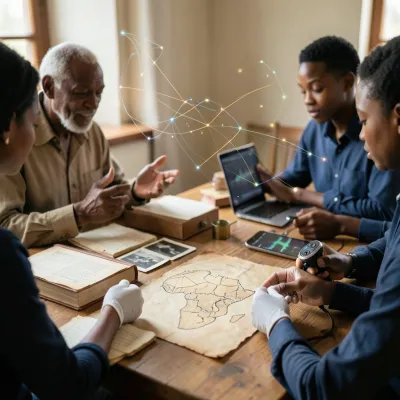
*Researching African History: A Practical Guide to Sources, Archives, and Digital Methods* provides a comprehensive framework for conducting rigorous and ethical historical research across the continent. The book emphasizes that methodology is inseparable from ethics, urging researchers to move beyond colonial-era extractive practices toward collaborative models that prioritize community reciprocity, data sovereignty, and linguistic plurality. By mapping diverse repositories—from national and missionary archives to Islamic manuscript libraries and family collections—the guide offers a practical roadmap for navigating the fragmented and often politically charged landscape of African historical records.
The text provides detailed technical guidance on the "hands-on" aspects of fieldwork, including the craft of oral history, the management of material culture, and the use of environmental and scientific data. It highlights the importance of "reading against the grain" of colonial sources while elevating oral testimonies and vernacular traditions as foundational evidence. Practical chapters cover the logistics of safety and fieldwork, the nuances of interview design across different languages, and the complexities of permissions and intellectual property in varied legal and cultural contexts.
A significant portion of the book is dedicated to digital methods, offering reproducible workflows for managing large, multilingual datasets. It introduces scholars to tools such as GIS for spatial analysis, OCR and OpenRefine for data cleaning, and platforms like Omeka and Mukurtu for building accessible, ethically grounded digital archives. The guide emphasizes that digital tools should augment rather than replace human judgment, ensuring that technological interventions respect cultural protocols and maintain the interpretive depth required for historical analysis.
Ultimately, the book serves as both a manual and a call to action for decolonizing African history. It encourages researchers to embrace uncertainty and silences in the record as analytical opportunities rather than failures. By integrating traditional archival skills with modern digital techniques and a steadfast commitment to stewardship, the guide aims to equip the next generation of scholars to produce histories that are methodologically robust, transparently sourced, and deeply accountable to the communities they document.
What You'll Find Inside:
- Learn to frame research questions that account for Africa's regional diversity, linguistic plurality, and multiple temporal and geographic scales while maintaining ethical awareness of power dynamics and community impact.
- Master practical approaches to working with diverse source types including colonial archives, Islamic manuscripts, oral histories, visual materials, and environmental data, with strategies for reading against the grain of colonial records.
- Develop skills in community collaboration, reciprocity, and data sovereignty to ensure research benefits participants, respects local knowledge systems, and aligns with community-defined access and use protocols.
- Gain hands-on guidance for digital methods including OCR, OpenRefine, GIS, text encoding, and building ethical digital collections using platforms like Omeka and Mukurtu while maintaining reproducibility and long-term sustainability.
- Acquire strategies for creating transparent, auditable research workflows through version control, metadata standards, and persistent identifiers that support collaboration, verification, and future reuse by communities and scholars.
Who's It For:
This book is designed for graduate students and independent researchers specializing in African history who need concrete, practical guidance for conducting archival, field, and digital research. It particularly benefits those committed to ethical, collaborative approaches that prioritize community engagement, data sovereignty, and methodological rigor while navigating the continent's diverse linguistic, regional, and source landscapes.
Table of Contents:
- Introduction
- Chapter 1 Framing Research Questions and Scales of African History
- Chapter 2 Mapping Major African Archives and Libraries
- Chapter 3 Colonial and Missionary Archives: Reading Against the Grain
- Chapter 4 Postcolonial State Archives and Contemporary Records Access
- Chapter 5 Islamic Manuscripts, Ajami Traditions, and Swahili/Arabic Sources
- Chapter 6 Oral History Foundations: Ethics, Memory, and Power
- Chapter 7 Interview Practice: Sampling, Question Design, and Elicitation
- Chapter 8 Recording, Transcription, and Translation Across African Languages
- Chapter 9 Community Collaboration, Reciprocity, and Data Sovereignty
- Chapter 10 Permissions, Copyright, and Intellectual Property in Context
- Chapter 11 Newspapers, Periodicals, and Broadcast Media as Sources
- Chapter 12 Photography, Film, and Visual Culture: Reading and Reuse
- Chapter 13 Material Culture, Museums, and Repatriation Debates
- Chapter 14 Environmental, Climate, and Scientific Data for Historians
- Chapter 15 Maps, GIS, and Remote Sensing for African Historical Research
- Chapter 16 Prosopography, Genealogies, and Social Network Methods
- Chapter 17 Managing Sources: Metadata, Standards, and Controlled Vocabularies
- Chapter 18 Building Ethical Digital Collections: Omeka, Mukurtu, and Alternatives
- Chapter 19 Reproducible Workflows: Notebooks, Version Control, and Data Management
- Chapter 20 Cleaning and Structuring Data: OCR, OpenRefine, and Text Encoding
- Chapter 21 Textual Analysis and NLP for Multilingual African Corpora
- Chapter 22 Citation, Persistent Identifiers, and Researcher Profiles
- Chapter 23 Safety, Logistics, and Fieldwork Planning Across Regions
- Chapter 24 Writing with Evidence: Crafting Arguments and Presenting Uncertainty
- Chapter 25 Preservation, Access, and Sustainability: From Project to Archive
Author:
Published By:
Date Published:
May 5, 2026
Type:
Nonfiction
Language:
English
Word Count:
64,516 words
Reading Time:
4 hours 31 minutes
Sample:
MixCache.com Total Access
Get unlimited access to this book + all books published by MixCache.com for $11.99/month
Subscribe to MTAOr purchase this book individually below
Order:
Buy the Researching African History: A Practical Guide to Sources, Archives, and Digital Methods ebook on MixCache.com:
Buy Now
Full ebook will be available immediately
- read online or download as a PDF file.
$5 account credit for all new MixCache.com accounts, usable toward any ebook purchase!*






Ratings & Reviews
Ask Questions About This Book
Have a question about the content? Ask our AI assistant!
Start by asking a question about "Researching African History: A Practical Guide to Sources, Archives, and Digital Methods"
Example: "Does this book mention William Shakespeare?"
Thinking...